

The Art of Spending Money - Book Summary
Morgan Housel on why healthy financial philosophy is having respect for others' experiences, an appreciation of your own, and an understanding that all behaviour makes sense with enough information.

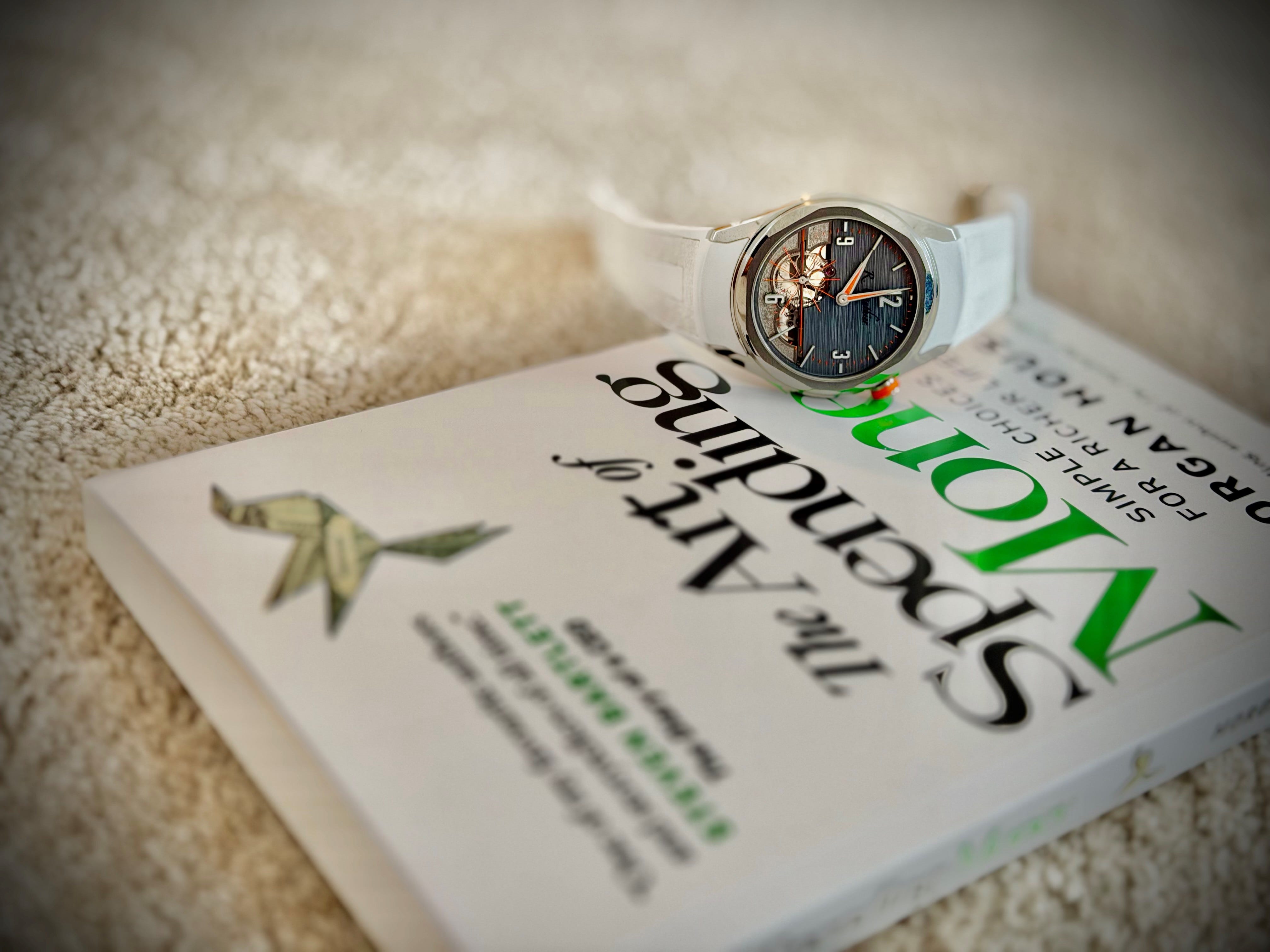
The moment you decide to buy a watch - something you want but do not need - you enter Morgan Housel’s world. If you’re a relatively new SDC reader, you might have missed my summary of Housel’s previous book; in which case, a book about the art of spending money might seem like an odd fit for a watch website… After all, the function of a watch is obsolete, and the cost is entirely discretionary - there is no “art” in blowing cash the way we do.
Except, there is; as soon as you spend large sums on something you don’t need, all the issues Housel covers (status vs utility, scoreboards, envy vs contentment) will be on display, right there on your wrist.
This book, The Art of Spending Money, is less of a financial guide and more of a psychological adventure into the messy reality that follows your accumulation of wealth. I suppose if watch collecting were really just about separating utility from desire, this book would be the textbook.
To be quite honest, this book is the necessary, and arguably harder sequel, to previous book, The Psychology of Money. It tackles the moment you’ve finally built up wealth and now face the challenge of somehow just ‘being happy’ with it.
Most of this book skips the budgeting and financial planning you’d expect. It’s more about the fact that spending money has little to do with maths or accounting, and everything to do with social pressure, identity, envy, and the stories we tell ourselves.
There is no universal formula to any of this, because the ultimate measure of success is, as Housel puts it, “the psychological distance between what you have, and what you want.”
Note: all quotes in this post are from the book unless stated otherwise
Estimated reading time: ~18 minutes
Highest ROI - time, not money
I’d say the main takeaway from the book is that the ultimate purpose of capital is to buy back your time - not to acquire more assets. Housel draws a distinction between two states; being rich (easy to measure, lots of expensive stuff) and being wealthy (complex to measure, maximum control over your own life). The foundational principle, Housel suggests, is that “spending money is the clearest window into what you value most.”
Every buck you spend tells a story; whether you chose a vintage piece over a new one or skipped eating out for a month to fund a grail, your choices will reveal what matters most to you. The tragedy is in knowing how many people live a life that tells the wrong story.
The book argues quite persuasively that “wealth without independence is a unique form of poverty.” Housel contrasts the miserable, spending-obsessed Vanderbilts (whose enormous fortune was spent solely on winning status competitions) with the ‘uncelebrated’ contentment of Chuck Feeney, the Duty Free founder who gave away his entire fortune. Until I read this book, I hadn’t heard of Feeney, which speaks to Housel’s point.

Feeney tried mansions, jets, and yachts, but supposedly realised it wasn’t for him. He found his joy in giving, which then led to his quote: “I realised one day that I was happy when I was giving my money away and I was not happy when I wasn’t giving money away.” Feeney was essentially free, and the Vanderbilts were prisoners of (other people’s) expectations.
The ultimate financial asset, therefore, is personal independence. Housel captures the essence of its ROI quite nicely: “You can’t put a price tag on waking up and doing what you want with your day.”
“Wealth without independence is a unique form of poverty.”
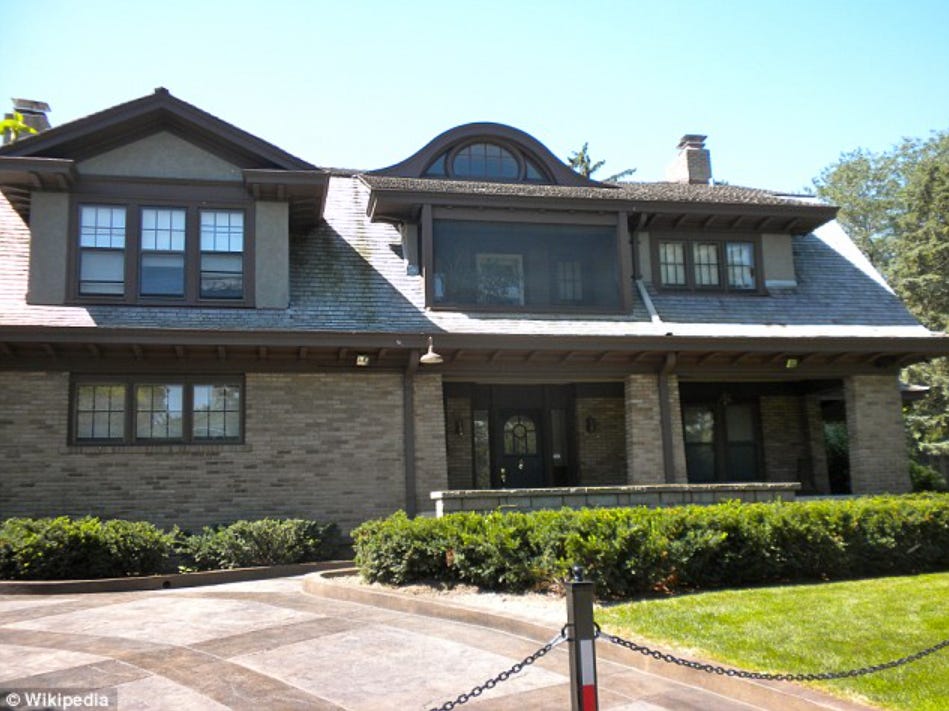
Warren Buffett, despite his billions, still lives in the same house he bought in 1958. This is because wealth, to him, represents the freedom to spend every day reading, thinking, and working with people he enjoys. Mansions, Bentleys and yachts are simply irrelevant to his actual goal, which is… autonomy.
Magic carpet
There’s one story in the book about a man named Michael May, who suffered a terrible accident as a baby that left him completely blind. A miraculous surgery restored his vision at age forty-six meaning he could see the world for the first time in his life.
As May left the doctor’s office after his surgery, he walked through the lobby and the carpet caught his attention.
“Look at those shapes! Look at those colours!” he told his wife excitedly. In that moment, it was better than the most beautiful thing his mind could imagine. He couldn’t understand why the other patients were just sitting there, ignoring this carpet. At one point he stopped and mumbled, “That’s blue. Oh my gosh, that’s blue.”
He was getting probably ten thousand times more pleasure from looking at an office carpet than you or I would ever get from the most epic Maldives sunset. Now of course, given he had never seen anything before, everything that might be ordinary to the average person was just… extraordinary.
I love this story because it frames the single most important idea in the book very neatly, in a way that anyone can understand. The point is, joy comes from contrast, not from a constant state. A good life is about having everything you need, and some of what you want, sometimes. The corollary is that if you have everything you want, you are likely to appreciate nothing you have.
I think I’ve written about this more times than I can count, so I don’t need to tell you how this applies to watches. Can you remember the excitement of getting your first proper watch? I can. It was a giddy, almost childlike feeling… and I don’t think I have ever come close to that feeling since - despite eventually buying many objectively ‘better’ watches (nicer movement, more prestigious brand, more expensive, etc). So for all of us, our first ‘proper’ watch was carpet-level beautiful because what came after ‘no proper watch’ felt monumental.
Housel makes the point that a $500 dinner rarely makes you five times happier than a $100 dinner. The contrast, not the amount, is what makes you happy. Arnold Schwarzenegger apparently offered some diet advice that captures this as well; you should mostly eat food you know is healthy, but you should also occasionally let yourself eat food you know isn’t healthy. Otherwise what’s the point? There’s a financial version of this, which is that when you’re content with what you have, an occasional treat or surprise can feel incredible. When you expect nothing, everything is a surprise.
“A $500 dinner rarely makes you five times happier than a $100 dinner.”
One of my high-school roommates has a private chef, and this dude eats five-star meals, three times a day, and has customised snacks in between. I’d lie if I said I wasn’t a little jealous… but I also wonder whether the joy would fade over time. In his case, there’s no anticipation or looking forward to a rare high-end restaurant meal… there’s no gap between a ‘normal’ meal and some insane delicacy. Does he get more pleasure out of his epic dinner than a kid would get when their dad offers a surprise trip to Pizza Hut and the kid savours their first bite? I kinda doubt it.
All of this is to say, so much of being happy with your money is fighting the hedonic treadmill1 - the way you quickly get used to something you once considered a luxury. The antidote is to understand that occasional treats can produce more joy than perpetual luxury. Christmas morning feels great because it happens once a year. The same joy can be had when the luxury items in your life become occasional treats rather than constant needs.
Here’s an excerpt from the book which captures this quite well:

Shackleton and his twenty-seven-man crew then spent nineteen months—from January 1915 to August 1916—rowing eight hundred miles to safety in tiny lifeboats, with nighttime temperatures hitting ten degrees below zero.
They were constantly freezing, wet, hungry, and sleep-deprived. They survived—and all of them did survive—on an occasionally captured seal and foraged seaweed. It’s one of the most astounding survival stories you’ll ever hear.
But, for me, the most emotional part of the story comes at the end, when Shackleton’s crew finally made it to a whaling station on South Georgia island, sixteen hundred miles east of Argentina, where they received aid.
Author Alfred Lansing writes:
“Every comfort the whaling station could provide was placed at the disposal of Shackleton [and crew]. They first enjoyed the glorious luxury of a long bath, followed by a shave. Then new clothes were given to them from the station’s storehouse.”
They were then served a hot meal, and slept for twelve hours. Can you even imagine what that must have felt like? Can you imagine how good it must have felt to have a bath, a hot meal, and a warm bed after being constantly frozen and starving for nineteen months?
Even if the water was lukewarm and the food was half-stale, that must have been one of the most pleasant and fulfilling evenings anyone has ever experienced.
Contentment is all that matters
Housel formalises the carpet idea as an equation: Happiness = Circumstances – Expectations. He illustrates this by contrasting the billionaire Larry Ellison, who perpetually craves more, with his own late grandmother-in-law, who was poor by any reasonable definition but wanted nothing beyond her garden, her books, and her friends. Ellison has everything, and she had almost nothing; guess which one was happier.
His antidote is to stop asking what else you need to be happy. Instead of trying to push your circumstances upward (a race you can never win), try to manage your expectations downward. Housel concludes: “In the end, money’s greatest gift is enough, not more.”
It’s worth internalising the concept we covered in the Michael May section earlier; the hedonic treadmill is real, and once a luxury becomes your baseline, it stops feeling like a luxury. This is a topic close to my heart, and I wrote about it a while ago:

Social debt and scoreboards
We think we want nice stuff, but what we really want is respect, admiration, and attention. The purchases we make are just proxies, and the pursuit of these proxies is often rooted in trauma: “The more you were snubbed while poor, the more you enjoy displaying your wealth.” This is a catchy quote, but I’m not sure it applies universally.