

How Scarcity Creates Desire
The weird history of royal potatoes, the illusion of the allocation game, and the behavioural economics of wanting what we can't have.

You’ll be pleased to know I have not developed a sudden interest in 18th-century Prussian monarchs… but I will nevertheless be kicking off today’s discussion by mentioning Frederick the Great. Rory Sutherland mentions this guy in his excellent book, Alchemy, and explains how old Frederick pulled off an epic marketing trick which in fact mirrors something that has played out in the watch world as well.
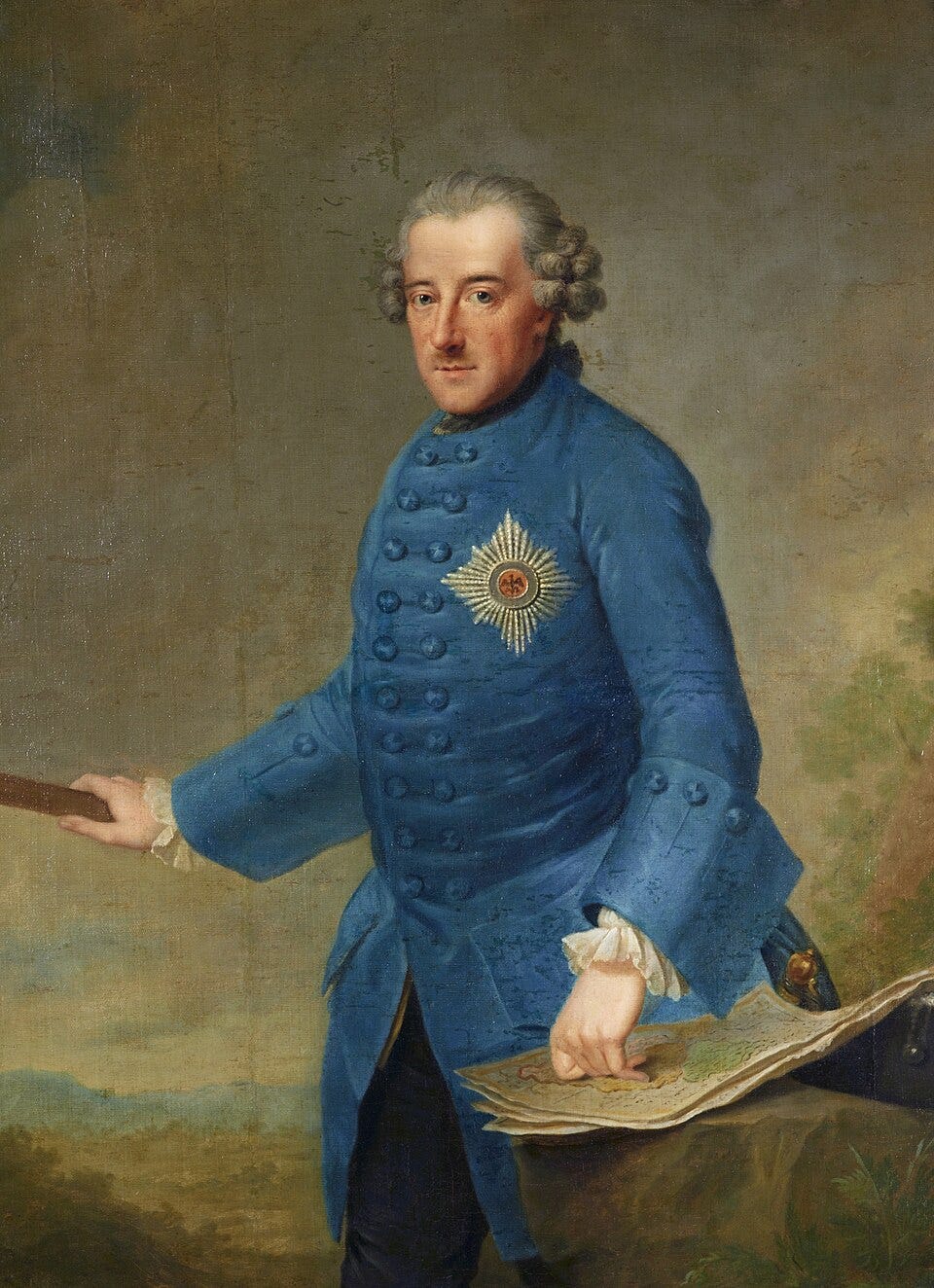
The story goes something like this… Frederick wants his peasants to eat more potatoes, but they refused (more on this later). Anyway, Freddie plants royal potato fields, posts guards to protect them, and deliberately keeps the security around the potato fields to a minimum. Peasants sneak in at night to steal what “must be” valuable (seeing as the king is guarding it). Basic reverse psychology tells you that if it’s worth guarding, it must be worth stealing.
After I read this story in Rory’s book, I was intrigued enough to look into it a little more - for the purposes of writing about it on SDC. It turns out, this is all nonsense - kinda like the information Luxeconsult uses for the annual report with Morgan Stanley. Jokes aside, it turns out that Frederick never ate potatoes, he never posted guards to protect them… the whole thing is a complete fabrication that historians have been trying to kill off for years… but the story just won’t die.
If you think about it, this story persists because even though Frederick didn’t do this stuff, the principle it illustrates actually does work. Manufactured scarcity combined with elite association creates a level of desire so powerful that it overrides everything else. Including, apparently, historical fact 😂
We will eventually bring this back to watches, but let’s kick off with some history first.
Estimated reading time: ~ 11 mins
Lessons in myths
Jürgen Luh is the official historian at the Prussian Palaces and Gardens Foundation. He has direct access to Frederick’s archives which includes royal menu records, administrative documents, and other similar materials. His verdict on the potato guard story is “Nonsense. None of that ever happened.”
The facts, however, are considerably less romantic. Frederick issued 15 bureaucratic potato decrees starting in 1756, the same year the Seven Years War kicked off. He threatened to cut off noses and ears if people didn’t plant potatoes. His subjects largely told him to get fvcked. When the town of Kolberg received his decree, they sent back an absolute gem of a response: “The things have neither smell nor taste, not even the dogs will eat them, so what use are they to us?”
In reality, potatoes only became widespread in Prussia after 1815, which is nearly 30 years after Frederick died. He was, as Luh puts it, “more of a wannabe potato king than an actual one.”
Speaking on why the myth still endures, Luh said: “The fact is that the legend has beaten the truth and the legend is just too beautiful.” He’s right, but there’s more to it than that. The legend persists because it describes a few highly relatable things about human psychology; we want what we cannot have, we value what others cannot access, and we transform ordinary things into objects of obsession through artificial restriction.
Brief history of scarcity
This led me to seek out some other historical examples where this approach actually worked as intended (and where we have the documentation to prove it).
The first is Tyrian purple:
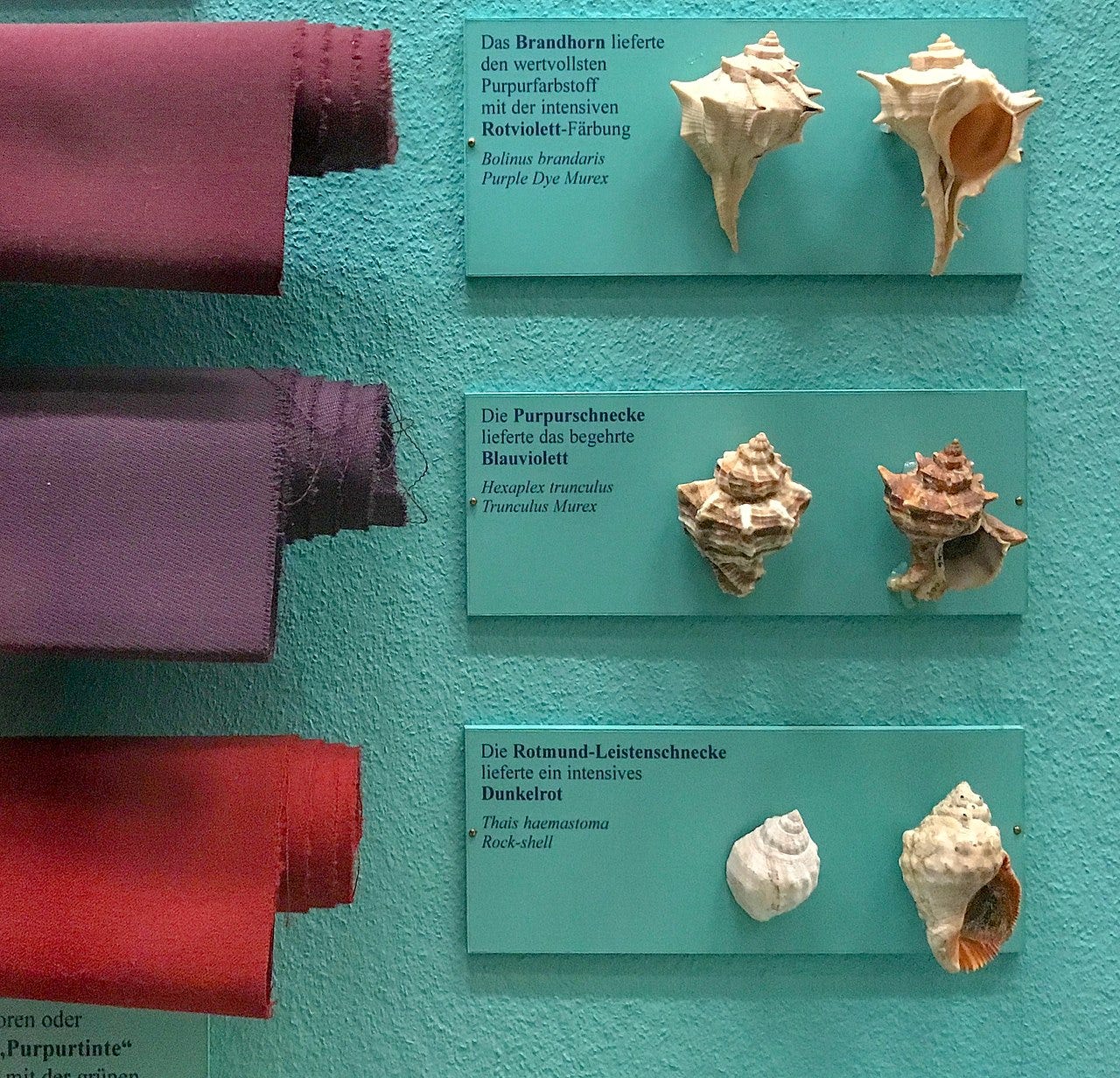
As it happens, producing one gram of this dye required 10,000-12,000 murex snails and a three-day process involving putrefied shellfish baking in the sun. By 301 CE, one pound of purple dye cost 150,000 denarii; which is approximately three pounds of gold. What transformed ‘expensive’ into ‘untouchable’ was an imperial decree that said only the Roman emperor could wear Tyrian purple. And in this case, violations of this decree, would result in your swift demise. This monopoly lasted 1,500 years, and the phrase “donned the purple” kinda became synonymous with ‘becoming emperor.’ I couldn’t find an image, but it is said there are 40-metre-high shell deposits at Sidon which testify to the industrial scale of production chasing elite demand for something most people were forbidden to own. You can read more about this here.
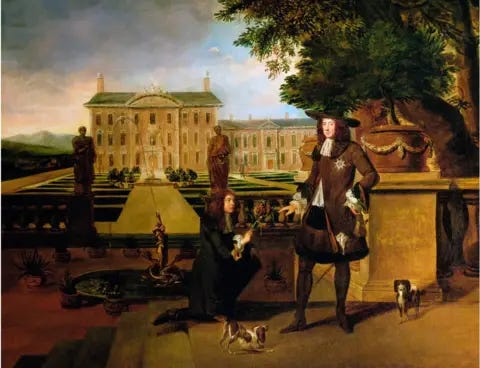
Now let’s jump to 17th-century Europe and talk about pineapples. At the time, each one cost ~£80 to produce in England (~£2,000 or ~$3,000 today) because you needed heated glasshouses with precise temperature control (and years of patience). King Charles II paid £200 just for a recipe in 1669, and more generally, party hosts would pay today’s equivalent of £6,000 or $8,000 just to display - not eat - a single pineapple at parties... Just to show they could.

Another example is Venetian glass; there was a 1291 law which moved all furnaces to Murano island. At the time, they officially cited “fire prevention” as the rationale, but actually it was so that they could isolate craftsmen and protect trade secrets. It was so intense that glassmakers were not even allowed to leave the island without permission. If they did leave, they were ‘asked’ to return and if they refused to return after a couple of warnings, their families were imprisoned and assassins dispatched to terminate them. In this way Venice maintained a near-total European monopoly on mirror production through the 15th century. Back in those days, mirrors were described as being worth more than a Raphael painting of the same size.
They were so pricey that according to one account, Gilonne d’Harcourt, Countess de Fiesque sold acres of farmland, just to buy one small mirror. Source
I mean, these are all mildly interesting stories, but the point I am making is that this pattern repeats across centuries; if you combine real or manufactured scarcity with elite association, add legal or social restrictions, you will see demand explode beyond any rational relationship to utility. There are loads of other examples which you can look into if you’re keen; black pepper in medieval Europe (a pound equalled a skilled craftsman’s monthly wage), chocolate in 17th-century London (consumed by aristocrats in exclusive houses that evolved into private clubs because entry fees kept ordinary people out), Dutch tulip mania in 1637 (virus-induced striped patterns that couldn’t be reproduced made single bulbs trade for the equivalent of a house).
These aren’t made up stories because the price records, legal documents, and archaeological evidence exists to back all this up. Everything points to the same conclusion, which is that artificial scarcity works. It has always worked, and it probably always will.
Why this hijacks your brain
SDC regulars will know we are a big fan of the late Nobel laureate Daniel Kahneman. He spent decades figuring out all kinds of interesting things about behaviour, and one of these things is why scarcity does this to us. One principle he researched is called loss aversion - losses feel approximately twice as psychologically painful as equivalent gains. When scarcity threatens your access to something, your brain processes it as ‘potential loss’ instead of foregone gain, and this dynamic triggers a much stronger response.