


In the spring of 1921, Andrew Mellon checked into a suite at Claridge’s in London. He was a Pittsburgh banker, newly sworn in as Secretary of the US Treasury, and one of the richest men in America. As far as he knew, he was not being hunted.
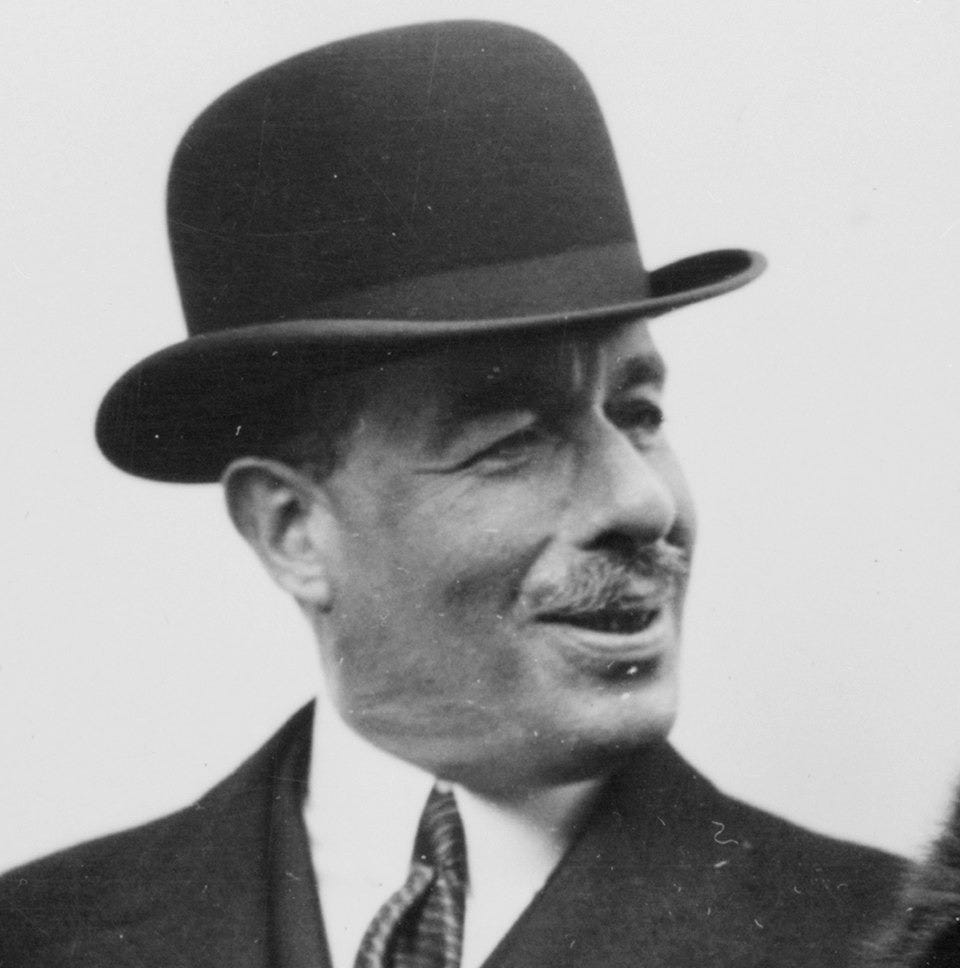

What Mellon didn’t know was that an art dealer named Joseph Duveen had booked the room directly below his. Duveen’s valet was told to befriend Mellon’s valet. Mellon’s valet, being the friendly sort, had told Duveen’s valet that his employer was about to head downstairs, and that he was headed to visit the National Gallery. Duveen’s valet, being well-tipped, told Duveen, who then timed his walk to the lift accordingly. When the doors opened on Duveen’s floor, Mellon was standing inside.
“How do you do, Mr Mellon?” he said. “I’m on my way to the National Gallery to look at some paintings.”
What an extraordinary coincidence… two men in a lift, off to look at the same paintings. Mr Mellon would soon learn they had remarkably similar tastes too, and they ‘discovered’ several shared interests as they wandered the museum together. Mellon was charmed. Hooked, in fact.
Over the following two decades Duveen sold Mellon a large proportion of the paintings he would eventually give to the American nation, and even the giving was Duveen’s idea; he urged him to donate everything, and build the National Gallery of Art in Washington around it. This might sound selfless until you realise that a national museum needs far more art than one man can own, and Mellon suddenly had many walls to fill… guess who had the inventory.
The ‘coincidence’ at the lift was, of course, choreographed to the second.
—
I listened to an entire podcast on Duveen1 and the longer I listened, the more I thought, “this could be the watch world.” Every move Duveen made, every tactic, every piece of psychological trickery… it all has a direct translation into how the upper end of the watch market operates today. The names may be different, and the objects have obviously changed, but the ‘choreography’ of the game has most definitely not changed one bit.
So today I want to walk you through Duveen’s approach and map it onto our world, because it clarifies how this hobby works at the very top. After that I want to do two things: one for the dealers reading this, who perhaps want to operate at a higher tier; and one for you, the collector, who wants to spot when somebody is ‘doing this’ to you.
Estimated reading time: ~ 19 minutes
Genius has the fewest moving parts
Behrman opens his profile on Duveen with the entire business model in one sentence:
“Early in life, Duveen—who became Lord Duveen of Millbank before he died in 1939, at the age of sixty-nine—noticed that Europe had plenty of art and America had plenty of money, and his entire astonishing career was the product of that simple observation.”
This guy spent half a century moving pictures west across the Atlantic and got fabulously rich doing it. The equivalent in the watch world is that Switzerland, Germany, Japan, and a few other places make watches, and the people in the world with money, wherever they are, buy them. Wealth is portable, supply is constrained, and at the very top of this hobby, the interesting pools of money are in the gap between a master watchmaker’s bench in the Vallée de Joux and a vault in Geneva’s free port (the tax-free warehouse where expensive objects go to be owned rather than seen), or between Plan-les-Ouates and the Middle East.
All grey dealers, authorised dealers, auction house specialists, concierges, and WhatsApp middlemen… are all just iterations of Duveen’s basic premise, which was that the watches are over there, the money is over here, and somebody has to broker the trade.
Many people have tried this. Most fail; some do okay; a handful do very well. Only a tiny fraction could become Duveens, and they all do the same thing. They notice that the deals follow the relationships, so they collapse the entire operation onto maybe a dozen extraordinarily wealthy clients. That’s why Duveen’s strategy is insanely difficult to replicate.
It’s also the thing most people in the high-end watch trade screw up i.e., they focus on going wide. They build big Instagram followings, advertise discounts, and, more generally speaking, chase volume over value. The Duveens of the watch world go the other way. They get smaller, deeper, and much more selective; their client list would probably fit on an A4 page.
Monopoly was his method
Duveen’s main quirk was that he refused to be one of several dealers a client used - he wanted to be the dealer. To pull this off he did two things.
He controlled supply. He bought up entire collections, often paying more than anyone else was offering, and the paintings went into his own storage, not immediately onto the market. He understood, long before others did, that owning the inventory was the entire game. If you’ve got the inventory, you set the price, and you decide who gets to buy. If you don’t, you’re just waving a number in the air.
And he educated his clients. He made them believe that the only way to get the great stuff was by going through him. Other dealers might sell you something nice, but he would sell you something irreplaceable. “When you want a great painting, you must come to me, because you know I get the first chance at all of them.” Duveen said that to Henry Clay Frick, then one of the richest men in the world, who had just told him about a painting he’d failed to acquire. Duveen had already bought it.
The analogy isn’t perfect but if you think about it, the Rolex authorised dealer system, which I’ve written about before, is a franchised take on Duveen’s method. Rolex controls supply, the dealer controls allocation, and the dealer educates you, the buyer. Over months and years of buying things you don’t really want, you are taught that the only path to the thing you do want runs through the relationship. You can’t buy a Daytona… you need to earn one. So the watch is the carrot and the threat of losing your place in the queue is the stick. The dealer, like Duveen, is the gatekeeper, and having some sort of gate is the entire point of this setup.
The supply side capitulated as well; the dukes and barons of pre-war Europe (basically broke noblemen sitting on Old Master portraits) would watch Duveen arrive at their crumbling country ruins, look around with contempt for the pictures other dealers had been haggling over, and announce a price higher than anyone else had offered. “This is the greatest thing I ever saw. I will pay the biggest price you ever saw.” The dukes sold only to him after that, because once you’ve seen that kind of certainty, letting another dealer grind you down by 20% feels like a dumb thing to do.
It isn’t widespread yet, but some of the high-end watch trade already operates in this way. There are dealers who pay 200k for something the auction estimate capped at 140k, and no, they are not stupid. They are just buying control of the next deal. The next time anyone wants to talk about that reference, they own the comp (the comparable sale every future negotiation gets anchored to).2
Paying high for priceless stuff means you’re getting it cheap
This was Duveen’s cardinal dictum, and it’s the most useful idea in Behrman’s entire profile. There’s a story about a titled Englishwoman with a family portrait to sell. Duveen asks what she wants for it, and she says, meekly, £18k. Duveen is indignant.
“Eighteen thousand pounds for a picture of this quality? Ridiculous, my dear lady. Ridiculous.”
Then he starts extolling the virtues of the painting as if he were selling it, and finally, when she asks what he thinks it’s worth, he tells her the very least she should let it go for is £25k. Of course, she agrees. Now given he has just paid £7k more than the asking price, you might think he’s just an insane clown. But in fact, he did it on purpose, because he has already worked out what he’ll charge his American buyer, and that price doesn’t work if his cost basis seems too low. And of course, people do talk. This woman would then tell all her titled friends that Duveen paid her more than she asked, and the next broke family with a Gainsborough in the hallway would end up calling him first.
It’s easy to believe this is irrational, but it’s the most rational thing he did. Humans use price as a mental shortcut for quality, and Duveen knew it. A high price isn’t a tax on the object; at this end of the market, price is a signal that the object deserves the tax. The £18k painting was suspicious to Duveen because he couldn’t sell it for what it was worth if he’d paid that little for it.
The watch market is dripping in this dynamic. A ‘spare’ Daytona on Chrono24 at 30% below comp raises questions. Why is it cheap? What’s wrong with it? Why hasn’t someone else bought it already? And before you’ve even finished asking, you’ve talked yourself out of the deal, because in luxury - as in art, in wine, and in watches - the cheap thing is a suspicious thing. People pay more because, well, they get to say they paid more… the price is the proof.
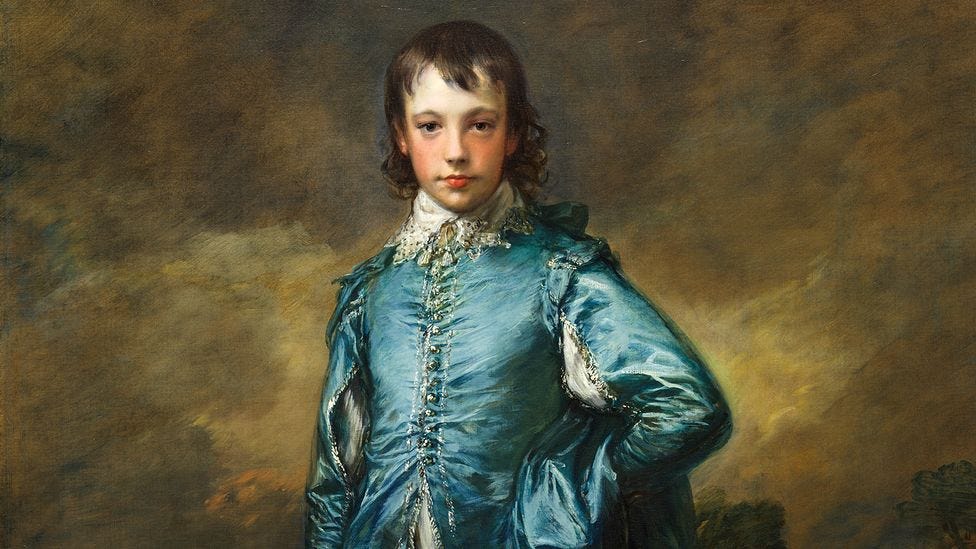
Duveen executed this tactic on a massive scale in 1921, the same year he trapped Mellon in that lift. He bought Gainsborough’s The Blue Boy off the Duke of Westminster and sold it to Henry Huntington for the highest price ever paid for a painting at that point in time. Then he arranged a three-week ‘farewell exhibition’ at the National Gallery in London before shipping it to California. Ninety thousand people queued to say goodbye to a picture most of them had never once thought about, and Cole Porter even wrote a song mourning its departure. The painting was the same one all along, but the price made it the most famous picture in the world.