
Saturation Problems
Bombarding tens of thousands of people about low volume watch releases is a category error

Your phone has been lighting up in recent days... by tomorrow evening you’ll have seen more watches than you can remember, and by the end of the week, most of them will have vanished from your feed for good. Watches and Wonders seems to be doing what Watches and Wonders does.
Which makes this the perfect time to talk about how watch releases reach us, and specifically, why the current approach feels broken. I will use two independent brands as examples from the last month, because they make the point nicely. These two went in diametrically opposite directions and (to me) both got it slightly wrong. One over-did it, and the other under-did it; I think, somewhere between them, is probably how this should work in practice.
Estimated reading time: ~15 minutes
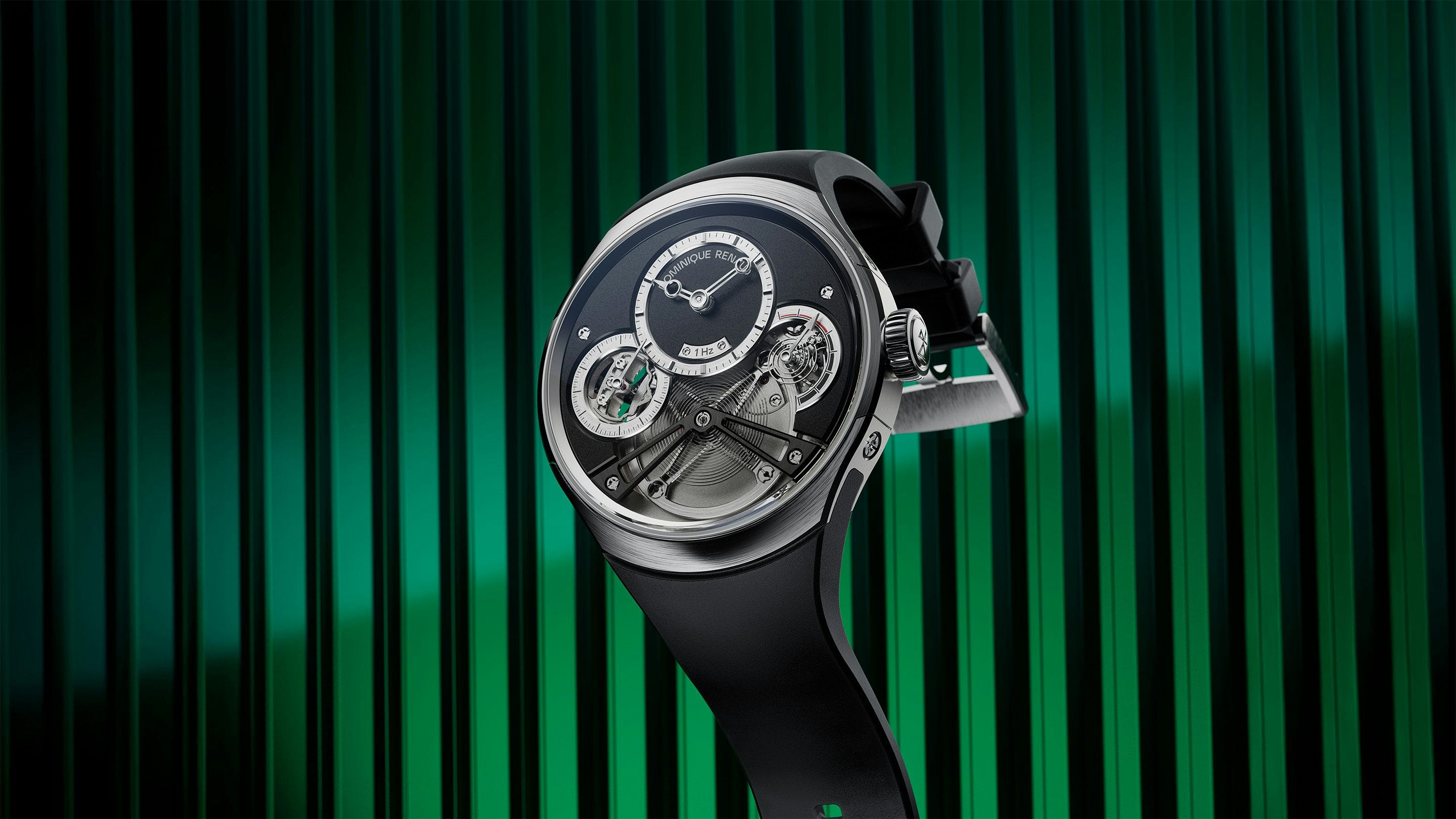
Let’s start with Dominique Renaud (DR); the man (brand?) launched a new watch a couple of weeks ago, and for about 36 hours following the launch, every watch feed on the internet displayed the same images, and every WhatsApp group was talking about this piece. Most publications that cover watches published something about this watch but then, as these things do, it basically vanished. Granted, W&W has also just kicked off, so maybe DR’s disappearance isn’t a perfect data point - but the fact that a significant new independent launch was knocked out of the conversation by the next bigger noise is sort of the point I’m building towards. Stick with me.
This week we found out F.P. Journe is doing the exact opposite:
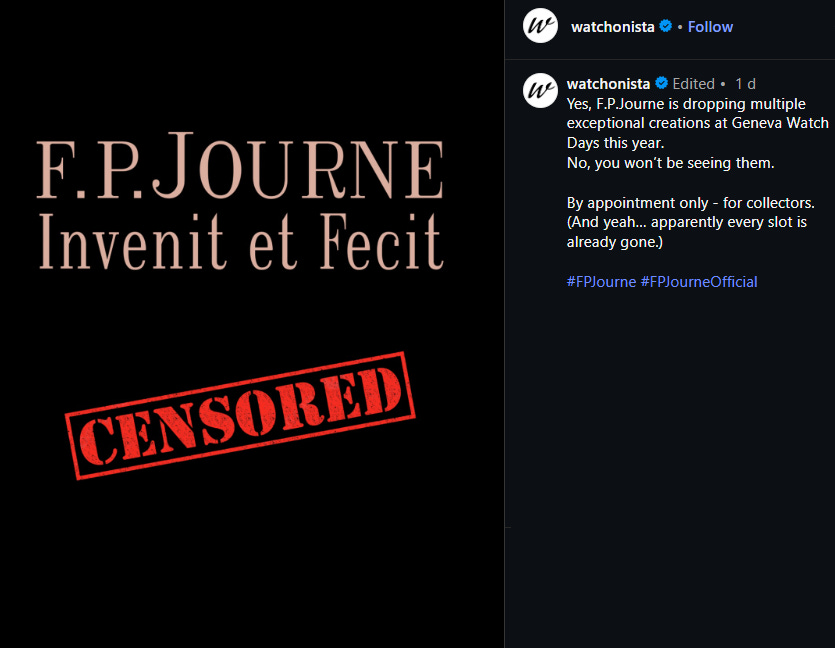
During Watches and Wonders this week, they are supposedly showing a handful of new pieces at their Manufacture in Geneva - they have a collectors’ set of bejewelled vertical tourbillons, a couple of LineSport limited editions, and some boutique editions. They’re showing them by private appointment only, with no photographs permitted and no press release of any kind. VIP clients who are in Geneva for W&W get to see them in person, and everyone else finds out through the grapevine and whatever ends up leaking (which will be everything, because it always is). I wasn’t even supposed to know what these watches are, and within 5 minutes of posting about it online, I was given the details I shared above.
So, quite conveniently, we have two independent brands with different approaches to launching products in recent weeks, and these examples give us a kind of ‘launch spectrum’ to think about.
Audience
Let’s start with DR, and just to reiterate, I’m not ‘picking on’ DR; this approach to a product launch is what happens with many launches, and DR just happens to be the most recent example I can think of, where the volume of coverage went overboard. Collective Horology, one US retailer for the piece, said on their podcast they’d been allocated five pieces and had already sold them; and that’s just one example. This raises an obvious question… who/what was all the marketing for1?
The watches are already sold, and while it may not be the case for DR, some are often sold months before anyone who is not already in the secret WhatsApp group has heard of them. This “saturation bombing” is not aimed at ‘converting’ buyers, because there are few buyers left to convert, if any. So the coverage must be doing something else - and I think it’s fair to say they are building brand equity, seeding future waitlists, and establishing that the brand is one you should know about so that in three years when they release their next piece, you feel clever for having known about the next one.
This feels like a legit goal to pursue, because brand equity compounds, and for a new or newly-independent brand it does matter. The alternative would be to release a watch in total silence and hope the right people find out via telepathy... which is dumb. DR benefits from people who will never buy a DR watch knowing the name, because those people might go on to read a Phillips catalogue five years from now and feel educated for recognising it.
But still, there is a difference between building brand equity and lighting yourself on fire in Times Square. The current approach to launches feels closer to the latter. Everyone gets the same images at the same moment, runs the same press release in slightly different words, and then everyone’s attention moves on together.
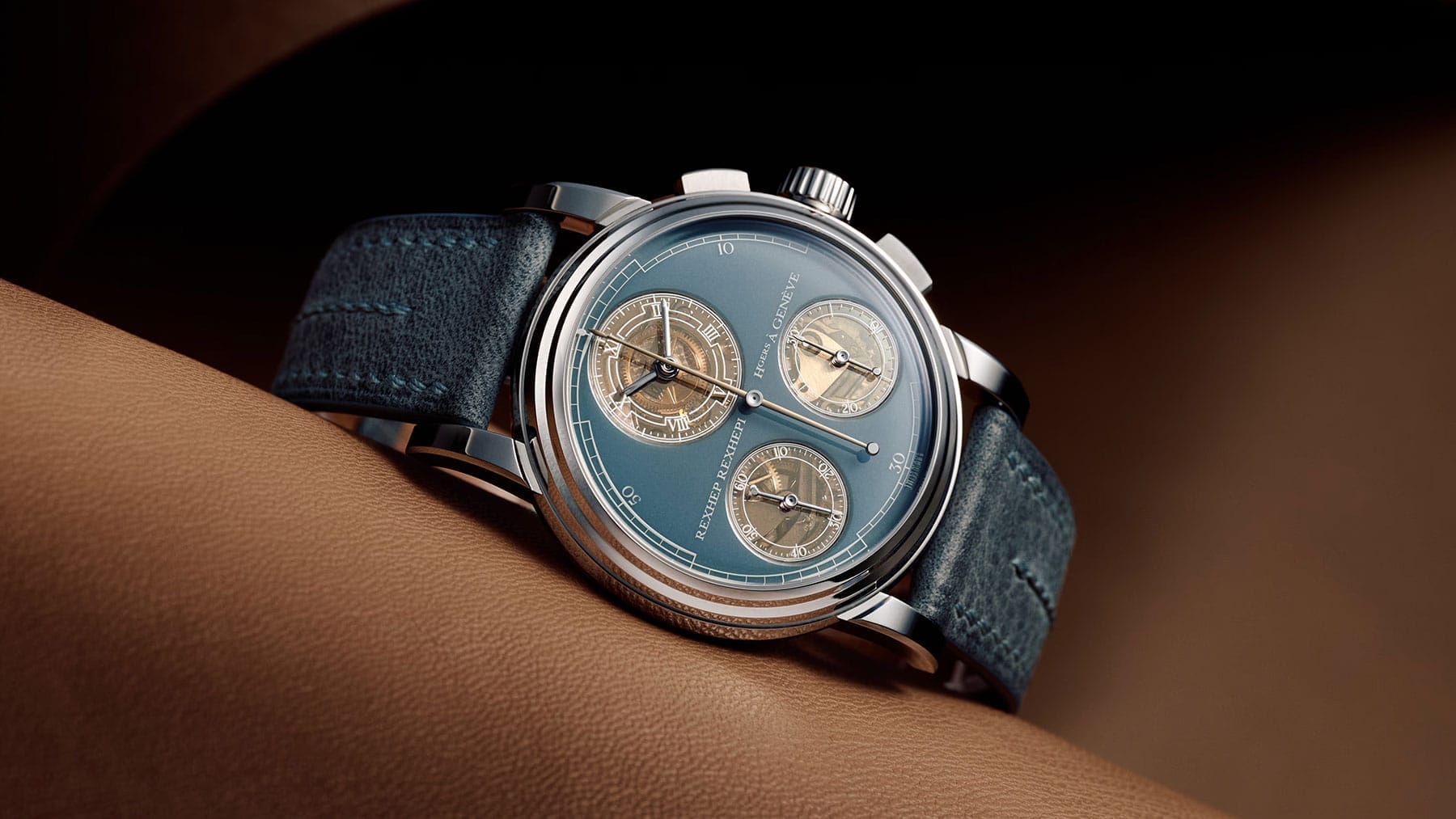
Now that I think about it, the same thing applies to Rexhep’s new chronograph. I mean, many might argue they will never tire of seeing this image, and that’s a fair quip; but when it launched on Sunday, I am pretty sure this was plastered across every corner of the digital world of watches, and yet, 99.9999% of people seeing it, will never be able to buy one - and that’s true even if they can afford one… ten times over 😂.
And really, if the whole watch-internet says the same thing at the same time it’s not really news, is it? To me, it’s more like announcing the weather. With low production indies, the people who the brands care about most (i.e. the ones who’d have bought the watch if they’d been offered it, and the ones who might buy the next one) mostly find out about it privately2, in the weeks/months before the embargo lifts. The public announcement is typically for everyone else, but for the most part, “everyone else”, is not buying.
Which, by the way, is why the deluge from Rolex and Patek doesn’t bother me as much. A brand that makes a million watches a year legitimately does need a broader announcement - some version of “everyone else” is in fact a potential buyer of at least some Rolex release, and so the press machine is doing real work there.
The argument I’m making here only really applies below a certain volume of production. If you’re making 30 pieces, or 100, or 300, and they’re already allocated or close to it, then the saturation approach is in fact, a category error3. It’s like using a Super Bowl ad to sell a watch that was already bought by 30 people you know by name.
Follow the incentives
I seem to quote Charlie Munger once a week now… but I don’t think I will never stop, because this quote is pure gold:
“Show me the incentive and I’ll show you the outcome”