

Wrist Laundromats
How and why luxury watches are money laundering tools, and what's coming next...

Richard Mille’s RM 27-05 is the lightest mechanical tourbillon watch ever made - or at least, that’s what they say on the RM website. It weighs 11.5 grams excluding the strap, and based on some very brief research, prices range from 1.13 to 6.49 million USD depending on dealer and location.1
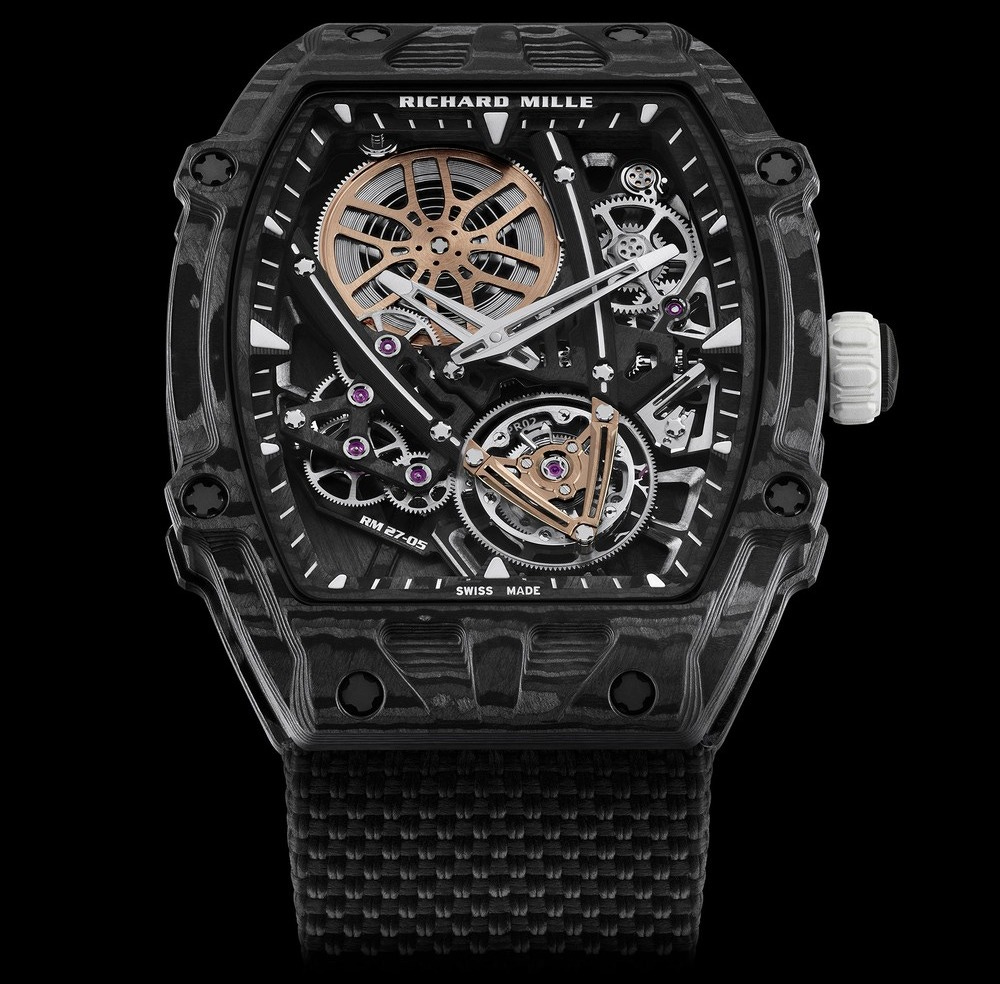
If you wanted to move a million dollars in $100 bills across a border, you’d be carrying roughly 10 kilograms of paper (or ~22lbs) in a briefcase; this would of course be hard to explain if you were stopped and questioned about it. Instead, if you converted that cash into an RM 27-05, you’d be able to carry the same value on your wrist, through airport security as a personal accessory, and in most countries nobody would bat an eyelid.
Quick disclaimer before we continue… this is not some kind of ‘moral panic’ essay. Buying and selling expensive watches legitimately is fine, and none of this changes the appeal of horology to people like you and me. But if you care about this hobby, the ‘shadow economy’ that has grown around it is worth understanding, mainly because it’s starting to drive regulation that will eventually affect all of us.
Estimated reading time: ~20 minutes
Why watches, specifically?
Money laundering needs three things… a way to place dirty money into the system, a way to move it around without leaving obvious traces, and a way to bring it out of the system as ‘clean cash’. Watches are almost perfectly suited for all three steps; obviously not by design, but by some weird confluence of their physical and commercial traits, they do happen to be super useful for this purpose.
Starting with the physics, as one does, it is obvious that the value-to-weight ratio of a high-end watch is very attractive. A Daytona carries anywhere between $30k and $17,752,500 in value despite looking like ordinary ‘male jewellery’ to the average person. A Tiffany Nautilus sold at auction for $5.35 million (auction premium raised this to $6,503,000) and weighs about 120 grams. There is probably little else on earth which combines this level of ‘value density’ with the ‘social normality’ of casually wearing it on your person through any border crossing on earth.2
Next, is the relative anonymity of watches; unlike cars, real estate, or even diamonds (which require certification), no jurisdiction on earth ‘mandates’ ownership registration for watches. There is no title deed, no VIN number, and no centralised database of who owns what. A watch can change hands with nothing more than a handshake.
Finally, there is the general structure of the watch market - the secondary market for pre-owned watches is estimated at somewhere between $17 billion and $27 billion annually3, and it is, for the most part, quite chaotic and fragmented. What constitutes this ‘market’ ranges from independent dealers, online platforms, pawn shops, private sellers, Instagram traders, middlemen, and so on… plus there is minimal regulation, pervasive cash transactions, and essentially no background checks required for most of it.
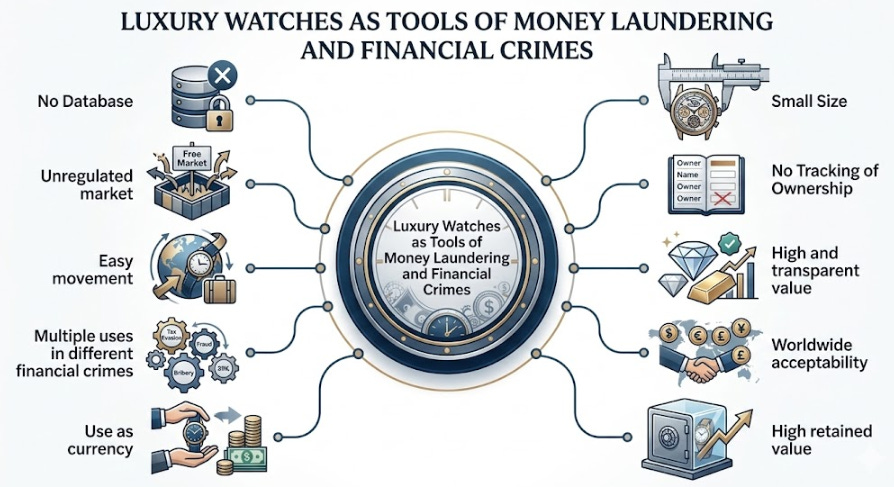
If you put all of that together, you get what one Australian police source described4 as a situation where “you can’t put $1 million in your bank account, but you can fly out of the country wearing it on your wrist and then sell it overseas.” Funny that.
Criminal cases
Here we will cover a few documented cases to anchor the theory a bit better.
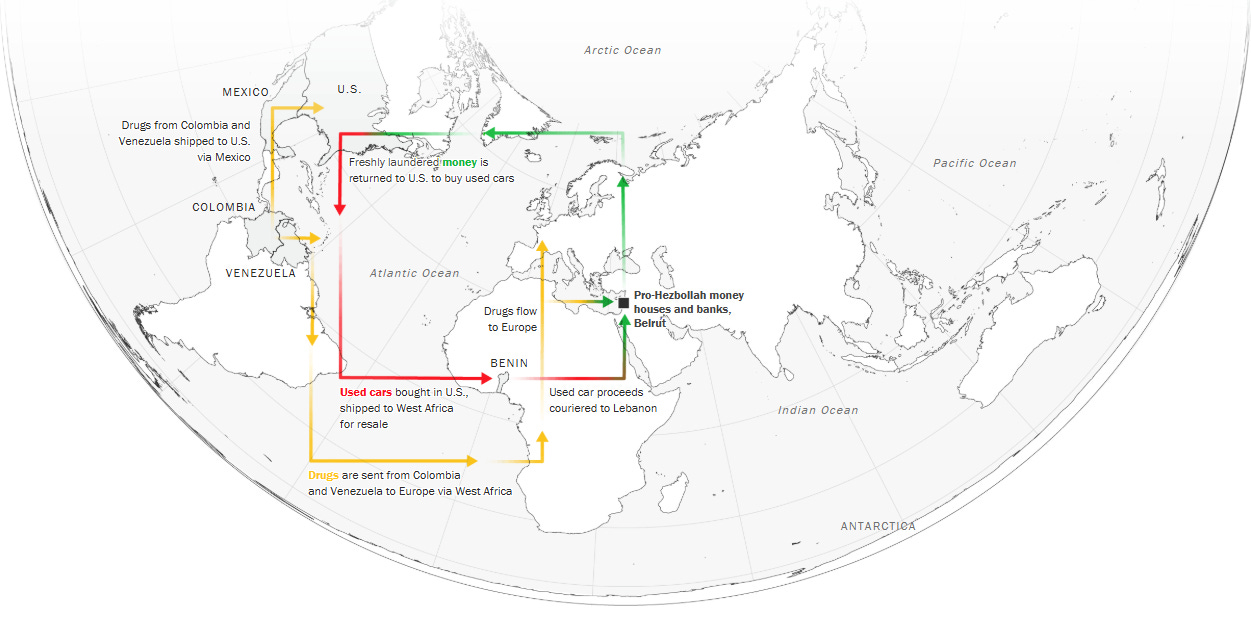
We’ll start with Project Cassandra (this is a huge and fascinating expose, do read it later); long story short, it is a deep-dive into a DEA investigation that ran from 2008, involving 30 US and foreign agencies. In terms of watches, investigators had documented that Hezbollah’s financial management arm had purchased €14 million in luxury watches from a single store in Germany.
The FBI called him “one of the most prolific money launderers in the world” and he had many of the laundry receipts on his wrist.
The coordinator of one specific operation was a Lebanese-Colombian national who went by the name ‘El Taliban’ (shocker); he managed cocaine shipments from South American cartels, used the proceeds to buy watches, and had couriers transport them to Lebanon where they were sold for cash through ‘hawala’ networks which would totally bypass any international financial monitoring. The network ran across Spain, the Netherlands, Romania, and Belgium, and drug money became watches, which eventually became clean cash in Lebanon. Neat!