
What you pay for when you buy a watch
Price is a bet on a story you can't question; Why the Laureato's steak is invisible and Naoya Hida's sizzle is not; What's really holding up F.P. Journe?

Many watch writers have published something on the value question in the past few weeks. Chris Hall opened his Laureato review by comparing himself to a jaded television detective dragged back for one last case, because conversations about price and value have become ‘inescapable.’ Ms. Gomelsky writing for the NYT asked last week, “Are Watch Prices Outpacing Buyers’ Views of Their Value?” Jack Forster spent a couple of thousand words on Naoya Hida and arrived at a question that seems to be on everyone’s mind right now.
Is it worth the money?
I didn’t even finish this essay before Tony Traina also threw his hat into the ring on the same subject… When a Watch Becomes a Trophy.
A £10 Casio keeps better time than anything with a tourbillon in it. If ‘worth it’ meant ‘good at telling the time’, the whole industry would have shut up shop in the 1970s and we would all be wearing F-91Ws or Casioaks. So I think it’s fair to say that all this agonising has little to do with ‘value’ in the functional sense. We are measuring something else, and we really suck at saying what that is.
So this essay is that… I’ll have a go at saying what.
What?1
Estimated reading time: ~ 18 minutes
What your money buys
The price of a fine watch, when you boil it down, is mostly about belief. When you hand over large sums of cash for a steel watch, you are betting that a story about that watch (the craft, rarity, name, upside, whatever!) will carry on being told and carry on being believed, by you and by the people whose opinion is relevant to you. The price barely measures the watch at all. It is a measurement of belief, and of how well that belief holds up.
I read finance at university, and the world of finance has a word for a thing you put up to support claims you can’t fully back with cash - they call it collateral. Once you see a watch this way, the price stops being a number plucked from the ether; it’s simply a pile of collateral you’ve stacked up to justify the watch.
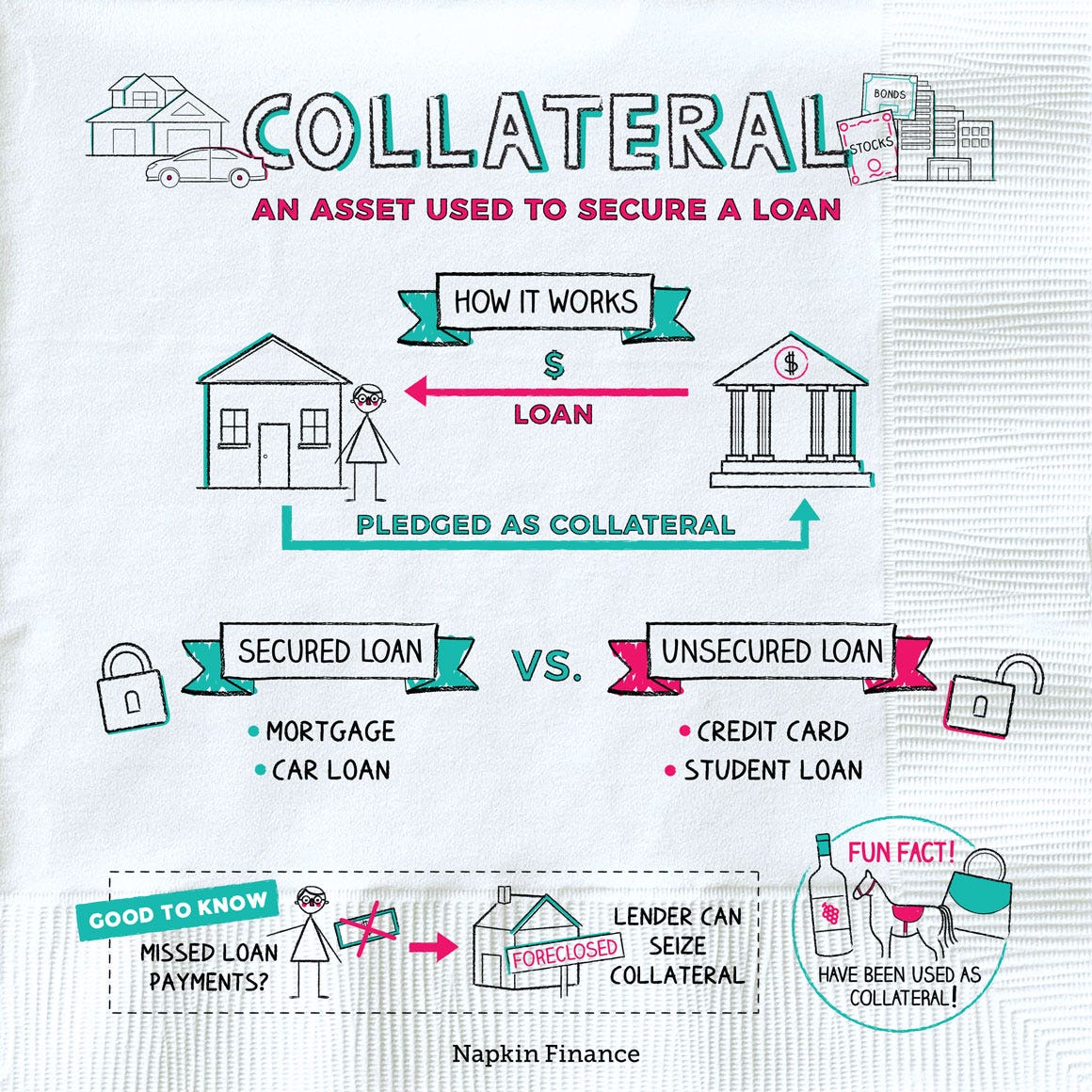
Some of that collateral is indeed real; borrowing Jack Forster’s analogy, we’ll call it steak2. The movement is indeed thinner and better, and perhaps the finishing really did take a human eight days to, umm, finish. And yes, some of the collateral is pure signalling - we’ll call it sizzle. That sizzle is where the watch feels special, and the dial looks expensive, and the waitlist implies that smarter people than you already decided it was a good watch to buy for this price.
So that’s the first question to ask of any watch... How much of the price is steak, and how much is sizzle?
Not so long ago, I used to frame this perspective as value vs scarcity3 - a watch holds a premium when it gives you value you can feel and scarcity tight enough that you can’t find the same thing cheaper elsewhere. I still think that’s mostly correct - and we’ve already covered why scarcity works so well in How Scarcity Creates Desire (loss aversion, reactance, the Veblen logic that a costly signal is believable because it’s hard to fake). What’s changed now is that I’ve come round to seeing scarcity as just one kind of collateral among several.
The point I want to make today is how all the action has moved to a different kind of collateral altogether; it has nearly nothing to do with watches, and a lot to do with whether you can be made to believe.
You can’t taste either one
The elephant in this room is that you can’t inspect the steak. For years, what you might call ‘trusted signals of value’ were signs of work from human hands - finishing, sharp inner angles… some sort of evidence that a person suffered over the object. Turns out, that’s a signal most people can’t receive anymore. We covered this thread in The Hand-Finishing Fairy Tale; CNC machines now cut inner-angle radii too small for the naked eye, and EDM goes sharper still. So now, you aren’t evaluating the hand-finishing anymore, and instead, you’re believing a story about hand-finishing. Plus, the system seems to reward brands for telling that story as suggestively as possible but documenting as little of it as they can get away with.4
I’d encourage you to just stop and think about this for more than a moment, because it’s the foundation of the rest of this essay: you can’t evaluate the steak anymore. And it goes without saying that you can’t evaluate the sizzle, because the sizzle was always just a story. This means both halves which make up the price - what’s real, and the story - now reach you as stories you’ve chosen to believe. The steak is basically just a story you’re more confident in.
It’s belief most of the way down.5
Belief most of the way down
Guess what? Finance has a word for this too, and it just might be the most useful word I’ve found for what’s happening in the watch market right now. Rehypothecation6.
Relax, I’ll explain.
When you post collateral to a bank, you’d assume the bank just holds it - that they keep it safe, ready to seize only if your story falls apart. In practice the bank actually re-uses your posted collateral to underpin its own borrowing, and that gets pledged again, and again, down a chain, so that eventually the same single asset ends up backing five different claims at once. As long as everyone believes, this works just fine, and it’s rather efficient. But then a crunch comes, and everyone turns up to grab that one asset, and they find there was never as much at the bottom as there were claims stacked on top.

That is exactly the watch market today.
The steak - hand-work, finishing, whatever you’ve decided is valuable - gets posted as collateral for the price. But the steak is itself only believed, and never audited as such, so the same unverifiable story gets re-pledged to back the brand’s craft claims, and your confidence at resale, and the next buyer’s confidence after that. Everyone in the chain treats the same story as if it were a legit ‘real’ asset sitting in a vault. The trouble with a chain of collateral that has nothing solid at the bottom is that it works beautifully right up until the moment it doesn’t.
All of which raises the obvious question for anyone holding a watch, or thinking about buying one. When belief does get called, what survives, and who gets left holding the bag?
The answer raises a second question we should ask of any watch. And for illustrative purposes, we’ll use three examples - Naoya Hida, Laureato, and F.P. Journe.
Naoya Hida sells you sizzle, loud and clear
Jack Forster’s Naoya Hida essay is one of the most enjoyable case studies I have read in a long time; I’ll steal one short quote:
“What Naoya Hida gives you is desire, not reasons.”
Forster spells out how modest the actual watchmaking is across Naoya Hida’s standard watches. The base movement is a stripped-back Valjoux 7750 derivative - ‘workmanlike’ and reliable, but frankly, a bit basic. The dials are pantograph-traced and then hand-engraved and filled with cashew lacquer (fascinating thing, btw) rather than the urushi everyone assumes. There is, by Forster’s own reckoning, very little hand-work in a watch which retails for just over $20k.
And yet, Jack explains some of these are really gorgeous -“the rich, glossy depth of the numerals” - these are signals so good, Forster argues, that they skip past conscious analysis altogether. You go ‘wow’, and once you’ve gone ‘wow’ you pretty much stop caring about the rest. The ridiculous pusher placement on the QP, the mediocre movement, and the sparse finishing - all of it steps beside the point, because the ‘wow’ is what you paid for.
The first question we asked was how much of the price was real. The second question is, can you read it? What I mean by that is, with no expertise at all, do you actually understand what you're being sold? Let’s call this criteria ‘legibility’. The Naoya Hida is almost pure sizzle, but it’s legible sizzle as Forster eloquently laid out in his own way - the bottom line is, you can read it at a glance. Naoya Hida is essentially betting that the sizzle is so good that you will fall in love before FaceID has finished scanning your face to pay for it.
It should come as no surprsie that we have already covered the underlying psychology; I went into Berridge and Robinson’s work on wanting versus liking, where dopamine-driven wanting roars ahead and the liking system adapts behind it. This is a really important distinction to have clear in your mind: wanting is the ‘spike’; it is fragile and forward-leaning. Liking is the more subtle, durable pleasure in the object itself… which is what you’d have left once the spike fades away. Naoya Hida is selling to the wanting, and most people with finite budgets prefer to buy for the liking.
I should add… there is nothing dishonest in any of this. It is all closer to theatre than to being an outright con. The trouble, as Forster flags with his restaurant review example, is that over a long enough horizon there has to be some steak behind the sizzle - or at least there does when the hype cools and people start doing basic maths again.
Laureato is the opposite
Now let’s turn to Chris Hall’s Laureato review… At first glance it kinda looks like the exact inverse of the Naoya Hida. On paper, the new 39mm Laureato seems to post tangible collateral (meaning it’s not pure sizzle). The bevelling on the case and bracelet is thicker, the new Calibre replaces a movement architecture from 1998, and even Hall reckons it’s better-made than the 38mm it replaces. So sure, these are reasons, and GP has repriced the watch accordingly… from around £12,300 to £18,200, which is a jump of roughly 50% for what is, give or take a millimetre, the same proposition.
Read Hall’s review to the end, though, and the steak turns out to be a thin cut that’s poorly plated. The main ‘improvement’ is a mere nine-hour bump in power reserve… and then, there is no accuracy claim, no magnetic-resistance claim, and the baseplate proudly says “silicium escapement” which on inspection is a bit of jazz hands. Hall keeps reaching for some kind of logic behind the price and coming up empty. He ends up liking the watch, but “returning it without a pang.” Shocker.
So let’s ask our key questions about the two watches. Naoya Hida is mostly sizzle, but at least it has sizzle you can read instantly. The Laureato comes off worse on both counts - the steak is thin, and there’s nothing readable to cover for it. At least the Naoya Hida makes you go ‘wow’. As Hall mentions, “The Nautilus has its ears, the Royal Oak its bolt heads, the Overseas its toothy bezel… the Laureato needs it’s own ‘thing’, its little idiosyncrasy”. Indeed, it has no instant emotional ‘tell’ that says this object is special and worth the premium - and so, because the Laureato gives the market nothing to read, the only thing left to read is the price on the sticker.
What’s really holding up Journe?
Forster said it is the watch which commands a premium, not the brand. I mean, sure… the Royal Oak does well and the Code 11.59, from the same brand, does not. This is a good example of how legibility attaches to specific objects (and not to whole maisons or brands). Fine. But if that were true, you might say, then Journe would be a contradiction, right? Journe is a brand so insanely strong that even its ‘lesser’ references get hoovered up into the desirability vortex of the good models. The brand’s halo seems to boost the whole catalogue.
At first I thought Journe disproved the whole legibility idea… but I then realised it’s just the most extreme version of the idea I’ve got.
Consider what you’re buying with a so-called lesser Journe. Frankly, a lesser Journe is still wildly legible. Hype and secondary market value aside, you read ‘serious watchmaking’ and ‘unmistakably Journe’ off every model in a fraction of a second, with no expertise required. So for me, Journe was never selling illegible watches on hot air. Journe happens to be one rare brand that managed to stamp that legibility onto every reference. The halo is really just a lot of legible objects next to each other, and people now call it a brand effect.
Ultimately, this perspective rescues Forster’s take indirectly; instead of seeing it as ‘the watch, not the brand’ … it’s about legibility, wherever it happens to be. Usually you find this in one watch, and Journe happens to be the freak case where it lives in all the watches.
I’m sure eyes will be rolling here… “bullsh1t!” I hear you saying… “this has nothing to do with this legibility nonsense; people are buying all Journe models because of auction results and resale value.”
That line of reasoning is not the rebuttal you might think it is. It is actually my whole point! ‘Auction results and resale value’ is just the plain-English label for… you guessed it: the crowd’s belief.
Think about what your house is worth. Some of that number is the actual building - bricks, rooms, doors, carpets, and a roof that keeps the rain out. You own that outright and it barely moves. But a fat slice of the price is really just leaning on the place that sold three doors down last month for a record price. You didn’t lift a finger for that slice; it landed in your lap because a stranger overpaid nearby. On paper you got richer overnight - but your house is the same pile of bricks. And that slice you got through your new neighbour behaves like real money - you can borrow against it, you can brag about it - right up until the market turns, the sales in the area decline, and that slice disappears as fast as it arrived. The bricks never changed… but what did change, was the belief.
And Journe works the same way.