


Our industry typically markets ‘exploration’ the way car adverts sell empty mountain roads… a man in technical outerwear squints at a glacier, a diver hangs aimlessly in blue water, and then the word ‘heritage’ appears in the bubbles or whatever. But in the end, the watch is bought by someone whose most demanding expedition this year will be a connecting flight through Schipol.
I include myself in this meme by the way; most of us are buying the costume, and I’ve written enough about self-deception to know the costume works well because we don’t tend to admit it’s a costume. Which is why it is rather disorienting to meet someone for whom the marketing copy feels like his personal diary.
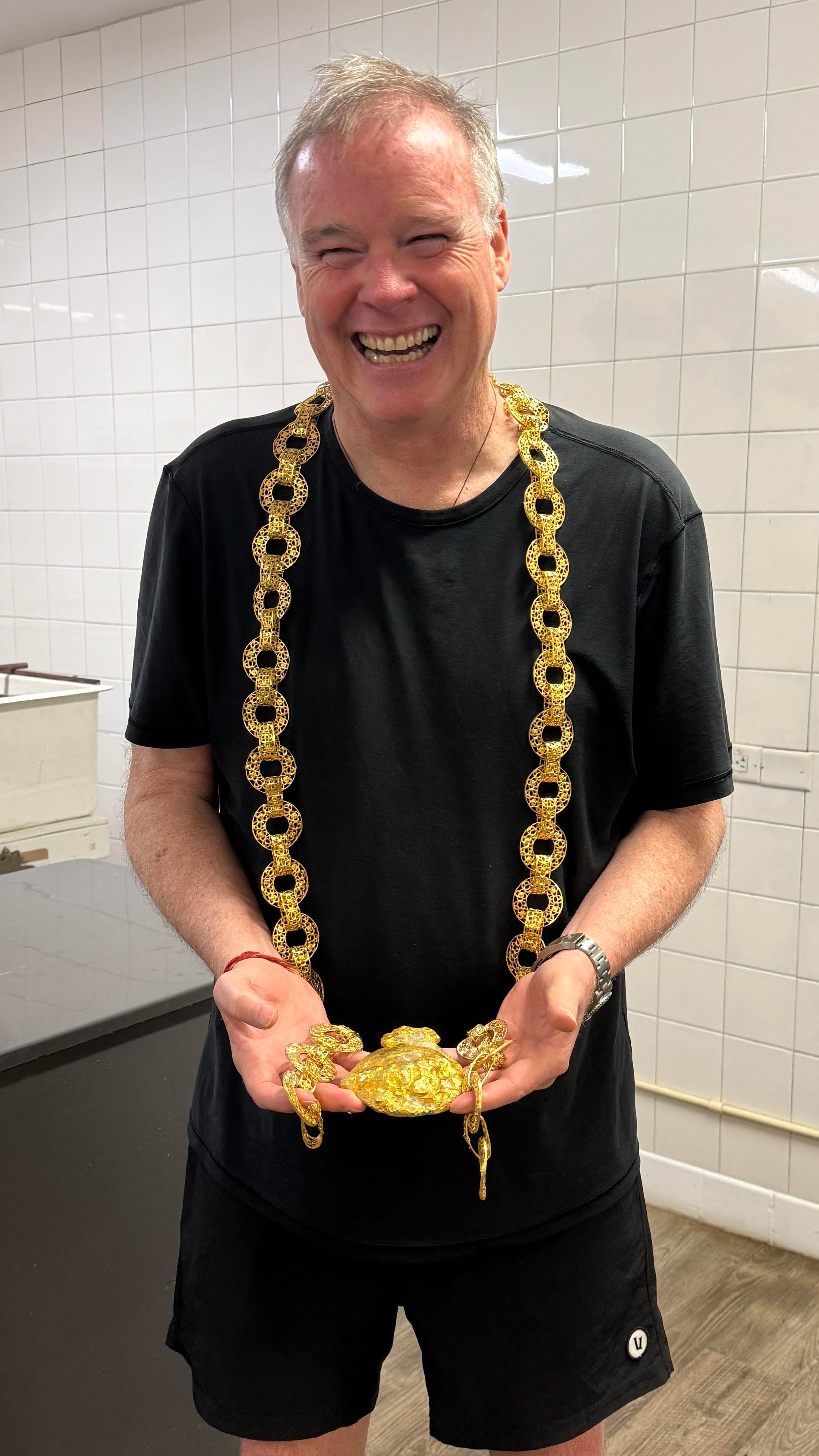
I met David Concannon the way you meet anyone these days, which is to say, in the Substack comment section 😂. We stayed in touch, and then I started following his photography (which is superb!). I then listened to some podcasts featuring him, and later his wife, and somewhere along the way a bigger picture about the man and his life came into focus (in escalating stages of disbelief, I might add).
First I learned he was a lawyer… no big deal. Then I learned he was the sort of lawyer who has lost only one trial, his first, in 1995. Then I learned he’d dived to the Titanic. Then, that he’d done it five times, and led the last expedition to visit the wreck with the Mir submersibles. I then learned that he led the expeditions that found and recovered the Apollo F-1 engines from the bottom of the Atlantic - I mean the actual engines that pushed men toward the Moon, on a project funded by Jeff Bezos. After that I discovered that he joined The Explorers Club in 1996 as one of the youngest members in the world, has held every office except President, and is currently its General Counsel (for the second time).
At some point in this sequence of learning about the man I took a break from thinking ‘wow, what an interesting guy’ and thought, ‘why the heck have I not interviewed him for SDC!?’
So I did.
What follows below is our exchange, lightly edited and grouped by theme. I’ve kept my interruptions to a minimum because, frankly, you will not want to hear from me on this occasion. But one warning before we start… this is not really an interview about watches per se, though watches do run all the way through the chat. I’d say this interview is mostly about what objects are for, and I’d argue David has better data on that question than almost anyone else I know in this hobby.
We will begin on the side of a mountain.
Estimated reading time: ~ 27 mins
Going through it
SDC: You came down from Kilimanjaro in 1989 half-wrecked and started planning the next trip almost straight away. Are you nuts? Has it ever frightened you, or is the fear part of the appeal?
DC: Actually, I was fully wrecked. I had a collapsed lung (again), pulmonary edema (on its way to pneumonia), cerebral edema (the most dangerous condition), retinal hemorrhages (which cleared soon enough) but, most importantly, a speech impediment, ataxia and significant memory loss. The doctors told me I had suffered the equivalent of a stroke and traumatic brain injury and, when I die and an autopsy is performed, my brain will show evidence of dead tissue and “mini-strokes” all over. This was a hell of a way to go into my 24th birthday.
The truth is, at that time, this was just another shitty card that I had been dealt in the game of life. It is hard to overstate the challenges I faced when growing up – no father, alcoholic mother, religious and economic intolerance, I started working at the age of 11, the most influential person in my life died when I was 16, no family or community to lean on, etc., etc. Despite this, I was the only person in my family to go to college, I paid for it myself, then I was in law school and, at the ripe old age of 23, I was faced with another significant challenge. Nobody was going to help me. The only way to get around the next challenge was to go through it. Fear was never part of the appeal. Resignation was part of my daily life. This was just another challenge I had to face.
Also, fear has never really been an issue for me. Fear is paralyzing. It keeps you from moving forward. I learned at an early age that fear does not serve me. The only things I am afraid of are something bad happening to the people I love, because I cannot control this. I am not afraid of the things that can happen to me. I believe I have the ability to just keep moving.
SDC: You worked the shop floor at Eastern Mountain Sports to pay for law school, kitting other people out for their adventures. Did you know then that you’d end up living the version most people were only buying gear to dream about?
DC: I was already doing it. I started venturing into the wilderness at the age of 11, when I attended summer camp in New Hampshire. I went there until I was 14, then I toured Europe in a double-decker bus (London to Istanbul and back) when I was 15. EMS was just a continuation of the path I was on, plus the opportunity to buy gear at half price!
SDC: You’ve said you’ve lost only one trial, your first, and never another since. Does the courtroom scratch the same itch as the expeditions, or are they two completely different parts of you?
DC: It used to, but it does not anymore. The truth is, I take no satisfaction from winning a trial. That is what I am paid to do. The same goes for leading a major expedition. There is something I talk about with my peers that I call “The realization at the foot of the bed.” It’s the realization that comes on the last morning of an expedition that you have led, when the five or ten or 100 people you have led are dispersing to the winds and you have accomplished something really significant – a first in human history – and now it’s over. You are about to go home to your family and loved ones, maybe to the crush of the media, and now you are about to be on the other side. It’s over. You have achieved what you set out to achieve. When you are the leader, that place at the foot of the bed on the last day of an expedition, is a very lonely place to be.
The only people who understand what it feels like to be there and experience this loneliness are the people who have been there before in the same position. I have talked about this with Victor Vescovo, Don Walsh, Mensun Bound, Stockton Rush and others. We have all felt it, and we have privately confided in each other that the feeling is real. And, the reality is, you cannot reveal this to anyone but a peer, because the world does not accept this feeling of loneliness and resignation as an acceptable part of the “hero’s journey.”
But, yes. The feeling I get when I walk out of the courtroom after the jury delivers its verdict is very, very similar.
Stuff that works
David’s gear philosophy is five words long: ‘I like stuff that works.’ This raised an obvious question for me because the things people like us obsess over are, by any reasonable assessment, technically obsolete.
SDC: Your whole philosophy is ‘I like stuff that works.’ Where does a mechanical watch fit in that, given it’s arguably the least functional thing you own? What’s it doing for you that your dive computer can’t?
DC: Not failing. A mechanical watch never shows you a blank screen. It does not fail to connect with another electronic device. It does not require charging. It allows you to navigate off the sun, orient yourself in the darkness, and help guide you to your destination, IN ADDITION TO telling you the time. It allows you to be untethered from the nanny devices we frequently rely upon. Have you ever lost wifi, even for an hour? Has this made you absolutely fall to pieces? A mechanical watch will never do this to you. It will not leave you in a lurch. It will not put you into harm’s way. On the contrary, it just may lead you out of harm’s way. It has for me, many times.
SDC: When you’re at the ocean floor looking at the Titanic, or coming up from a deep dive, is the watch on your wrist a tool, a talisman, or just along for the ride? Be honest, does it earn its place down there?
DC: It’s always a tool. When I am underwater, the watch guides me. It keeps me safe, keeps me out of trouble, and helps me accomplish what I am there to do. It only becomes a talisman or a piece of jewelry at the awards dinners long after the expeditions are over.
SDC: The titanium Yacht-Master. We both love this thing, and SDC readers will remember Mr Rehaut’s review of the 226627 as well as my own review. You waited about a year for yours. What made that the watch worth the wait for someone who’s handled the extreme end of dive kit?
DC: It is EXTREMELY functional. It’s light, easy to read, glows like a mother*cker at night, and it does not scream “ROLEX!!!!” It is rapidly eclipsing my GMT-Master II as my most favorite watch1.
SDC: You’ve got a deep love of Rolex and Omega specifically. Why those two? What did each of them get right that pulled you in and kept you?
DC: History, history, history. I love Rolex, but I don’t love Omega. I appreciate the simplicity and history of the VINTAGE Speedmaster. Otherwise, the Omega brand does nothing for me. As for Rolex, I love the history and universal functionality. I have worn a Rolex for more than 30 years. I cannot get used to looking at another watch on my wrist, unless it’s a vintage Speedmaster, and then only for about a day.
I’ll confess I’d written my question on the assumption David loved both brands, and he corrected me point blank. This happened a few times in our exchange, and it tells you something important... the brand loyalty on display here was built by 30 years of the product doing its job in places where the product failing might have been a case of life and death - it has nothing to do with adverts or status symbols.
Fathers and sons
SDC: Of all the watches with stories attached, which one carries the most for you, and what happened while you were wearing it?
DC: My original Rolex Submariner, for the reasons I stated in my Substack piece “A boy and his father’s watch.” This was my first “real watch,” purchased with an early paycheck from my first “real job.” I noted the date when I learned our first child would be a boy, I timed my wife’s contractions when she was giving birth to our son and daughter, I wore it on numerous dives, including my first dives to the Titanic (aka, when I first “made it” as an explorer), and I passed it on to my son when he was old enough to appreciate it.
SDC: You’ve written about linking fathers’ watches to Arctic expeditions and the way both connect generations. Can you tell us the watch at the heart of that, and why a watch, rather than anything else, became the carrier for that connection?
DC: Rolex Explorer II. This is the quintessential polar exploration watch. The hardest thing to get used to in the polar regions is the light never changing throughout the day. In the Arctic, the sun never really goes up or down. It just goes around the sky at the same height above the horizon. That height dips incrementally lower every day as the season progresses. Not only can you not tell the time of day, but you cannot tell the direction you are headed without referring to the sun’s position in comparison to the watch hands. Hours turn into days as your circadian rhythm gets thrown away. It becomes dangerously disorienting.
The watch represents the passage of time, both daily and generationally. The photo [see below] shows Alexander Hillary’s Explorer II, my Explorer II and Sir Edmund Hillary’s Explorer II on the chart showing the way to the North Pole.
Three generations, all having made the journey. Ed’s Explorer II went to both poles, but on the wrist of his son, then again on the wrist of his grandson at the North Pole.
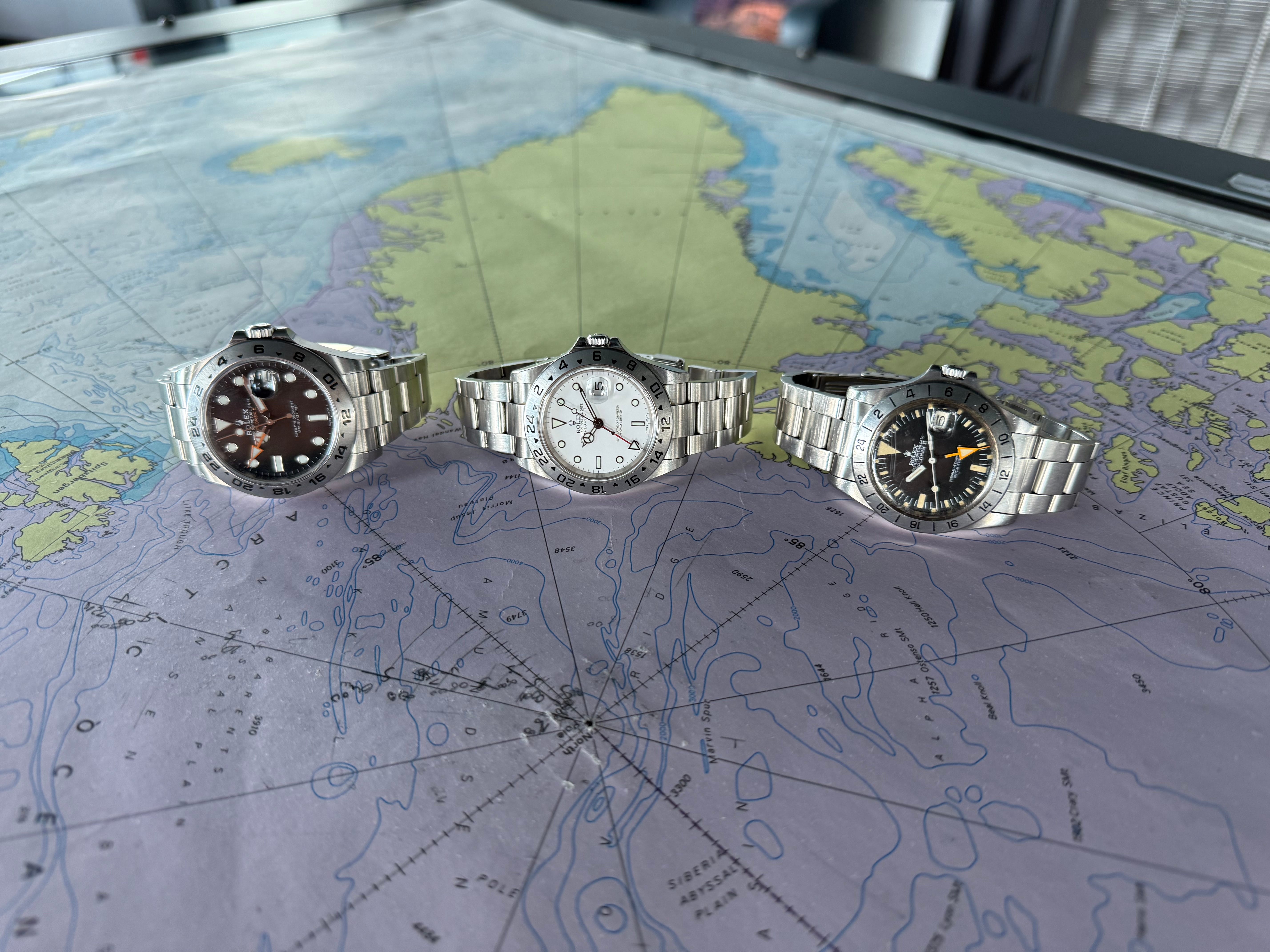
Just marvel at this photograph for a moment... three generations of the most famous name in exploration. I have nothing clever to add. Wild!
SDC: You’ve lived a life most people couldn’t, in places most people never reach. When you think about what gets passed down, where does a watch sit against the stories, the photographs, the rest of it?
DC: Photos age much more poorly than a watch, especially in the age of digital photography. Prints fade or wind up in a shoe box. Digital images shot 20 years ago are too small to tell a story today. Plus, a photo captures only a brief moment in time. A watch can tell a much longer story across a greater period of time, especially if it shows signs of wear. Vintage watches immediately tell a story because you know they are old the minute you look at them. You start asking questions: Who owned this? Where did they buy it? What achievement did it represent? What stories can it tell? Most photos do not do this, but all watches do.
SDC: Do you think a watch means something different to a man who’s really used watches as tools, versus a collector who just admires them, maybe in a case? Or is that a distinction we make too much of?
DC: Yes. There is a distinct difference between the trophy you earn and the trophy somebody else earned that you simply acquired. Case in point: I was extremely proud when I bought Apollo 12 astronaut Dick Gordon’s gold Rolex Day-Date. This is the watch he cherished for his achievement of making it to the Moon, and he was wearing it when he thanked me for finding and recovering “his engines” that got him there. (See my Substack story on “The Importance of Being Second.”)
But, when I wore it to The Explorers Club Annual Dinner – the Academy Awards of Exploration – I suddenly felt like a phony. I was wearing the symbol of someone else’s achievement on my wrist, when I actually have a bucketful of these trophies to celebrate my own achievements. I felt extremely uncomfortable. This surprised me, and I have never done it again.
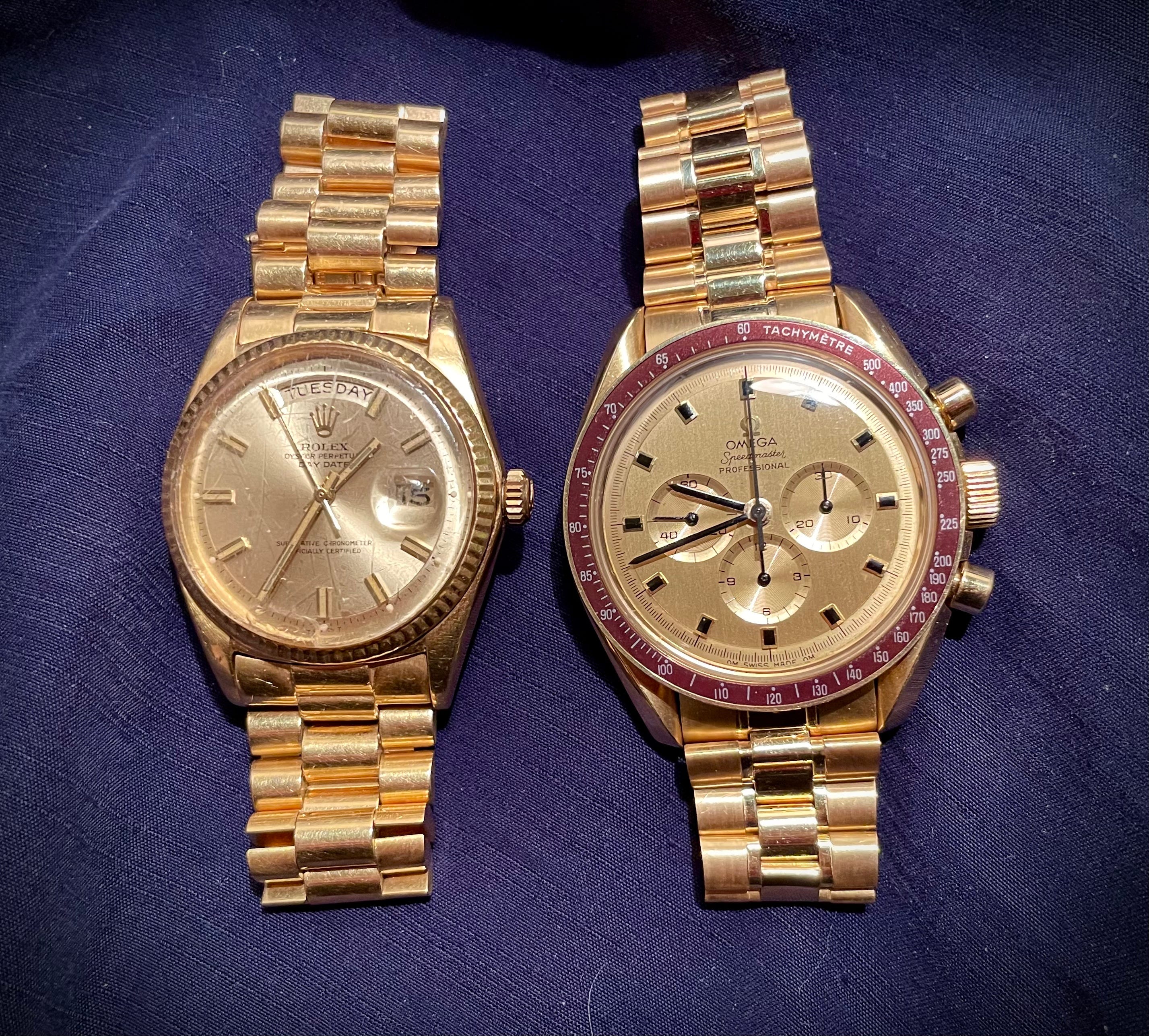
This answer is fascinating. Think about what the ‘provenance’ driven watch market sells nowadays... Paul Newman’s Daytona reached $17.8 million because people collectively agree that an object absorbs something from the person who earned it (remember ‘auras’?). David is saying the absorption is legit, and that is the problem. He put on a Moonwalker’s watch and the watch knew he wasn’t a Moonwalker. Most of us never feel this sort of thing because we have no trophies of our own to compare them with. I guess the ‘phony alarm’ only rings if you’ve got something legit in the watch box next to it? Like I said, fascinating!
The Club
SDC: You were one of the youngest people ever to join The Explorers Club, and you’ve served in its leadership for decades. For readers who only know the Club from photographs of a townhouse full of relics, what is it actually like inside, and what does it still do?
DC: Some minor corrections: I was one of the youngest members in the world when I joined in 1996. I have held every office but President, including the Vice President for Flag & Honors (which protects the integrity of the Club and the achievements of its members). I am now the General Counsel, for the second time.
The Club’s building was built in 1912 for a very wealthy family at 70th & Park Avenue in NYC. It’s old. Its interior was assembled from disassembled rooms in European castles at the turn of the last century. These are the actual relics of a bygone era. But they are important relics: Matthew Henson’s mittens, Robert Peary’s sledge, Teddy Roosevelt’s lantern slides from his Africa safaris, the table upon which the Panama Canal Treaty was signed, a century of Explorers Club Flags that have been to every point on Earth and to the Moon... You are surrounded by history in a private museum to 125 years of exploration. There are treasures on every shelf and alcove. And, now it’s vibrant. The under 30 age group is the fastest growing demographic, and nearly half of the new members are women. The place is turning over to an exciting new generation – my old generation – right before my eyes.
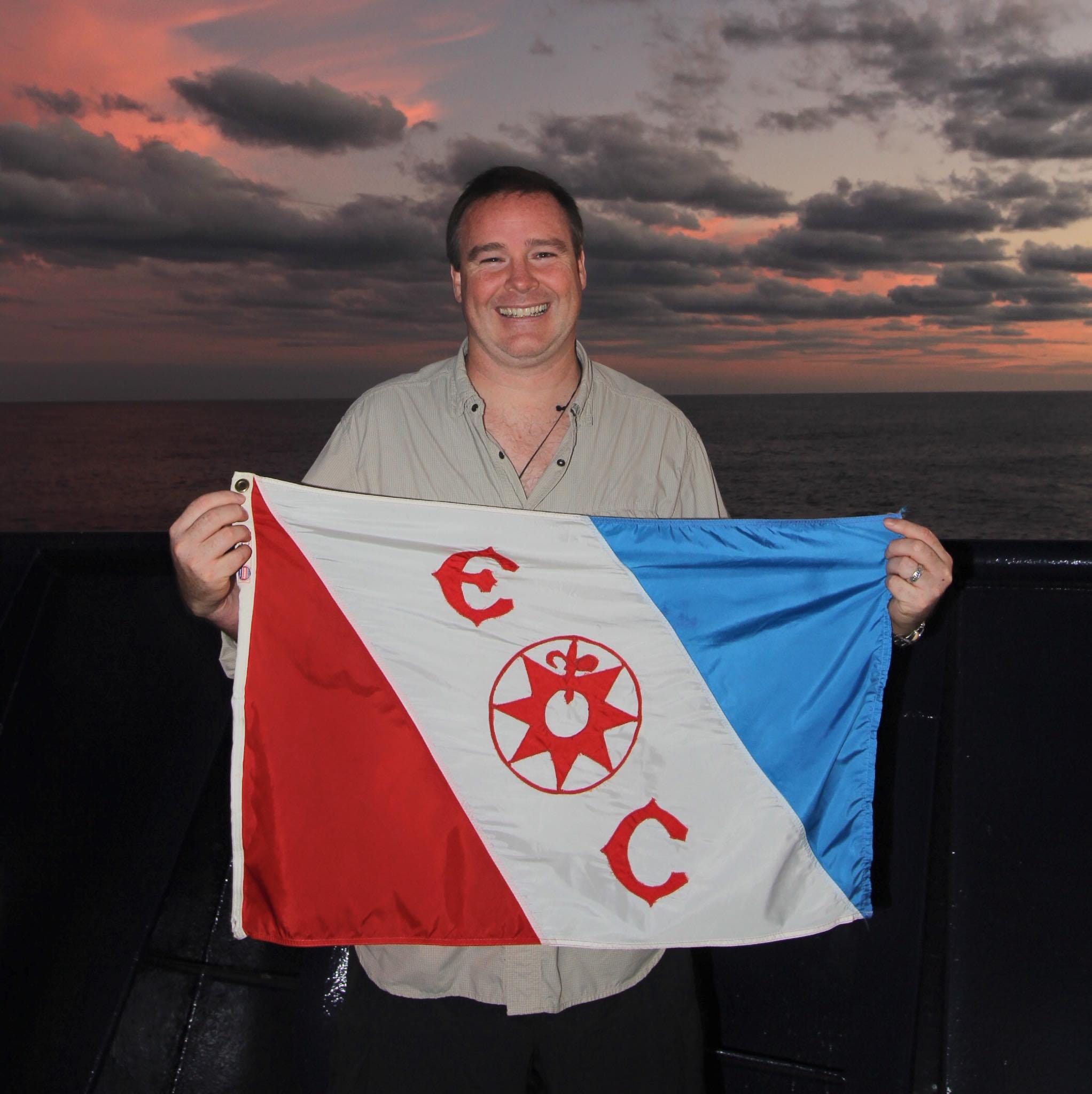
SDC: The Flags carry expedition history. What does it mean to carry one, and is there a flag story of yours you’d want us to know?
DC: The Explorers Club started a tradition of carrying Flags on very special expeditions back in the 1920s. Each Flag is numbered, and each has its own history of a century of expeditions. Only 10% of the members have been awarded the honor of carrying the Flag. The honor goes to an individual, not a group, so the person who receives the award gets the credit for the merit of the expedition – as well as the responsibility for ensuring that the Club’s ethical standards are achieved and kept. Membership of the committee that decides who can carry the Flag used to be limited to only former Presidents and members of the Board of Directors. I served on the committee for 12 years and I led it for three years. I have carried the Flag many, many times, including on multiple expeditions to the Titanic, to discover the world’s deepest wooden shipwreck, and to find and recover the Apollo rockets.
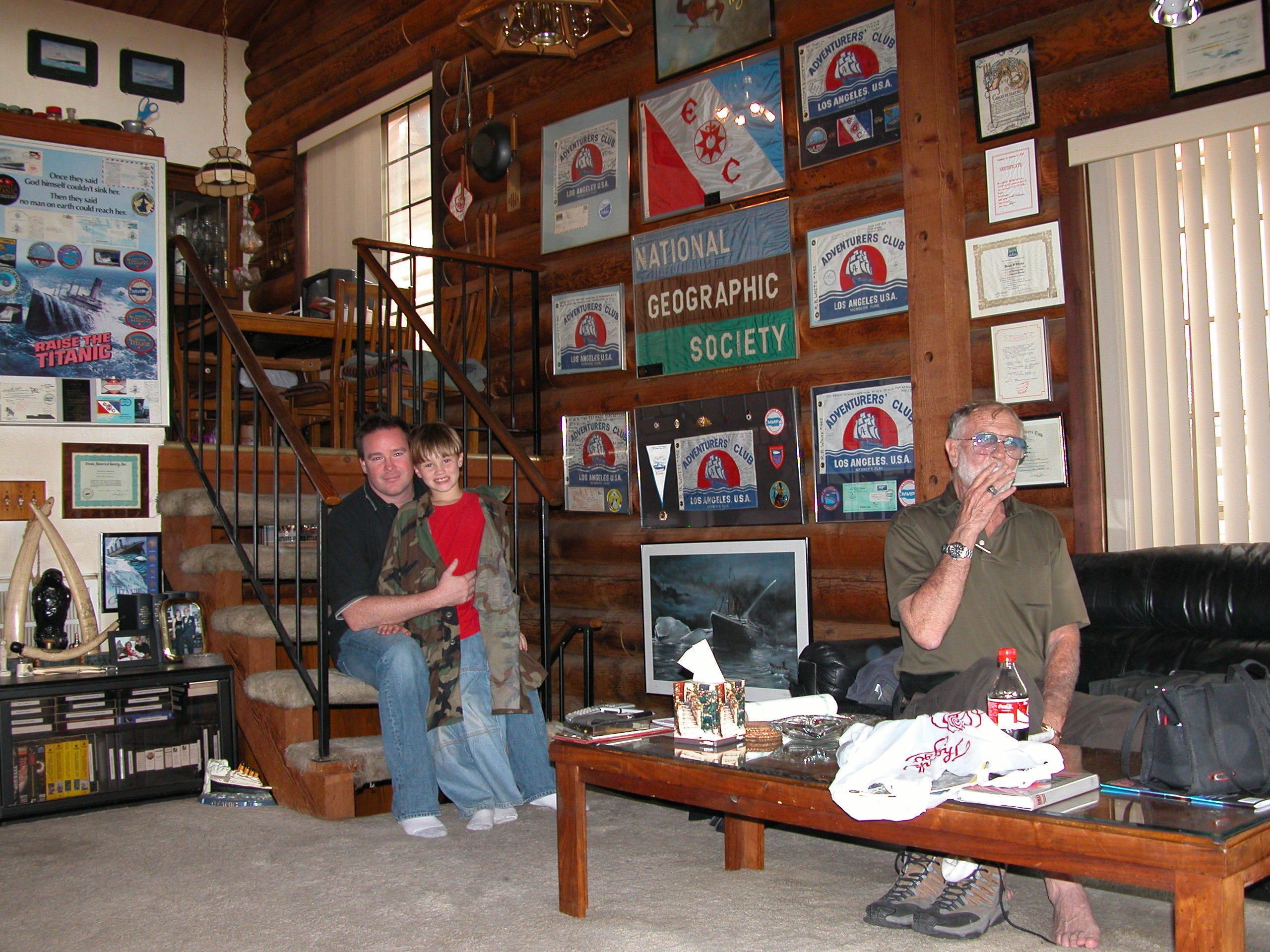
My favorite story is of the “bootleg” Flag, which the Club prefers to call the “unnumbered” Flag. In 1985, when the expedition to search for the Titanic was being organized in deep secrecy, a member of the Club named Ralph White wanted The Explorers Club to be represented on the expedition. The problem was, he could not apply for permission to carry the Flag because the mission was a secret. So, White found the original flag maker and commissioned an almost exact replica and he brought this on the 1985 expedition. To distinguish this “bootleg” Flag from the official Flag, White made sure that an extra piece of fabric was overlapping on the fleur de lis so it was left closed. On the day the Titanic was discovered, White assembled the expedition team on the back of the boat and took a group photo with the Flag to mark their achievement, then he proudly sent the photo to The Explorers Club to share the achievement.
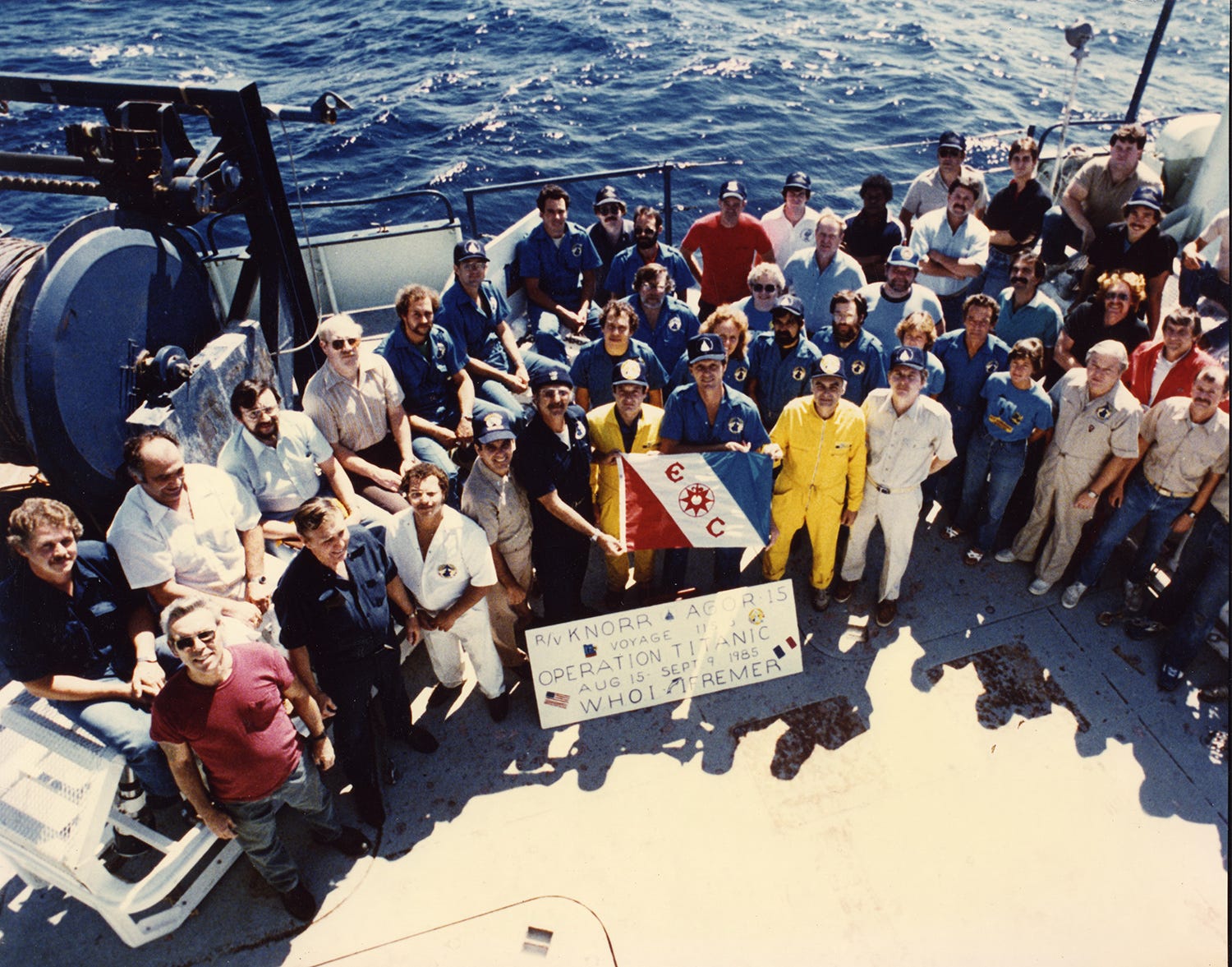
Cue the sound of nails screeching across a chalkboard. Half the leadership was happy and half wanted White thrown out of the Club. A compromise was achieved: White was allowed to keep his membership but he was blacklisted from receiving any recognition bestowed upon Bob Ballard and the other expedition members for finding the Titanic. White kept the Flag and it was displayed in a place of honor on his living room wall, along with trophies from decades of exploration. We became great friends and he was largely responsible for me getting the opportunity to dive to the Titanic. He died very unexpectedly in 2008, without ever receiving credit for his role in finding the Titanic, and the Flag disappeared.
If Ralph had lived, he would have been a key part of my team on the Apollo F-1 Project. I wanted to honor Ralph and his contributions to my career in exploration, and I knew what the Flag meant to him, so I tracked it down and I was able to take it on the 2011 expedition that discovered the Apollo rockets. Naturally, because the expedition was a secret, I did not ask for permission from The Explorers Club. I recreated the iconic photo on the back of the ship, and I sent the photo to The Explorers Club. Basically, I dared them to kick me out of the Club. This did not happen, maybe because the Club realized it was a mistake the first time when they mistreated Ralph.
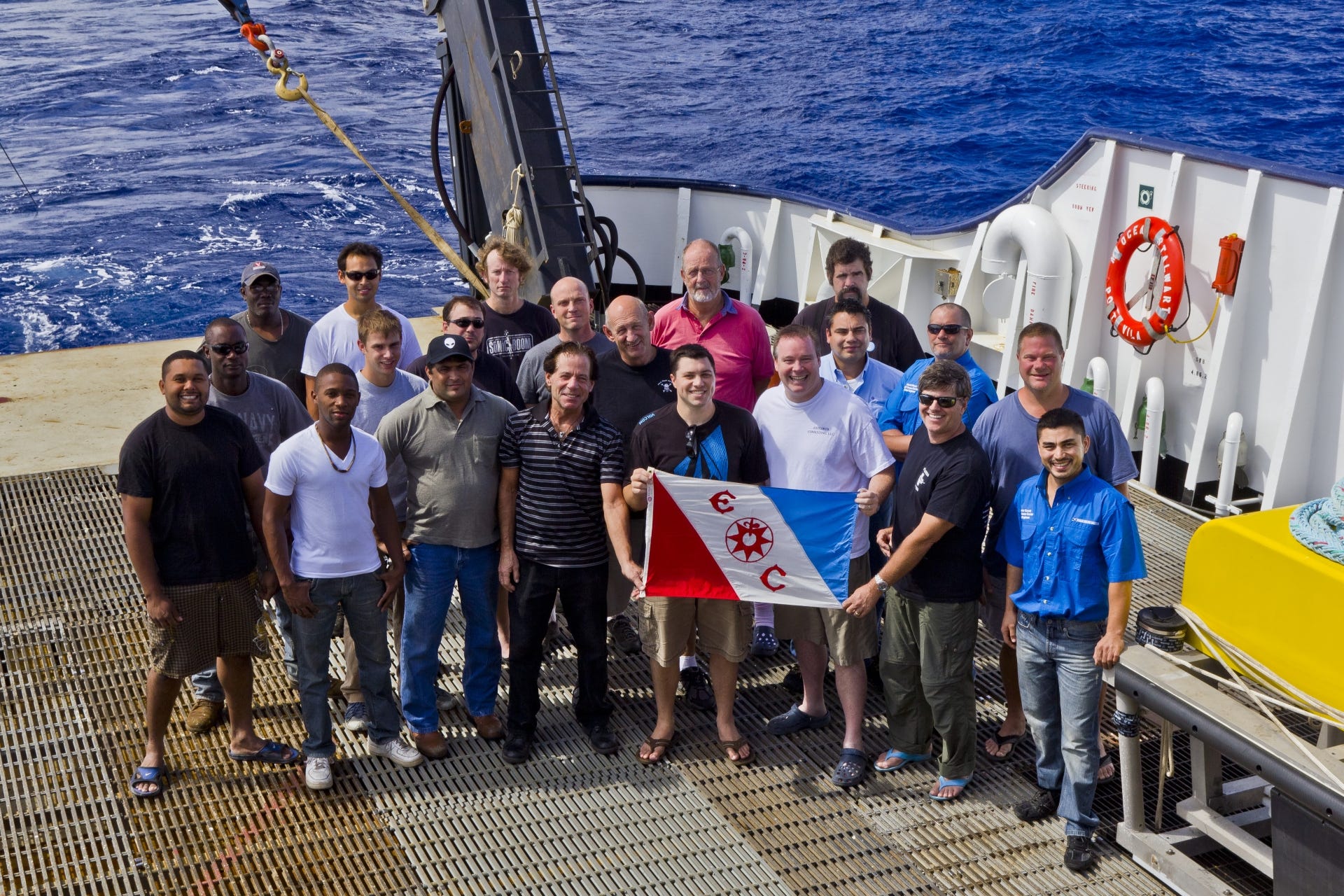
I negotiated the donation of the Flag to the Club in time for the 100th anniversary of the sinking of the Titanic in 2012, and Jim Cameron – who Ralph and I sponsored for membership – accepted the gift on stage from Ralph’s daughter. The Flag was immediately “retired” and put on display, but I was allowed to take it on an expedition to the Britannic in 2015 and Jeff Bezos – who I also sponsored for membership and loved the story of the Flag – later carried it on his first spaceflight on Blue Origin.
That’s the best story I can tell on that topic...

DC: Ralph was the cinematographer on that 1985 expedition. He’s the man who filmed the moment the wreck was found, and he’s in the background of Emory Kristof’s photograph of that moment. He never received credit or payment for his role or his images in his lifetime.
Fast forward to 2008. National Geographic wanted to publish a 25th-anniversary commemoration of the discovery for 2010. They sent Ralph a contract releasing the copyright to his video and images, for no credit and no payment. I called bullshit. I negotiated a contract whereby Ralph would receive credit, be paid past royalties, and royalties going forward. Ralph signed the contract on a Friday, mailed it on Saturday, suffered an aortic aneurysm on Sunday and died on Tuesday. He never saw credit or payment for his most important work in his lifetime. After his passing, the royalties went to his daughter, who has applied them ever since to the care of her daughter – the first grandchild Ralph knew was on the way, but never saw.
Because I did this for the daughter and granddaughter, I was able to persuade her to loan me the bootleg Flag in 2011 and donate it to the Club in 2012.
SDC: Don Walsh handing you that brown envelope at a board meeting is how the Titanic chapter of your career started. Do the big turns in your life tend to arrive like that, sideways and by chance, or have you gone looking for them?
DC: All of them. Every single one.
Sitting with the engines
SDC: The Apollo F-1 engines came up from more than 13,000 feet of saltwater after decades down there. What’s it like to hold something in your hands that launched men to the Moon and then sat at the bottom of the ocean for forty years?
DC: 14,000 feet, but who’s counting. Being able to touch these magnificent objects was truly special, and I knew the experience would not last. I knew the moment they reached shore, I would be kept behind the glass like everyone else, and my special connection to them would be broken. I used to go out on the stern of the recovery ship at night – which was strictly forbidden but it was my expedition, so kiss my ass – just to be with the engines in the silence. I would sit with them and absorb their energy, take in their stories. I remembered how I never did this when I recovered artifacts from the Titanic, and the next time I saw them they were under glass in a museum. I did not want this to happen. So I broke the rules and had my personal moments. I am glad I did.
Now that the artifacts are in museums, I am not allowed to touch them. I have tried, but I have never succeeded. And, much to my displeasure, they have been cleaned up and the patina has been scrubbed off. I don’t like being around them anymore. They are too shiny. Their stories have been lost, or maybe added to in an inauthentic way. I am glad I took the time to defy the rules and spend those evenings on the stern. Nobody else had that kind of access to these magnificent pieces of history.
Dave’s Vermeer
SDC: You spent two years building a faithful recreation of Joe Strummer’s Telecaster, and you’ve got strong feelings about Fender’s own ‘tribute’. What is it about getting a thing exactly right that you can’t let go of? And is that the same instinct that drives the watch collecting?
DC: Have you ever seen the movie “Tim’s Vermeer”? My wife calls that guitar “Dave’s Vermeer.” There is something about exactness and authenticity that really drives me. I am not a perfectionist, but I notice when something is not correct and it really bothers me. If you are going to take the time to recreate something, I believe you have to do it right. My partner in that project, Billy Rowe, felt exactly the same way. We wanted it to be perfect, because nobody had ever done it before and we felt that Joe Strummer, who gave us so much, deserved at least that much effort in return.
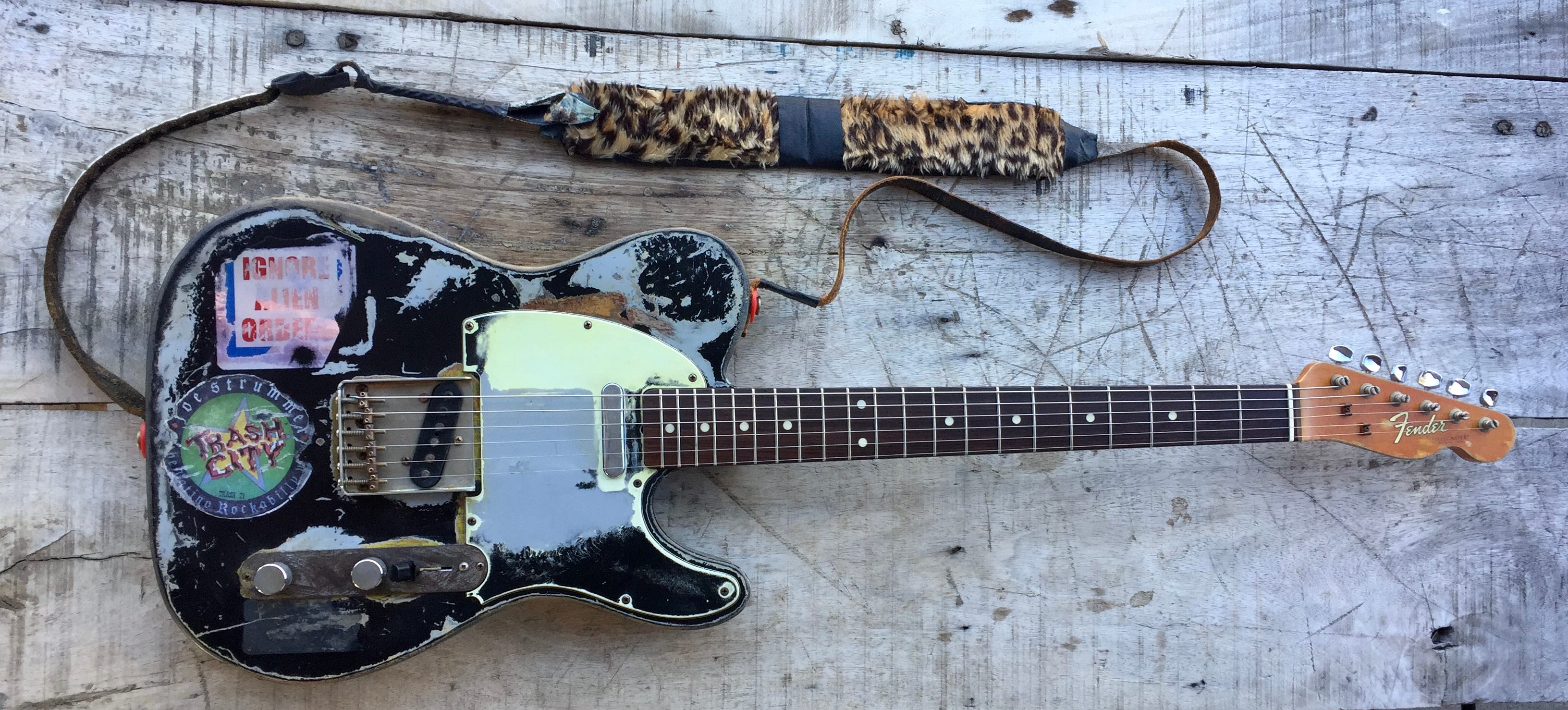
And for comparison…
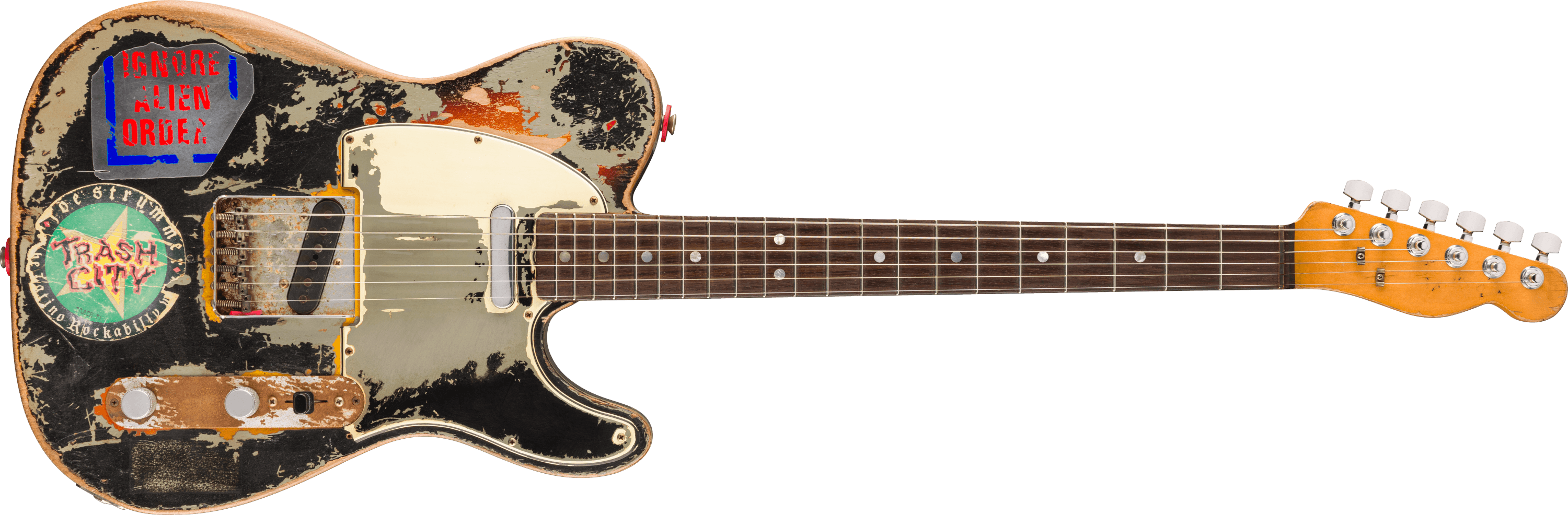
The same instinct does not drive my watch collecting, at least not exactly. I want a watch to have all the correct parts. If it is pre-owned, I don’t mind if the previous owner had it serviced, as long as the key parts (dial and hands) are original. I will not buy a used watch that does not have original key parts, nor will I buy a vintage guitar that does not have the original key parts.
SDC: Guitars, knives, cameras, watches, cars. Is there a single thread running through what you’re drawn to, or do they each scratch a different itch?
DC: I collect the things that I admired when I was a dirt poor kid and could never have without earning them. I don’t collect cameras or cars, but I certainly do accumulate them. I have so many probably because I rarely sell anything and now I am old, so I have had many years to accumulate things. But I do collect watches, knives, guns and guitars, and the number one thing they all have in common is utility. The object has to be useful. It has to be designed to perform a particular task and actually perform that task well. It cannot let me down.
What’s it all worth?
SDC: Exploration has a price to you, measure in terms of money, risk, and even your own body. Do you think this has changed how you think about the ‘worth’ of an object? Does the price of a watch process differently for someone who has ‘measured’ value in oxygen, decompression stops, and broken ribs?
DC: Money means nothing to me. I value experiences and relationships first, then material objects after this. To me, the value of a watch lies in the stories it can tell, the memories it helps me relive. My young life really shaped me. When you grow up with less than nothing, and you are constantly told that you will amount to less than nothing – that you will take away more than you will add – you begin to value proving people wrong more than something everybody has or can acquire. You may have nice shoes but did you wear them to climb that mountain? Did that object help you achieve something you never thought you could, or you were told you would never do? Does this watch symbolize recognition for something you value because of a lifetime of work that helped you achieve something extraordinary, like diving to the Titanic or going to the moon on an Apollo mission? These are the questions I ask when I assign a value to a watch. To me, the price tag is absolutely meaningless. Not because I have the money – because often I don’t and historically I didn’t – but because the number on the price tag has no correlation to the value of the watch in my eyes.
SDC: After a life of going to places where the margins are thin, what does a watch actually mean to you now? Has the answer moved over the years?
DC: No, not really. I still struggle with utility. I am going deep into the Peruvian Amazon next month and I don’t know which watch to wear. I am leaning toward the Titanium Yacht-Master because it is light and versatile, and I expect it to go unnoticed in Lima. But is this the best choice? What about my ceramic bezel Submariner, my go-to watch for rugged adventures? I cannot decide. Similarly, I am going motorcycling in the Upper Mustang region of Nepal in October. I will definitely wear a GMT-Master II on this trip, but which one? My Pepsi that I wore on Apollo or my Batgirl that I wore to the North Pole? Which one flies under the radar better and will not get noticed in Kathmandu? My watches still represent a selection of the best tools for the job, and then reminders of the job they helped me complete.
I find this answer kinda comforting. The man has dived to the Titanic wreck and he still agonises over which watch to pack, just like the rest of us before a beach holiday! I’d vote for the TYM, it needs some stories of its own.
SDC: Last one. If everything else went, and you kept one watch, which is it, and what’s the story you’d want told about why?
DC: The Submariner I gave to my son, for the reasons I told in my Substack story. But he has it now, and he is creating his own memories with it.
Of the current watches, I think maybe the Batgirl for its unparalleled utility, or “The Brick2” because it represents a lifetime of hard work and it is engraved accordingly: “IAQN” – “I Am Qualified Now.”
But a solid gold Rolex Submariner doesn’t have much utility, does it? I’d have to become flashy in my old age...
Closing thoughts
There’s actually a paradox in the middle of all this; since I haven’t resolved it, I’ll just hand it to you. David insists, repeatedly (and totally credibly I might add) that his watches are tools - utility first, last and always. And yet, every single watch in his answers does something no tool does. The Submariner holds his children’s birth. The Explorer II holds three generations of Hillarys. The Day-Date held so much of another man’s achievement that he couldn’t bear to wear it. ‘The Brick’ is a big ‘fvck you’ to everyone who told a poor kid he’d amount to less than nothing.
I think the bottom line is that stories latch on to objects that were present at the point where the story too place. If you buy a watch to commemorate something you didn’t do, that is basically just a receipt. But if a watch was actually there, its physical presence bears witness… and so, David’s collection is like a witness list. Most collections, mine included, are mostly just receipts, and the entire luxury watch industry is in the business of making receipts feel like witnesses. I’ve written before about the lies we tell ourselves in this hobby; David’s story is one of the rarer ones where none of the lies are necessary.
The boy who started working at 11 grew up to sit alone at night with the engines that took men to the Moon. That sentence is wild to me, because it fills me with hope and all sorts of other positive emotions.
And David isn’t finished. By the time you read this he’ll be preparing for the Peruvian Amazon, hopefully with his new Titanium Yacht-Master in tow. Nepal follows in October, on a motorcycle, in the Upper Mustang. The man is in his sixties and his forward calendar would exhaust most thirty-year-olds. I suspect ‘The realization at the foot of the bed’ keeps getting postponed for the simple reason that there’s always another expedition forming behind it.
Long may that continue.
I’ll end with sincere thanks to David for the generosity of these answers, and for letting me share them (and his images) with you. You can subscribe to his Substack here, where the photography alone is worth your time, and the stories are better than anything you might commission.
I’ll let David have the final word…

DC: Double-wristing it on my last Titanic dive. I was using my Rolex Sea-Dweller to time the 50-minute cassettes in the recorder for the external video cameras and the Daytona to time the distance between objects underwater. This is how you navigate on the bottom using speed and distance, when combined with a compass to tell you which direction you are headed.
Footnotes
Yeahhh baby! ‘Explorer-approved’!
David’s nickname for his solid gold Submariner.
This is the only substack I subscribe to, and it's articles like this _as well as_ the watch industry fun _as well as_ the psychological insights that keep me around. It's so good that more than once, I've been able to get my wife to read about watches (no small feat).
Thanks for some truly wonderful writing.
What I took to be a blanket refusal to assign worth to provenance and "feeling like phony" in his commentary on the Apollo astronaut's watch, was tempered by Mr. Concannon in his response to Matt Walker's comment in this section.
Mr. Concannon writes: "The comment about feeling like a fraud is limited to wearing another person’s watch commemorating their achievement to an awards dinner commemorating similar achievements. I felt like I was wearing another person’s medal on my chest."
Even revisiting this essay with that constraint, I'm still left thinking about trophies never earned. So much of watch collecting is about the collector picturing themselves as a part of the process. By acquiring a watch made by a craftsman, we envision ourselves as part of the project that brought that timepiece to life. I suspect that deep down, many of us, certainly myself, see ourselves as part of the assembly line. We envision that we are one cog in the wheel of assembly and craftsmanship in the Vallee de Joux or La Chaux des Fonds, when at the surface level we are simply the financial grist for the mill.
This essay has occupied my mind for a full day and I'm not sure how I proceed from this point. I think I move forward by being more selective about the my cognitive and social consumption and contributions to the ecosystem. Maybe when all is said and done, a few decades from now I can say that my time in his hobby was a trophy earned.
Many thanks @KF anf Mr. Concannon. I extend to you both what I consider among the highest intellectual praise I can give to others: You changed how I think.