


🚨 Welcome back to SDC Weekly!
Admin note: The Unofficial Editor is dealing with a broken camera lens and declined to review this draft. He said he just couldn’t picture himself doing it today. Please click here to read this post online and ensure you see all corrections made after publishing.
If you’re new to SDC, welcome! If you have time to kill, find older editions of SDC Weekly here, and longer posts in the archive here.
Estimated reading time: ~35 mins
💫 Abdulmagied Ahmed Seddiqi, 1950–2026
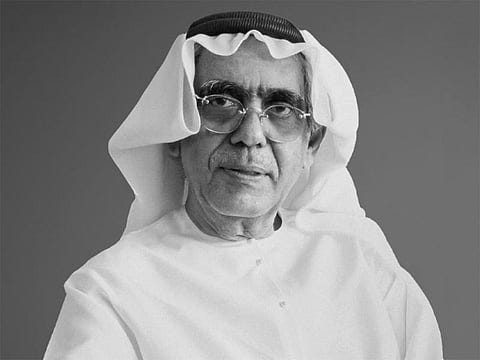
On the evening of Thursday 12 February 2026, thousands of people gathered at Al Quoz Masjid Kabir in Dubai for the Janaza (funeral) prayer of the late Abdulmagied Ahmed Seddiqi. After the prayer, the crowd moved towards Al Quoz graveyard for the burial. Employees who’d worked alongside him for decades stood in small groups sharing memories, and several described him as a father figure. One employee who’d only joined five years ago said that despite leading a massive organisation, Abdulmagied remembered names and gave people nicknames.. .“that made us feel valued.”
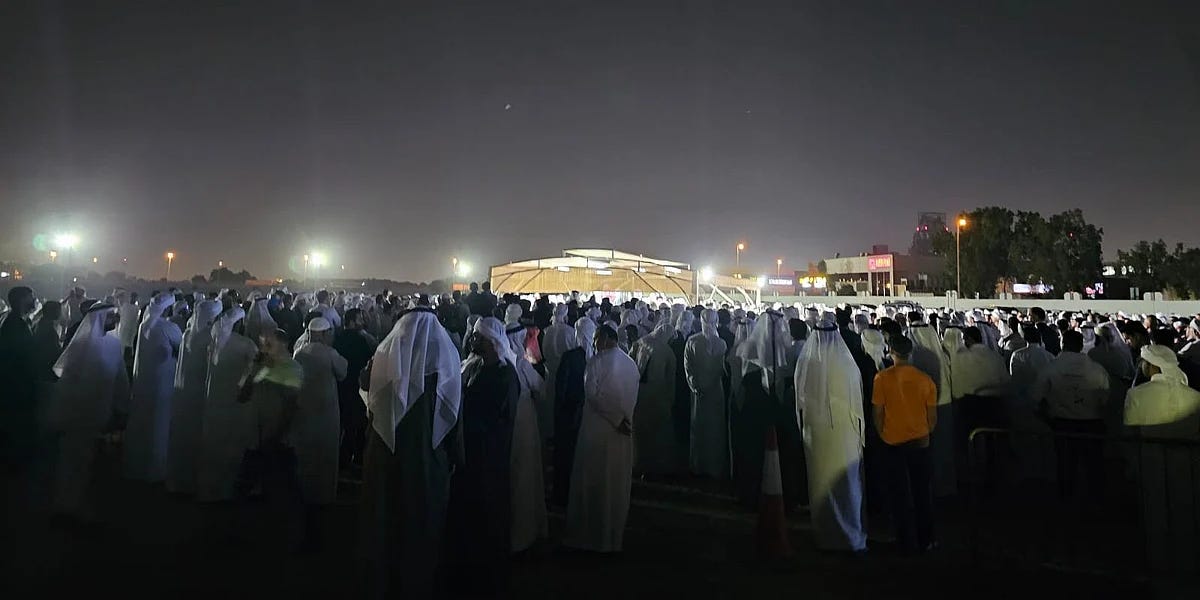
“Every single day at around 6.30pm, he would call our store to ask what was happening, how the employees were doing, and whether there were customers in the mall or at the store. It was not just about business. He genuinely cared about us.”
The Seddiqi family shared the news with an Arabic verse which is customarily used when someone passes away: “Indeed, to Allah we belong, and to Him we shall return.” Sheikh Hamdan bin Mohammed, Crown Prince of Dubai, visited the mourning council to offer his condolences as well.
This was clearly a man who was loved.
For those of you who know the Seddiqi name only through Dubai Watch Week or the retail empire behind it, I think it’s worth understanding the bigger picture surrounding this departed soul. Abdulmagied’s life, to many, may have been solely about selling watches, but in fact, on a macro-level, he was instrumental in opening a door that the Swiss industry had kept firmly shut for the Middle East; after which he held it open long enough for the entire region to walk through it.
From the souk to Switzerland
The Seddiqi story starts in 1950, when Abdulmagied’s father, Ahmed Qassim Seddiqi, opened a small shop in the Bur Dubai souk. Dubai back then was a modest trading port built around pearl diving and creek commerce.
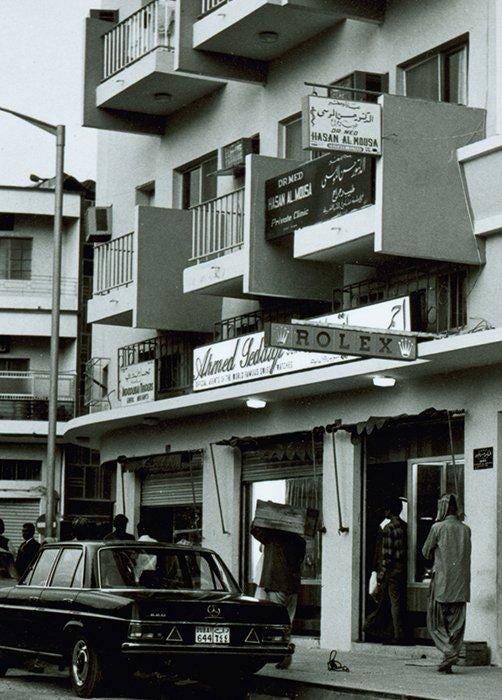
What happened next is, I think, the most interesting part of this whole story. Ahmed Qassim Seddiqi sent his son Abdulmagied to university in Switzerland. Back in the 1960s, international travel was expensive and complicated. Cultural barriers between the Gulf and Switzerland were quite significant, and the Swiss watch industry was (and largely still is!) one of the most insular, relationship-driven businesses on earth. Getting a simple meeting was already difficult, and gaining trust was next to impossible.
Despite what might seem like difficult odds, Abdulmagied studied in Switzerland, and also mastered French. The high-end Swiss watch industry, even today, mostly operates in French. They can speak English, but they think in French; and so, by speaking the language fluently, Abdulmagied removed any friction that would have kept any other Gulf trader at arm’s length. He could sit across the table from the Sterns at Patek or the executives at Rolex and communicate more like a peer than an outsider using interpreters.
He built personal relationships with the families behind the brands, and bear in mind, these were forged in the 1960s and 70s, decades before the modern luxury boom. This of course created loyalty that would protect the Seddiqi’s agency agreements through every subsequent wave of industry change.
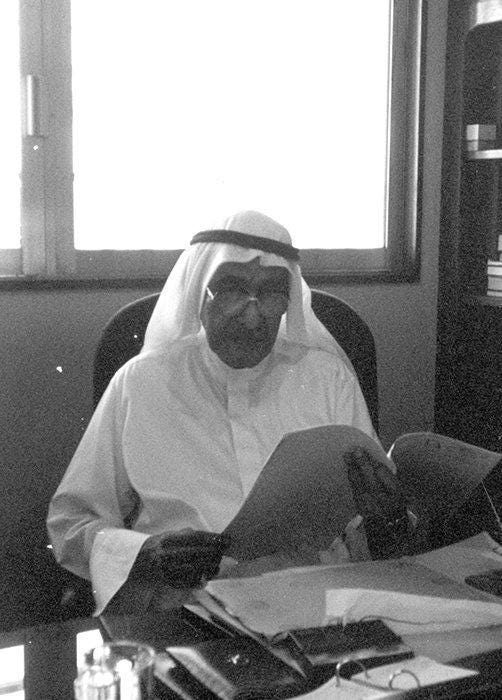
His father, Ahmed Qassim Seddiqi never visited Switzerland himself. He built the business from the souk, and his son took it to the world. That generational handoff is the foundation of everything that came after.
It’s important to remember that Abdulmagied didn’t build this alone. He and his brother Abdul Hamied were always a team - Abdulmagied was the elder and the figurehead for decades, but they both worked incredibly hard and were very complementary in their talents. Those who know them well speak of them with equal admiration, and the Seddiqi group is fortunate to still have Abdul Hamied as Chairman today.
Rolex and Patek
The two partnerships that define the Seddiqi empire were established quite early on. Rolex came on board in 1952, just two years after the company’s founding. Patek followed in 1960, making Ahmed Seddiqi & Sons the first authorised retailer for Patek in the UAE.
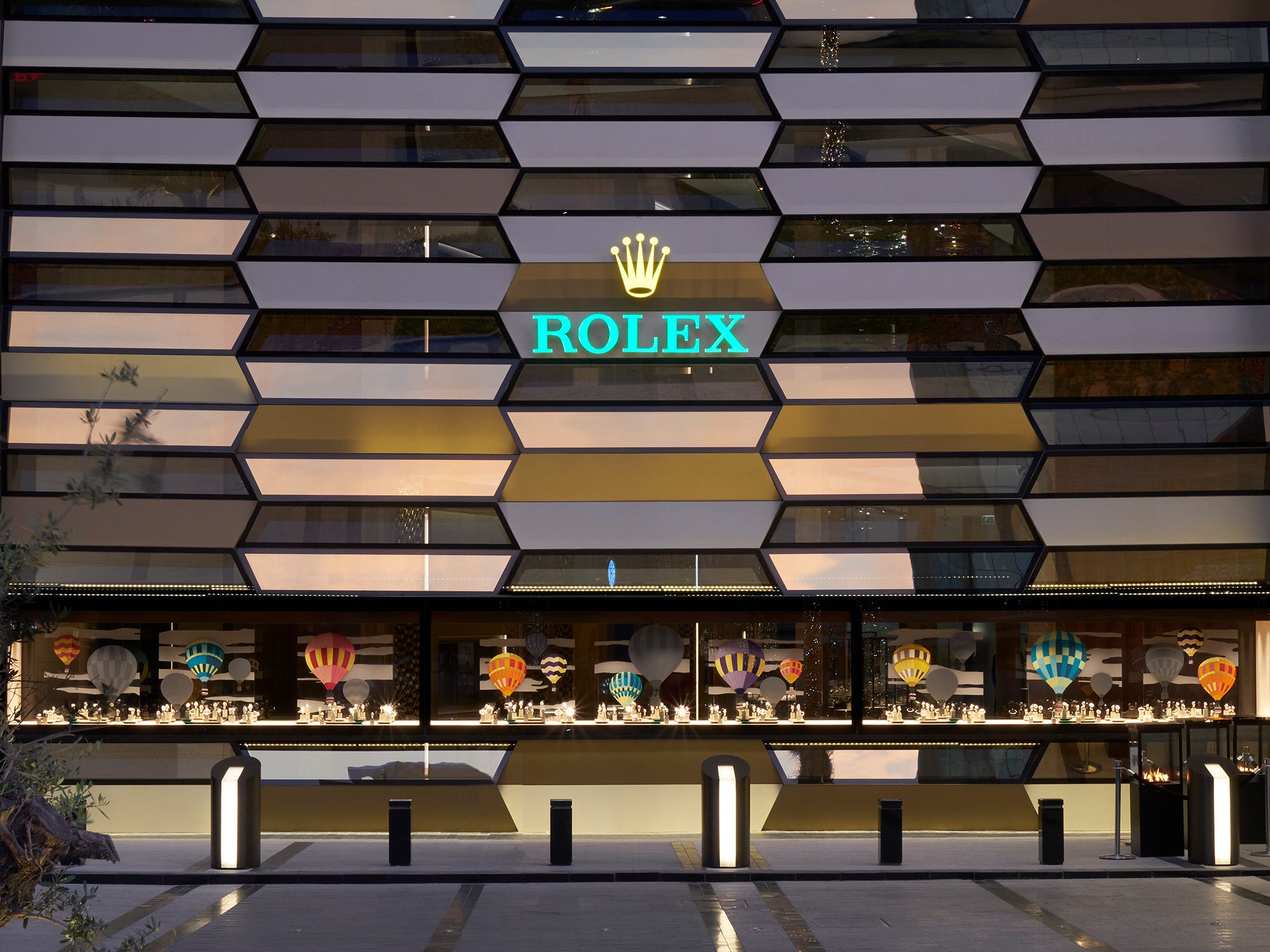
The Rolex relationship is the bedrock, and it eventually led to the opening of the world’s largest Rolex boutique in the Fashion Avenue of Dubai Mall in 2018 - an 850-square-metre space over three levels. If you ever wanted a physical measure of the trust Rolex places in the Seddiqi family, that building is it.
The Patek partnership arguably holds more symbolism, though, because in 1960, taking on Patek was a statement that the Gulf was ready for watches valued and viewed differently. That bet on sophistication, placed over sixty years ago, looks rather prescient now!
Champion of the independents
This is the part of Abdulmagied’s legacy that I think matters most to SDC readers, and it’s the part that the broader industry tributes seem to underplay. In the early 2000s, independent brands like Journe, Urwerk, MB&F, and De Bethune were risky propositions. They lacked the marketing budgets of Richemont or Swatch Group and as a result, they struggled to get retail space. Most multi-brand retailers viewed them as small-time curiosities rather than serious commercial prospects.
Abdulmagied saw something else in them; he gave these brands retail space in one of the world’s fastest growing luxury markets. More importantly, he gave them liquidity by paying upfront for orders at a time when cash flow was a huge problem for most independent makers. If you wanted to understand why Dubai became one of the top markets globally for independent horology, this is the answer. It wasn’t magical or inevitable at all; it was clearly a choice made by a retailer who understood that artistic merit and commercial viability could coexist.
Max Büsser put it like this (discussing the Seddiqi 75th anniversary collaboration last year):
“I have been privileged over the last 27 years of their 75-year history, to have counted the Seddiqi family as very close friends. They welcomed me when I was at my most vulnerable, they many times helped me when I was down, and were there to celebrate our greatest achievements together.”
That quote tells you everything you need to know; when Max talks about vulnerability, he’s talking about the early years of MB&F at a time when the business could have folded at any point. The Seddiqi family backed him when the smart business decision might have been to fill those shelves with more variations of Hublot.
Max’s tribute on Instagram speaks to his love for the man as well:
Thank you Magied. Thank you for being there for me, when virtually no one was. Thank you for trusting me when it was a gigantic leap of faith – not once, but twice. Thank you for always being so kind and caring, notwithstanding your busy schedule and very important responsibilities.
Thank you for opening my eyes to this incredible country and its people. Thank you for always making me feel so welcome. Ever since that day, 27 years ago, when we first met in Dubai, you helped change my family’s and company’s life in so many ways. I will always try to make you proud.
Yesterday was such a sad day for all of us. My thoughts are with your beautiful family.
Dubai Watch Week
Dubai Watch Week launched in 2015 and has grown into what many consider the best watch event in the world. While Hind Seddiqi leads DWW as CEO, and Mohammed Abdulmagied Seddiqi drives the broader corporate strategy, the ethos of the event is, I believe, a direct inheritance from Abdulmagied’s own journey.
He went to Switzerland to learn, and spent decades building relationships based on knowledge and appreciation instead of just focusing on purchase orders. DWW exists because someone in the Seddiqi family understood, long before it became fashionable to say so, that the watch industry’s future depends on making collectors smarter and not just trying to make them spend more.
Beyond watches
Abdulmagied’s influence naturally extended well beyond retail. The family’s philanthropic work is worth noting briefly. In 2008, Abdulmagied announced a $5 million donation to the Dubai Harvard Foundation for Medical Research; the auditorium at the Harvard Medical School Dubai Center now bears the Ahmed Seddiqi name.
In 2020, during the pandemic, the family donated AED 10 million to the Al Jalila Foundation for COVID-19 research. They also endowed the Ahmed Seddiqi Chair in Gulf and Middle Eastern Studies at the American University of Sharjah with AED 15 million, specifically to preserve regional history as the Gulf modernises at extraordinary speed.
The corporate restructuring into Seddiqi Holding in 2007 was quite a significant move as well. In the Gulf, family businesses often fracture by the third generation and this move seems to have preempted a future problem. Abdulmagied and Abdul Hamied prevented any drama by professionalising the organisation together - and once again, the complementary nature of their partnership was on full display here. They brought the watch retail business, Swiss Watch Services (established back in 1964), the Mizzen fashion arm, and Seddiqi Properties under one governance structure. Swiss Watch Services alone is a fantastic asset; it employs Swiss-trained watchmakers and holds authorised service centre status for brands that rarely grant it to third parties, meaning a watch bought in Dubai can be serviced in Dubai.
What he leaves behind
Abdulmagied is survived by his four sons (Mohammed, Hassan, Ahmed, and Mansour) and his brother Abdul Hamied. His other brother, Ibrahim, predeceased him. The third generation is firmly settled, with Mohammed as CEO of Ahmed Seddiqi, Hind as CEO of Dubai Watch Week, Osama as vice-chairman of Seddiqi Holding1.
The family statement described Abdulmagied as “a devoted father and a deeply cherished member of our family... known for his warmth, generosity of spirit, and quiet strength.”
It feels like “quiet strength” is on point here; Abdulmagied’s influence was built on relationships cultivated over decades, on handshakes in Geneva that were honoured across generations, on the silent patronage of paying independent watchmakers upfront when they needed it most, on establishing service infrastructure that other markets still lack, and on the insight that educating your customers is better business than simply selling to them. None of this is social-media worthy at all, but it is absolutely more powerful than your usual sales tactics.
The watch industry has lost many good people over the years, and the loss of Abdulmagied is worth a pause as well. He represented a kind of bridge between the old souk trading culture and modern luxury retail, between the Swiss establishment and the Gulf market, and maybe even between commerce and culture itself.
That bridge will stand, because he built it well.
I’d like to extend my deepest condolences to the entire Seddiqi family, their employees, and the wider community who knew and loved Abdulmagied Ahmed Seddiqi. May he rest in peace.
🔨Should watchmakers get paid when their work is resold?
Last week, SDC subscriber (and prolific-commenter!) Rip Roach sent me this note:
A thought for one of your pieces, maybe (unless you’ve already covered it, which wouldn’t surprise me).
An artist, early in her career, sells one of her paintings to Mr. X for $1,000. Five years later, the artist has become a huge success. And Mr. X, smelling a nice return on his investment, decides to auction the painting he bought from her, and gives it to Sotheby’s to handle. It hammers at $250,000. All of which goes to Sotheby’s and to Mr. X. None to the artist.
Of course, if you swap out ‘painting’ for ‘watch’ and ‘artist’ for ‘watchmaker’, this essentially describes the independent watch market since the hype cycles began in 2021.
I’ve been chewing on this for a few days, and what follows is my attempt to unpack the legal, economic, and psychological dimensions of this question.