


🚨 Welcome back to SDC Weekly!
Today I’d like to start with some thank you notes.
Big thanks to Johnny Davis for the enjoyable conversation which led to this feature in his weekly newsletter1. My favourite joke from his newsletter was this one:
If you already know SDC, you’ll recognise the voice below.
If you don’t, consider this an introduction to the second-best watch newsletter you’ll read this week.
Cheeky cvnt… I love it! Thanks again Johnny.
—
Next, another big thank you to the watch world’s favourite “aging retro-grouch” (in his own words, no less!). I’ve never made it on to any ‘recommended reading’ lists (that I’m aware of), so popping that cherry on a list compiled by the OG of watch writing, feels quite special. Thanks again, Jack.
—
And now, on with the show…
Admin note: The Unofficial Editor is currently dealing with a severe bout of constipation and flat-out declined to check this edition. When we asked him if he cared about our typos, he said he simply couldn’t give a crap. Please click here to read this post online and ensure you see all corrections made after publishing.
If you’re new to SDC, welcome! If you have time to spare, find older editions of SDC Weekly here, and longer posts in the archive here.
Estimated reading time: ~30 mins
💿 Nobody wants the CD
In some ways, music has always been a status object disguised as an art form, and if we look at how we’ve chosen to listen to it, there’s a cool analogy I thought of which speaks to where luxury markets are heading.
If we ignore things like phonograph cylinders or shellac records, let’s assume vinyl records were the ‘original’ format. Using these was a physical, ritualistic experience; you held the (physical) sleeve, studied the artwork, gently placed the needle on the groove, and enjoyed the sounds, with crackles and all. Then came CDs, which were technically superior in almost every way; more portable, more durable, better dynamic range, and far cheaper to produce. I suppose these lasted about two decades, and the CD dominated because it made sense, and was a rational choice over vinyl.
Then streaming arrived, and something strange happened. CDs declined and then practically vanished, but vinyl came back! In 2023, vinyl record sales in the US overtook CDs for the second year running, despite costing 3-4x more per album and offering objectively worse sound than CDs.
People bought 43 million vinyl records last year, according to the Recording Industry Association of America (RIAA). That’s 6 million more than the number of CDs sold in 2023, marking the second time since 1987 that’s happened and reflecting the steady 17-year-running growth of vinyl sales.
My point is, the format that sat in the middle and offered the best balance of quality, convenience, and value, is the one that died. The cheap, frictionless option gobbled up everything below it. The expensive, ritualistic, and inconvenient option became a kind of status symbol, and in this example, nobody cared about “the sensible middle ground.”
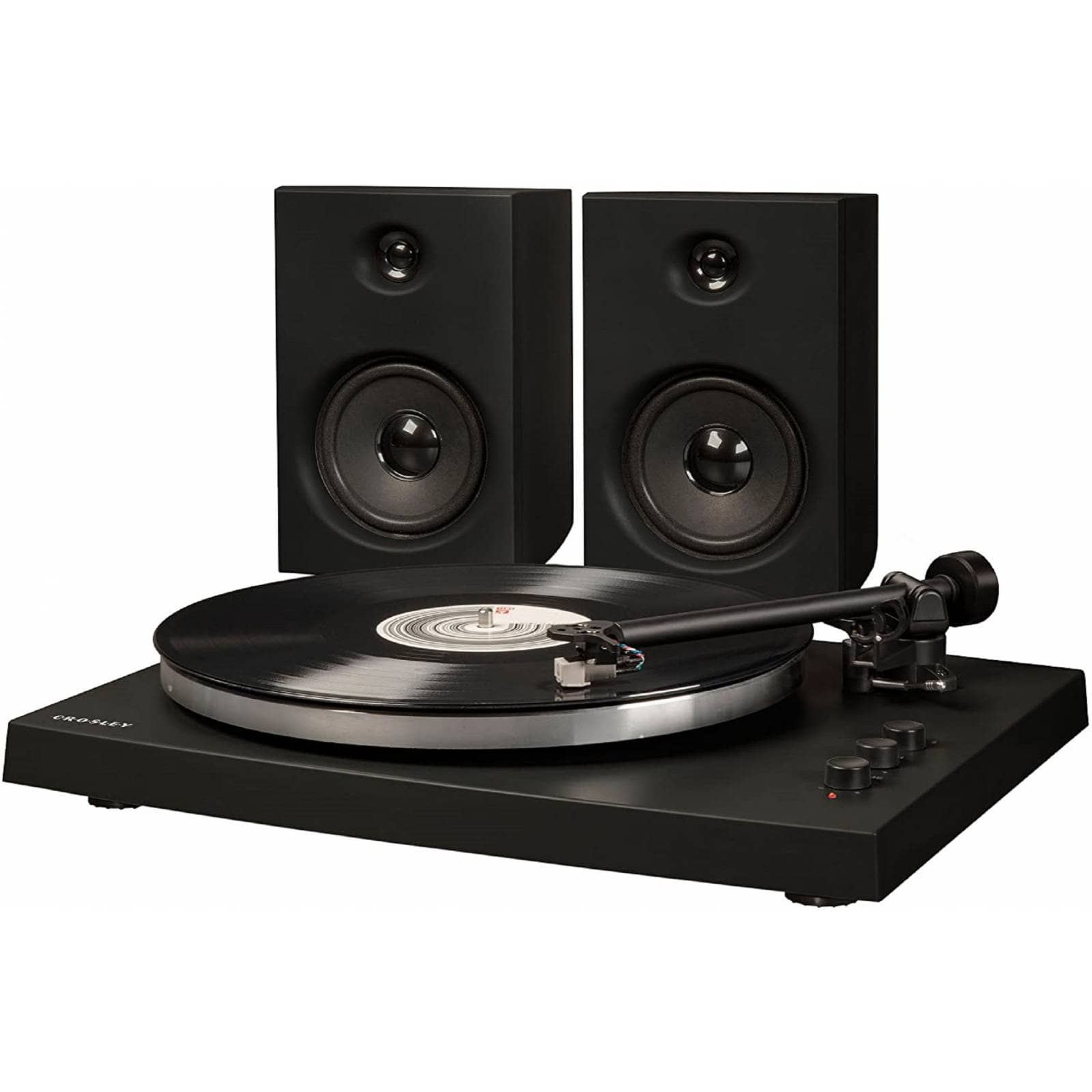
It gets stranger when you consider that the vinyl “boom” isn’t even driven by so-called audiophiles. Most people buying records today are playing them on £90 Crosley turntables that sound worse than the cheapest Bluetooth speakers. So they’re clearly not buying vinyl for the sound, which must mean they’re buying it for the shelf, or the Instagram photo, or maybe even for the feeling of owning something physical - because really, we live in a world where everything else is rented or hosted in the cloud. Put another way, what we see here is that the object matters more than its underlying function.
In that example, the people who deeply cared about audio quality simply adapted; they moved to lossless streaming, FLAC files, high-end DACs etc, and probably got better sound than CDs ever offered. They’re doing just fine, and I know this for a fact because I know a few of these nerds personally. Nevertheless, the CD ecosystem died completely; the entire commercial apparatus that served the “sensible middle” of the music market collapsed, regardless of whether individual audiophiles found workarounds for themselves.
And that final part of the analogy is the bit that should worry people who care about watches. The equivalent in our world isn’t that knowledgeable collectors will stop finding good watches to buy - because you probably will! You could pick up a Zenith El Primero on the secondary market for ~50% below retail and feel very clever about it. On a trip to Geneva you’ll perhaps discover some new independent making a better-finished chronograph than anything a conglomerate puts out anyway. The point being, you can and will adapt, because enthusiasts always do - just like the audiophiles.
But what about the brands built to serve you? By this I am referring to the whole “mid-tier” sector… the commercial infrastructure of Swiss watchmaking. That’s the part that’s apparently dying a slow and painful death. It is dying for the same reason the CD died, which is the broader market doesn’t care about ‘best balance of quality and value.’ It cares about either maximum convenience or maximum status. The middle, no matter how sensible on paper, is getting more hollowed out.
Having waded through the last Morgan Stanley report last week, I will keep this high-level. About 2% of total Swiss export volumes in 2025 contributed 89% of the industry’s total growth. 29 of the top 50 brands declined year-on-year, with 14 of those posting double-digit drops. The four biggest privately owned brands now control nearly half the entire Swiss watch market by value, and that’s up from about 37% just six years ago.
That is a staggering shift, to say the least. Half the industry’s value is concentrated in four names, and the trend is accelerating. So what happens to everyone else? Well, the honest answer is that nobody really knows, but I think there are some useful ways to think about it.
Imagine a high street with three restaurants - one is a Michelin-starred place that charges £200 a head and has a three-month waiting list for a reservation, one is a lovely neighbourhood bistro doing decent food for £30 or so, and one is a mid-range chain charging £75 for reheated stuff with fancy plating and a wine list designed to make you feel sophisticated.
When times are good, all three do okay; people eat out more, they’re less fussy about value, and the middle restaurant gets by on convenience and the vague sense that you’re treating yourself despite the sub-par value for money.
When times worsen, the Michelin place barely notices, because its customers aren’t affected by the rising cost of living, and the waiting list just absorbs any slowdowns. The bistro actually does better, because people still want to eat out and they’re now looking for the best meal they can get for the least amount of money. The mid-range chain is suddenly competing with both ends and losing on every metric. It’s too expensive to feel like good value, and too mediocre to feel like a treat.
In this situation, the mid-range chain has a decision to make. Should it invest in becoming better and justifying its prices? Maybe hire a better chef? Should it drop prices and become more accessible? Or does it just… redecorate, add gold leaf to the menu, and hope nobody notices?
I think everyone knows which option most Swiss watch brands have chosen.
Zenith is a useful albeit painful example of this in action. This is a brand that was, by any honest measure, among the most important movement manufacturers in Swiss watchmaking history. The El Primero was launched in 1969 and was the world’s first automatic chronograph movement in a wristwatch with over 50 hrs power reserve. It was so well-regarded that even the mighty Rolex chose it for their Daytona, and today, a ‘Zenith Daytona’ is still a coveted reference among Rolex enthusiasts.
So we have a movement so good that at one point, the most famous watch brand in history used it. And today, the company that made it is now reportedly losing millions every year. How does that happen?
I think the music analogy is actually quite apt here, because Zenith is like the CD. Technically it’s great, it generally does things well enough. And that’s really the underlying problem. This market rewards either extreme accessibility (Casio, Citizen, Tudor, Kollokium, the streaming equivalent) or extreme exclusivity (Kari, Journe, certain Patek & AP, the vinyl equivalent) - and being really good at making watches in the mid-range might be the worst place to be.
Zenith doesn’t have Rolex’s cultural cachet, or Patek’s generational status appeal, or the coolness of a Unimatic or Casio... It doesn’t even have the quirky personality of an independent like MB&F or Moser. What it has is some historical and horological substance, and to me, this is a bit like being the best-sounding CD player in 2026. Might be a little impressive, but it’s also somewhat beside the point.
What we’re buying
So what are people actually buying when they buy a luxury watch in 2026? I think the Zenith example already gives you the answer, but it’s worth making it explicit; people are buying what the vinyl buyers are buying, and that is a feeling, a signal, or a story they get to tell themselves and others.
Engineering excellence is necessary, for sure, but it’s nowhere near sufficient. Rolex wins because its obsessive quality control feeds the myth of indestructibility, and as a result, the substance and the story are the same thing. For Zenith, the product is good but the story is… what, exactly? ‘We made a great movement in 1969 and Rolex used it’? That’s Rolex’s story now, not Zenith’s.
I want to be careful here, because I think it’s too easy to be cynical about this and say ‘it’s all just status signalling and nobody actually cares about watchmaking.’ That’s lazy, and I don’t think it’s true. Most collectors I know personally do care about the craft as well. They care about finishing, about movement architecture, about history and so forth, but, and this is the important bit, they care about all of that within a context of social meaning. The craft matters, but it matters more when it comes wrapped in a story that other people recognise.
A Nautilus is a nice enough watch, but it is also a universally recognised symbol that communicates something specific about its wearer. Those two things are both true, and the second one probably accounts for most of the price premium over, say, a Vacheron Overseas, which is arguably as well-made (or better) and sells for significantly less.