

SDC Weekly 137; Inside the MB&F M.A.D. House; Kurono’s Diver
Pyrrhic watch purchases and why saving costs more, how swearing boosts performance, Kalshi's death-bet controversy, the Fed on prediction markets, the quick-set date in parenting, and more!

🚨 Welcome back to SDC Weekly! Let us begin with an old meme from a 2024 newsletter:

That’s right… It’s that time of the year when everyone moans about Daylight Saving Time. Clocks in the US changed this weekend, but clocks in the UK will not change until 29 March - which means we have a few weeks of extra confusion.
I once wrote about DST in some detail but Tony Traina mentioned it in his newsletter yesterday, and Jack Forster had his annual rant this weekend stating, “Daylight Saving Time Is A Terrible Idea And Kills People” 😂 - so I need not say much more other than confirm “fvck DST” is an accepted trope in these here parts…

Admin note: The Unofficial Editor declined to check this edition because of Daylight Saving Time. Since he’s still pouting about losing an hour of his weekend, we are flying completely blind today. Please click here to read this post online and ensure you see all corrections made after publishing.
If you’re new to SDC, welcome! If you have time to kill, find older editions of SDC Weekly here, and longer posts in the archive here.
Estimated reading time: ~29 mins
🤹♂️ Inside the MB&F M.A.D. House
I was in Geneva last week for meetings with brands about our upcoming event, and MB&F was kind enough to extend an invitation to check out their infamous manufacture, aptly named the M.A.D. House. I must be honest with you… I had low expectations going in.
My perception of MB&F, for many years, was that it was a design and marketing company. ‘Maximilian Büsser and Friends’ as a brand name - to me - spoke to Max’s role as the chief artist who comes up with weird and whacky things, and then all the various ‘friends’ do the real work. Max then goes on to spin fairy tales and connect emotionally with watch nerds - something he is exceedingly good at - and people fawn over his genius when he really did very little beyond drawing pictures and convincing others to turn it into reality.
So yeah, that was my read on MB&F for quite some time, and I wrote as much in SDC Weekly 115 when discussing the établissage model. My exact words were:
MB&F is literally founded on the principle of working with other specialists for each component. Max openly celebrates his friends in the brand name, and partners are doing the actual watchmaking while he handles the marketing.
Turns out, I was wrong!
Max himself was scheduled to be there during our visit, but was unable to make it to Geneva; due to the ongoing conflict in the Gulf region, he couldn’t fly out of Dubai. That was a shame, because I would have liked to speak with him directly. I’ve watched most of his major interviews and features, I’ve listened to most of his podcasts, and I’ve read a lot of what he’s said over the years… so I had a decent picture of the man in my head already. Maybe next time… if there is a next time!
Nevertheless, Cédric Roussel (Client Relationship Manager) gave us the tour, and what follows is everything I took away from the visit. I’ve also done some additional homework afterwards to fill in a few blanks, so any factual references about the building or the brand that go beyond what I saw are drawn from public sources which I’ll reference where relevant.
Crazy castle in Carouge
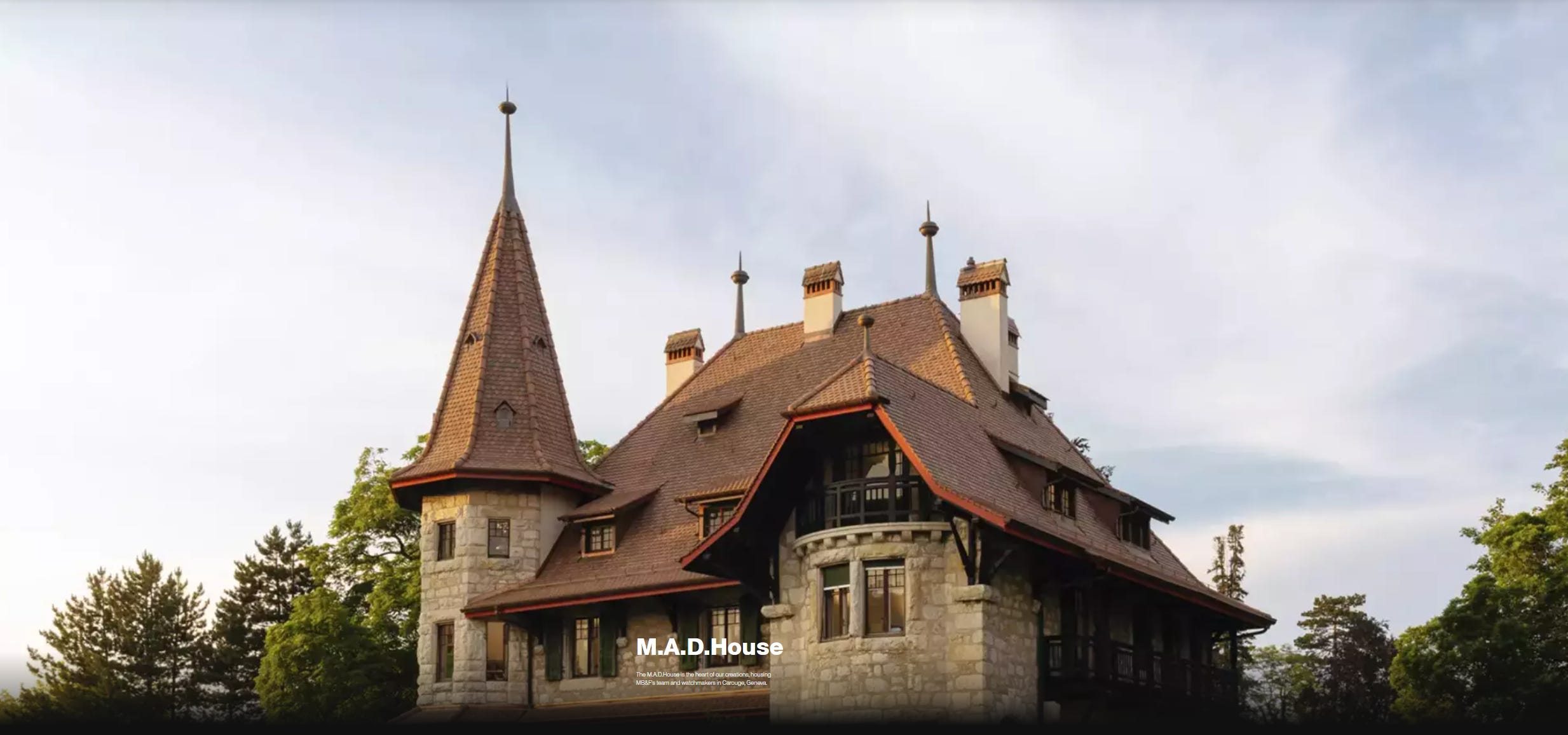
The first thing you notice when you arrive, is that this place looks bonkers. It’s a mini-Hogwarts-looking villa in Carouge which is nestled in some sort of industrial area. Carouge is a suburb of Geneva sometimes called the ‘Greenwich Village’ of the city and the building itself resembles something out of Harry Potter. It’s got a sort of half-timbered construction, asymmetric spires, wooden shutters, and heavily textured stone walls. It was built in 1907-08 by two architects named Edmond Fatio and Charles Meysson, originally as a private home for a wealthy Swiss family who ran a ceramics factory. The architectural style is known as Heimatstil, which roughly translates to ‘homeland style’ - a movement that rejected industrial sterility in favour of romanticised regional architecture.1
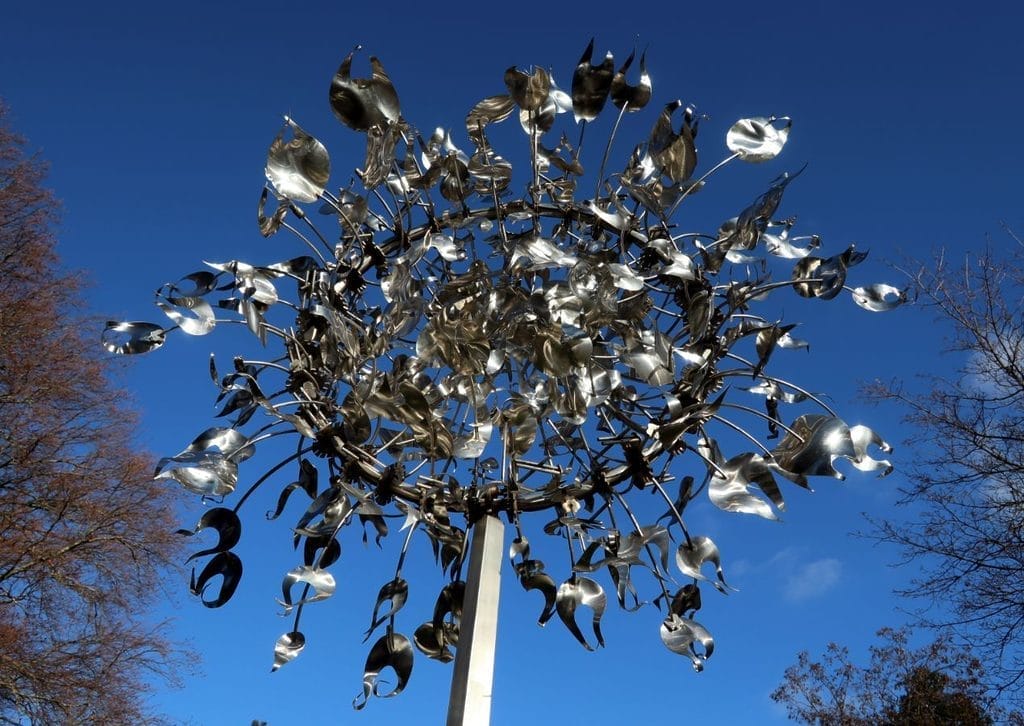
I had no idea about any of this before arriving, and to be honest, I probably wouldn’t have cared much anyway. But, standing in front of the building, I did start to understand the appeal. There’s a wind sculpture by Anthony Howe outside the entrance; one of those kinetic metal pieces that catches the breeze and creates these swirling, slightly hypnotic waves. It’s a fitting introduction to the place.
The building is protected by the Swiss Heritage Society, which means MB&F can’t drill into the original walls or ceilings.2 This constraint shaped everything about the renovation. Cédric walked us through how every fixture and fitting was customised to avoid damaging the original structure. The entrance, for example, looks like it has this grand modern fixture, but it’s actually a temporary structure placed in front of the original fireplace (the fireplace is still there, preserved behind it).
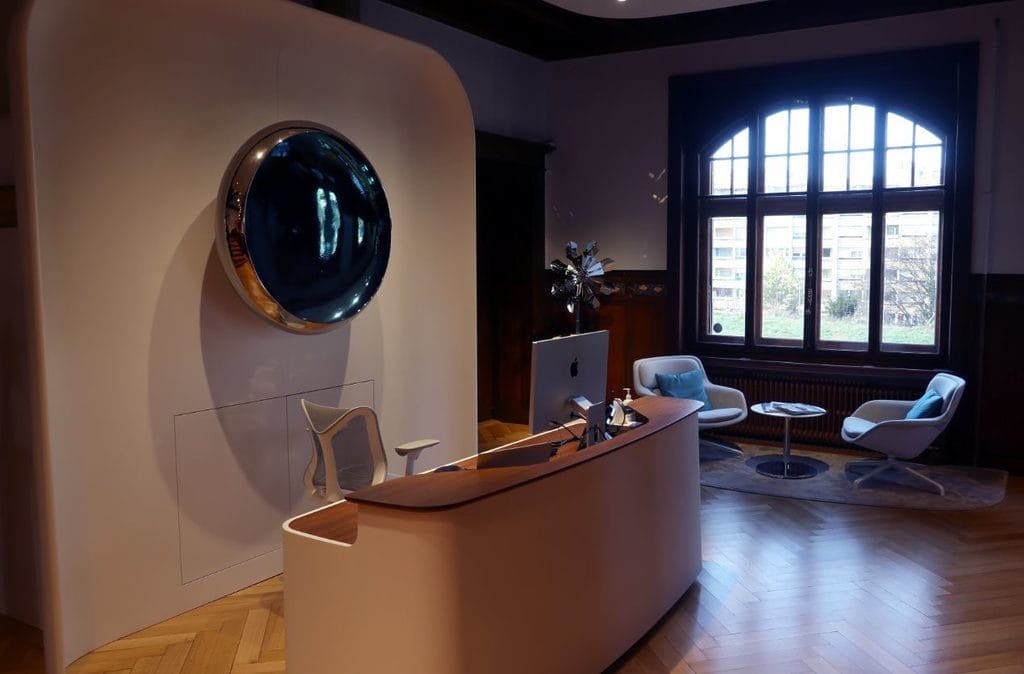
The lighting setup in this room was particularly clever as well; there’s a retrofitted cage of sorts that hides all the wiring inside the steel beams used for reinforcement, painted brown to match the original wood. I forgot to get a picture of this, sorry - but fwiw you wouldn’t notice it if nobody pointed it out, which is the point, and so the picture would not have mattered! They tried to stay true to the essence of the building but still upgraded it to meet the practical demands of a modern Swiss watch manufacture. The original herringbone wooden floors are still intact as well. The ornate door frames, the wood panelling, the hand-painted ceramic tiles embedded in the walls are all from 1908.
The renovation apparently took about 18 months, and the search for the building was delayed by the pandemic. MB&F previously had their operations split across two locations in Geneva’s Old Town, which from what I understand, was a logistical headache that got in the way of the collaborative energy they needed.3
Where the magic starts
We started on the ground floor, which seemed like the technical core of their operation. Cédric took us to the prototype area first, and this is where you might find all the new unreleased stuff. There was a new, unreleased watch on one of the tables - it will be unveiled soon, probably in the next couple of months. We were told, politely, that we weren’t allowed to see it. Rules, however, are meant to be broken - I shall say no more.
“In essence, they’re using normal tools to build special tools to build weird watches.”

One of the more fascinating parts of this tour, was the tooling work - or more precisely, the pre-and-post work. You see, with MB&F watches, the cases all have weird shapes, which means there is no ‘standard way’ to do anything. This creates a cascade of problems that the MB&F team has to solve from scratch, every time they make a new watch. I’ll give a few examples...
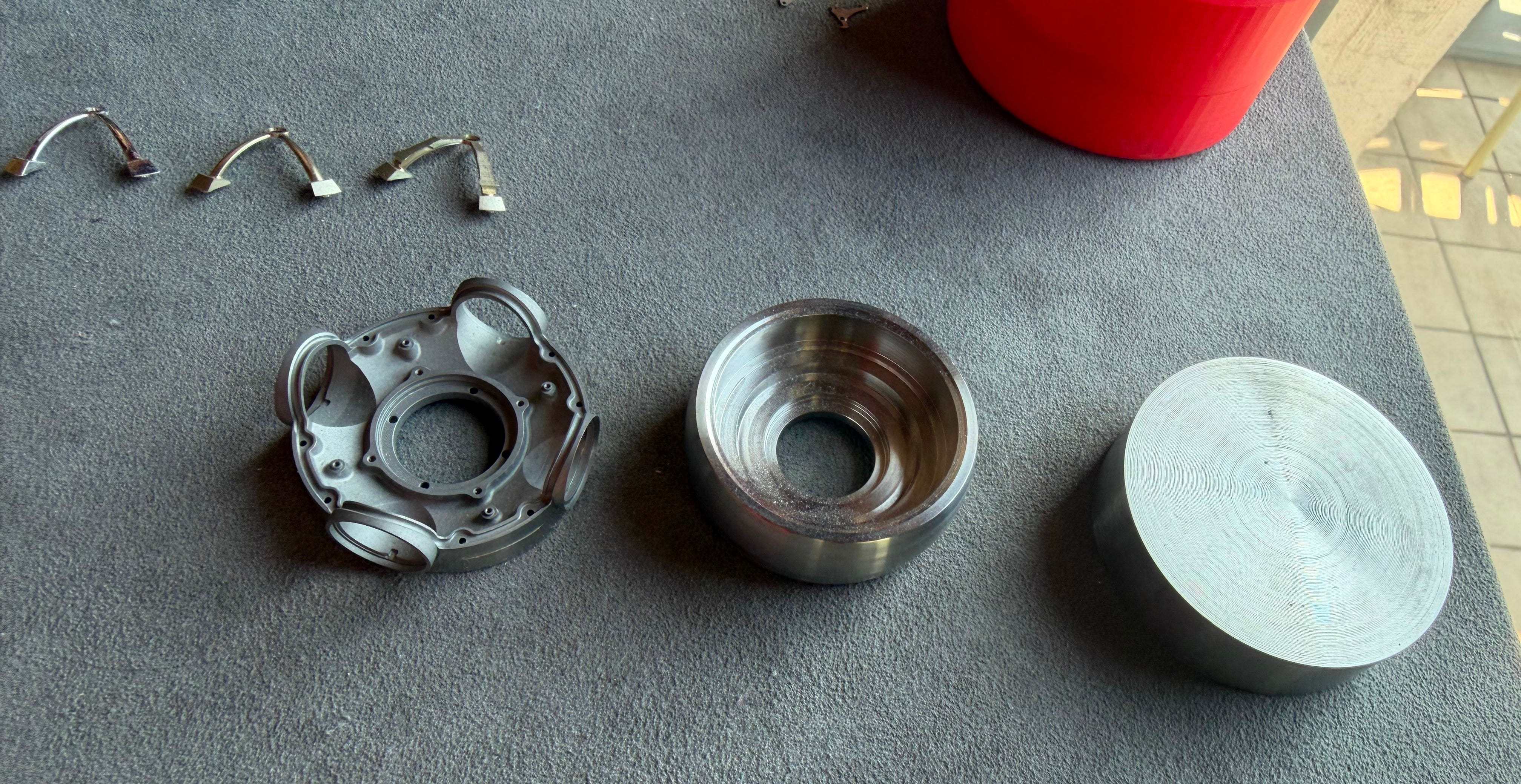
Custom gaskets. Every MB&F watch needs a gasket to seal the case, and because the cases are so unconventional in shape, they have to make every gasket themselves from scratch. Weird and wonderful cases need weird and wonderful gaskets… duh! I didn’t think about it before, but it makes perfect sense. You can’t go to a standard supplier and order a gasket for a case shaped like a bulldog or whatever.