

SDC Weekly 152; Secondary Reinforcers; People Don’t Believe Machines
How spilling coffee can make you more likeable, Genta the painter, Naoya Hida x Zenith, Everywatch howlers, Paul Graham is back, Rolex beats Horage, a note for fathers, and more!

🚨 Welcome back to SDC Weekly - you’ll be pleased to hear there is no discussion about auctions or watch prices for a change :)
—
A quick PSA for Genta fans… I was speaking to Alexia Genta, who told me something interesting:
“Dad famously said he didn’t like watches, that’s because his absolute passion was painting. To him watches were constraints, but painting was freedom… Every morning he designed watches, but he couldn’t wait for the end of the day so he could lose himself in the feeling of complete freedom that a blank canvas offered him. He always defined himself as an artist before anything else. My mission is not only to preserve his watchmaking legacy, but to help realise his deepest dream to be recognised as the great painter he was.”
And so… if you’re in London today, go check this out (register here):

Admin note: The Unofficial Editor declined to check this draft because he's busy fixing his broken vacuum cleaner. He said he wanted to spend the afternoon with something that actually has an excuse for sucking (told him to see his mum). Anyway, please tap the title of this post or click here to ensure you read the most recent edition, which may include corrections made after publishing.
If you’re new to SDC, welcome! When you have some time, check out prior editions of SDC Weekly here, or find enlightenment in the archive here.
Estimated reading time: ~34 mins
In case you missed these last week:


🔁 Secondary Reinforcers
Every collector has some story about why they collect - be it craft, history, flexing, or whatever mix of these or other reasons they can come up with. Most of the time these stories are lovely, but almost all of them fall apart when we view them next to the person’s full collection… typically several watches, many of which haven’t been worn in ages and there’s another #NWA in the near future.
So, you’ve passed the point you would have called ‘enough’ a long time ago, and some part of you knows it. Why are you still, at 10am on a Thursday morning, refreshing Subdial’s new-arrivals page as though it’s a lottery draw? (Not an ad, lol!)
A reader (named Foresight) left this interesting comment on SDC Weekly 149:
“…there is a psychological term or phenomenon I came across recently that for sure you will be interested to dive deep into. It’s called secondary reinforcer, I’m not sure if you already wrote about this before, it expands a lot of what u write about on SDC.
Look it up, its too long for me to explain in detail here, I believe it explains the original link between how it makes sense for us to chase money, status, power and when the original “logical” purpose disappears we continue on regardless of the new consequences that appear later on from chasing these things. I think another name to this phenomenon is called conditioned reinforcement.”
Today we’ll take Foresight up on the deep-dive idea.
What is a secondary reinforcer?
Psychologists split rewards into two buckets. A primary reinforcer is something your body wants with no instruction manual - so that’s things like food, water, warmth, sleep, etc. You were born, pre-loaded, to ‘care’ about these things. A secondary reinforcer is something that means nothing to you at birth and develops a ‘pull’ by being paired, over and over, with the primary stuff.
The canonical example of this is of course money. A banknote can’t feed you or help your sleep deprivation - but it still works because you’ve learned that it reliably converts into things that can. Status and praise are in the same bucket. Another good example is the clicker a dog trainer uses; it makes a click sound that means nothing to a puppy right up until it starts predicting a treat - after which the dog will happily work for the click alone.
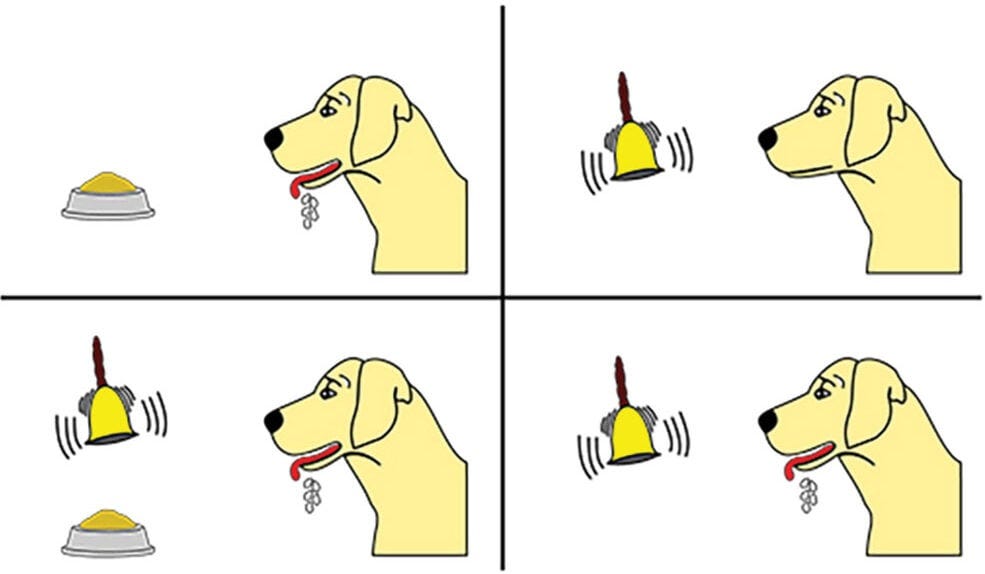
This whole principle has two main origin stories, and both of these famous experiments date back to the late 1800s. Ivan Pavlov with his drooling dogs in the 1890s showed how a meaningless thing like a bell can gain ‘power’ by being paired, again and again, with something that does matter, like food (this is classical conditioning). Edward Thorndike, around the same time, showed using cats in homemade puzzle boxes that we repeat whatever gets rewarded (this is instrumental conditioning, which is the basis of operant conditioning). To quote from the link above:
“While classical conditioning depends on developing associations between events, Thorndike’s law established the basis for operant conditioning: learning from the consequences of our own behavior.”
A secondary reinforcer is what you get when you put these two findings together. The pairing gives a neutral thing some sort of value, Pavlov-style - and then you work and scheme to get it, Thorndike-style.
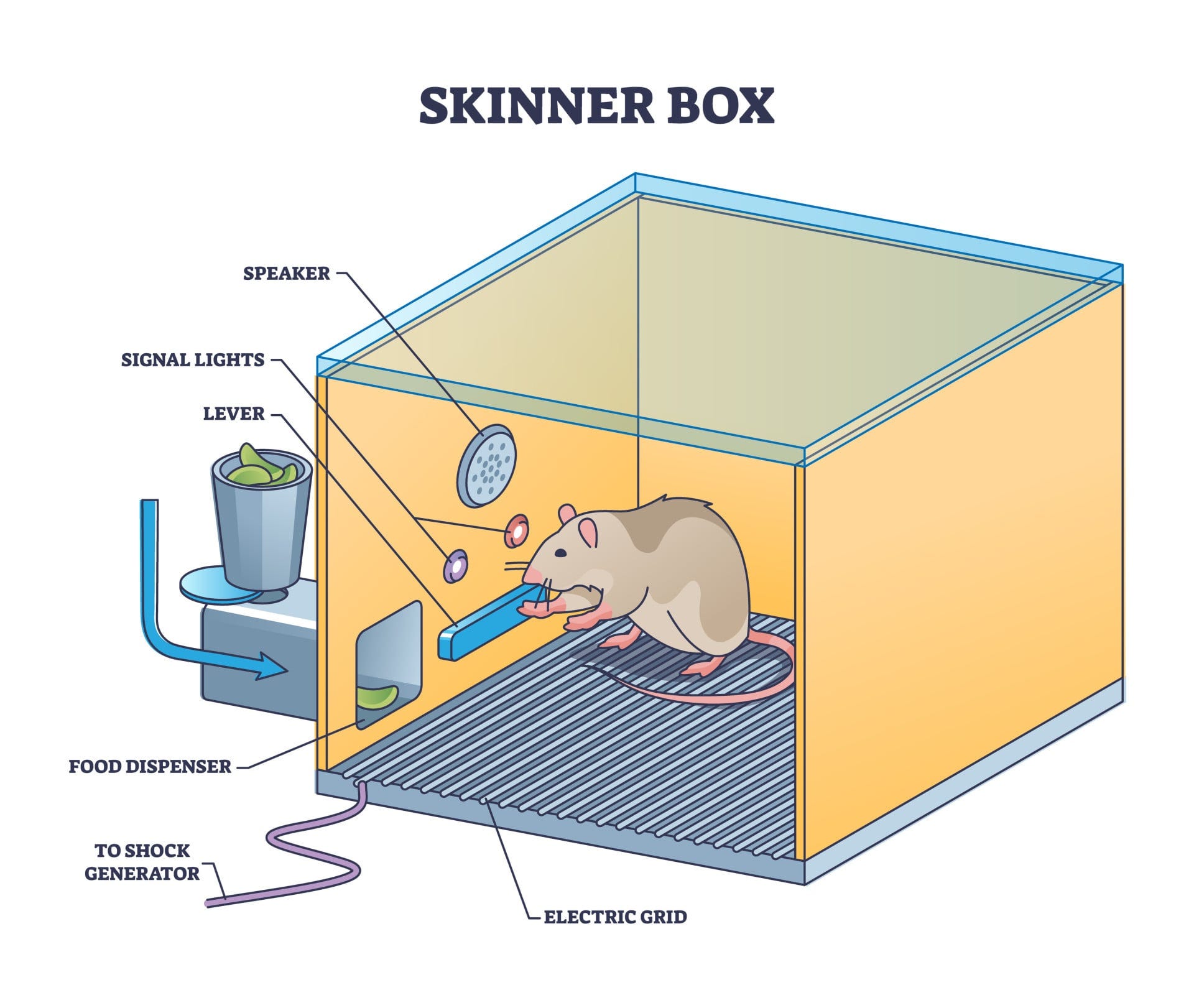
To put it another way, money is what you’ll find at the junction of the two most famous experiments in the history of psychology. B.F. Skinner turned up mid-century and put all of this into a type of system, with levers and pigeons and reinforcement schedules… but really, he was just laying floorboards over the foundations that were already decades old.
The best real-world proof that all this does work in practice was the token economy. In the 1960s, Teodoro Ayllon and Nathan Azrin ran psychiatric wards where patients earned little tokens for self-care, bed-making, work, and could swap those tokens for sweets, cigarettes, and other small privileges. The tokens ‘functioned like money’, which is basically the main point - a worthless disc can become a powerful motivator as soon as it ‘buys’ things you want1.
I guess that is Foresight’s instinct, and it’s a pretty good shout. When you look at us humans, a huge amount of what we grind for has no value in and of itself. We then chase the proxy because, somewhere down the line, the proxy buys the real thing. A watch is an expensive proxy after all… I mean, nobody’s stomach ever grumbled for a perpetual calendar, right? (I’m sure someone will argue this point!)
What doesn’t add up
All that being said, according to the theory, a secondary reinforcer that stops being cashed in for the real thing is supposed to stop working. So if a dog hears the click but never gets a treat, eventually it will do nothing when it hears the click. Trainers know this, and that’s why the general advice is to keep pairing the click with food at least some of the time - otherwise the click will become useless.
So the model predicts the chase should die down when the link breaks, and it should not carry on forever. This is awkward because unlike Foresight’s implication in his comment, “continue on regardless of the new consequences” is the opposite of what the theory says should happen.2
You might think this sinks the idea altogether, but the conditioning research has two good comebacks - which is basically why this is an SDC section and not a reply in the comments section.
Why the chase won’t die
The first comeback is that money is a special kind of secondary reinforcer - it is a generalised one, which was Skinner’s own term for it. Most learned rewards are tied to a single thing which fades when that thing stops paying out. Money is tied to nearly everything, so it pretty much never decouples from a primary reward, because you’re forever cashing some of it in for dinner. That means it can’t extinguish, because the pairing never ever stops. The same is true for status - it still ‘buys’ you tables, mates, deference, and a hearing, so the world keeps topping it up whether you asked it to or not.
The second comeback is that a behaviour lasts longest when the reward is unpredictable - this is the so-called variable-ratio schedule. A slot machine pays out after some random number of pulls, and that randomness is why people keep pulling through a losing streak. They never know if the next one is the one, so they can’t make themselves walk away. It is, as it happens, the single most extinction-proof pattern anyone has ever found.
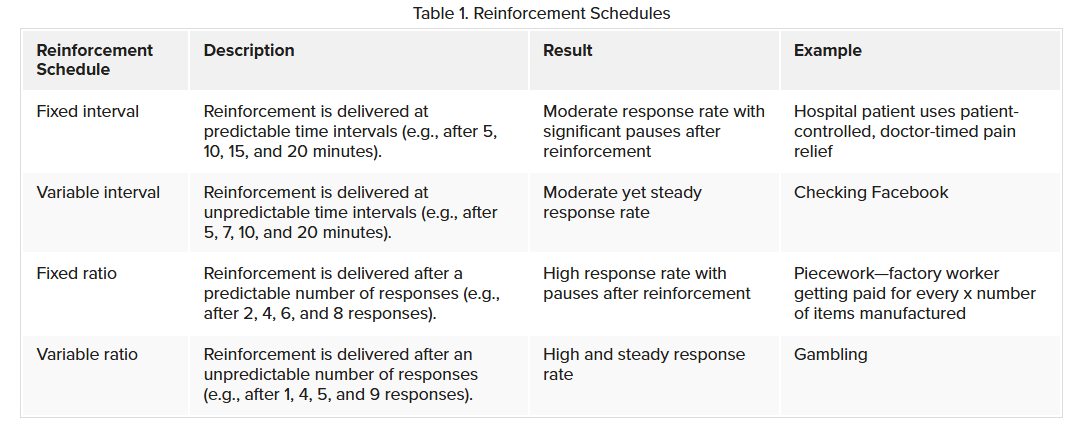
With all that in mind, look at how you actually collect. You don’t land the grail every time you go looking, right? You get a dead lead, another dead lead, a near miss, and then, once in a long while, the right watch at the right price comes into your life and your whole nervous system lights up like the machine spitting out coins.
You are on a variable-ratio schedule!