

🚨 Welcome back to SDC Weekly! This week, we dig into why Rolex is making its beige CPO boxes bigger, and what a half-billion-dollar pre-owned programme growing at 60% a year means for Tudor, the grey market, and basically everyone else in the mid-market. We also get philosophical about data, asking whether a single observation can ever be enough to change your mind. Then we recap on a recent interview with Philippe Dufour, covering everything from how he taught himself AutoCAD to which three words he tells young watchmakers to erase from their vocabulary.
Admin note: The Unofficial Editor is currently trying to calculate the probability of obtaining a Daytona for his newborn son using only an abacus and a bottle of gin. Please click here to read this post online and ensure you see all corrections made after publishing.
If you’re new to SDC, welcome! If you have time to kill, find older editions of SDC Weekly here, and longer posts in the archive here.
Estimated reading time: ~30 mins
🚀 Rolex’s Beige Box Gets Bigger
Early in January, Coronet reported that Rolex plans to increase the size of its certified pre-owned (CPO) presentation boxes to match its standard green ones. Nobody cared at the time, admittedly because it seemed like pointless ‘packaging trivia’, but upon reflection, I think it may tell us something about where Rolex is heading.
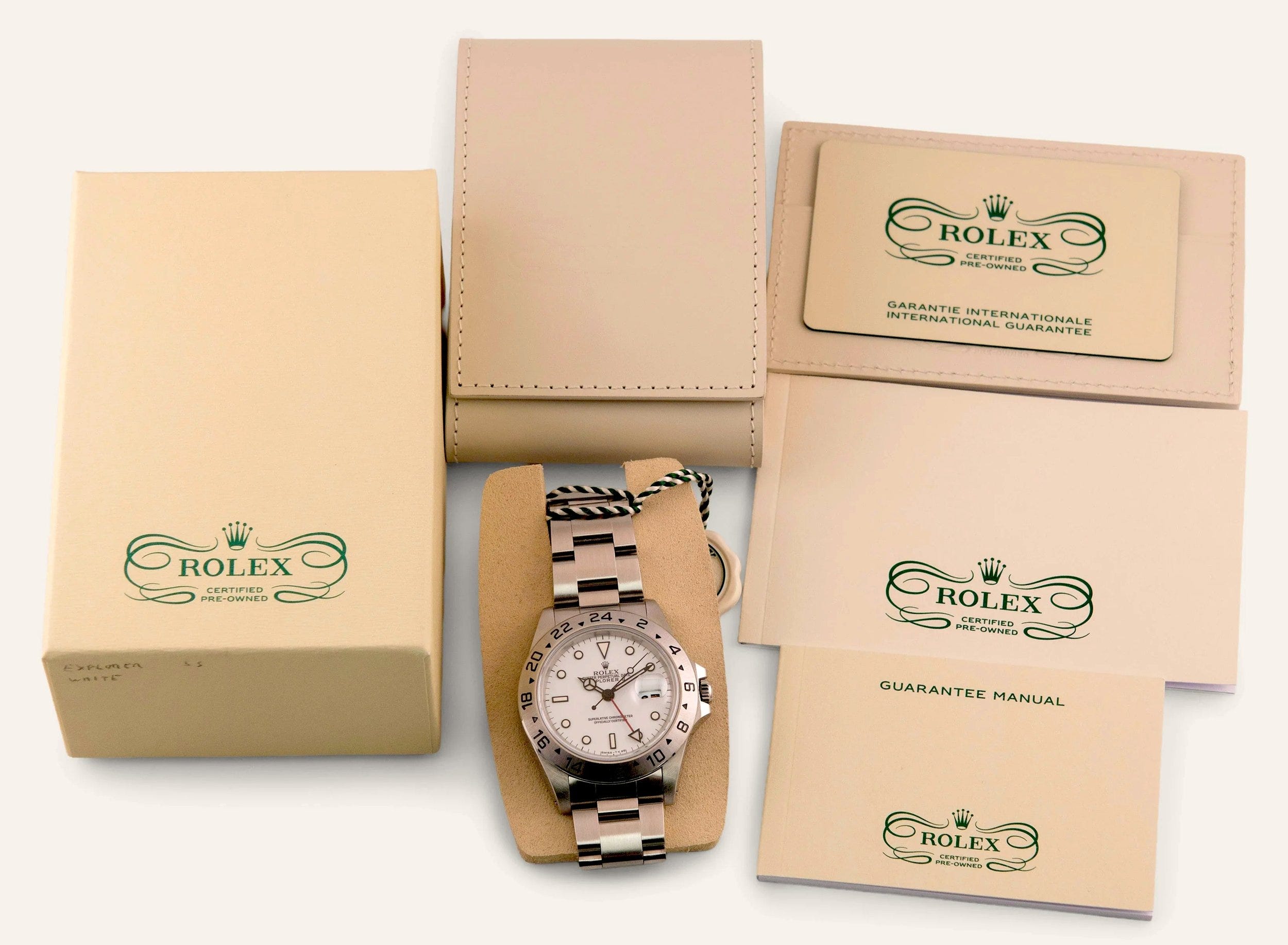
Since launching CPO in late 2022, Rolex has used beige boxes roughly half the size of the green ones you get with new watches. The official line was sustainability, which nowadays is perhaps fair enough. However, the practical effect was the creation of a subtle hierarchy effect, where a green box means new, and a smaller beige box means... well, NOT new. It’s akin to a “full experience” versus what we could call “the sensible alternative.”
Now, by making the boxes the same size, Rolex is reducing that distinction. They’re signalling that CPO isn’t really a “lesser” path to ownership - it’s more of a parallel one, with somewhat equivalent prestige. It’s still not a full-green experience, but it’s a little closer. In fact, by matching the physical size, they are essentially institutionalising the “second-hand” purchase, and betting that the official Rolex certification is becoming a Veblen good in its own right, perhaps even more prestigious to a certain buyer than the “newness” of the watch itself. And of course, if you look at the numbers, you begin to understand why they’d bother with all this.
Half a Billion Dollars and Just Getting Started
In the Morgan Stanley Q4 2025 SDC post, some interesting discussion took place in the comments about where all this is heading. In addition, one line from the report is worth recalling as well: “We estimate Rolex CPO sales exceeded $500 million last year, surpassing the annual primary-market turnover of most Swiss brands.”
That’s pretty crazy right? Rolex has built a side business, inside their main business, and it’s already larger than most of their competitors’ entire operations. To make matters worse for the competition, it’s growing at 60% annually. If that growth rate holds (admittedly a big “if,” largely dependent on how many pieces they can convince owners to part with), you’re looking at something like:
2026: ~$850 million
2027: ~$1.4 billion
2028: ~$2.2 billion
Now perhaps this growth will slow down, and it may only hit $2 billion by 2032 or whatever - but I’d guess other brands will perform worse over this period as well… which means, at some point in the next 2-4 years, “Rolex CPO” will rank among the top five Swiss watch brands by revenue. Again, that’s not Rolex the company, it’s just their pre-owned programme 😂!
Closed Loop = Central Bank
Rolex has essentially built a streamlined way to cash in on the same watch multiple times. They sell you a Submariner, you wear it for a few years, trade it in for something else, and Rolex sells that same Submariner again through CPO - which currently commands a 28% premium over equivalent grey market pieces.
The trade-in mechanism is particularly clever if you think about it. Someone walks into an AD hoping for a new GMT, learns there’s a long wait, but the salesperson offers to take their old Sub as a trade-in toward a CPO GMT they can leave with today. Rolex captures both ends of that transaction (the old Sub, and the CPO GMT), and the customer stays in the Rolex family, walking out enjoying the GMT they wanted in the first place. Don’t forget, the grey dealer who might have bought that Sub, gets nothing.
This system is circular, self-reinforcing, and at some point it will become unstoppable (who can forget Amazon’s rise to where they are now). Every CPO sale potentially creates the next piece of CPO inventory via trade-in. On top of that, every trade-in keeps the customer inside the Rolex ecosystem. Buy a Rolex, trade it in for another Rolex… repeat indefinitely.
There is also a deeper level of control at play here. By becoming the largest player in the secondary market for their own watches, Rolex is effectively acting like a Central Bank. If the market starts to dip, they can adjust their “intake” or trade-in valuations to support a floor price. This “Price Floor Control” mechanism will protect the brand equity of every Rolex ever made, and make the purchase feel less like “luxury spend” and more like a “high-yield savings account.” I’m not sure this is necessarily a good thing for watch enthusiasts, but it’s good for the pocketbooks of anyone buying Rolex.