

🚨 Welcome back to SDC Weekly!
Admin note: The Unofficial Editor declined to check this edition because he’s moonlighting as an auctioneer this weekend. He said he has no time for our grammar today because he’s going to spend the whole afternoon banging his gavel. Please tap the title of this post or click here to read the most recent edition, which may include corrections made after publishing..
If you’re new to SDC, welcome! When you have some time, check out prior editions of SDC Weekly here, or peruse the archive here.
Estimated reading time: ~35 mins
In case you missed it last week:

🔨 How Watch Auctions Are Engineered to Make You Bid More
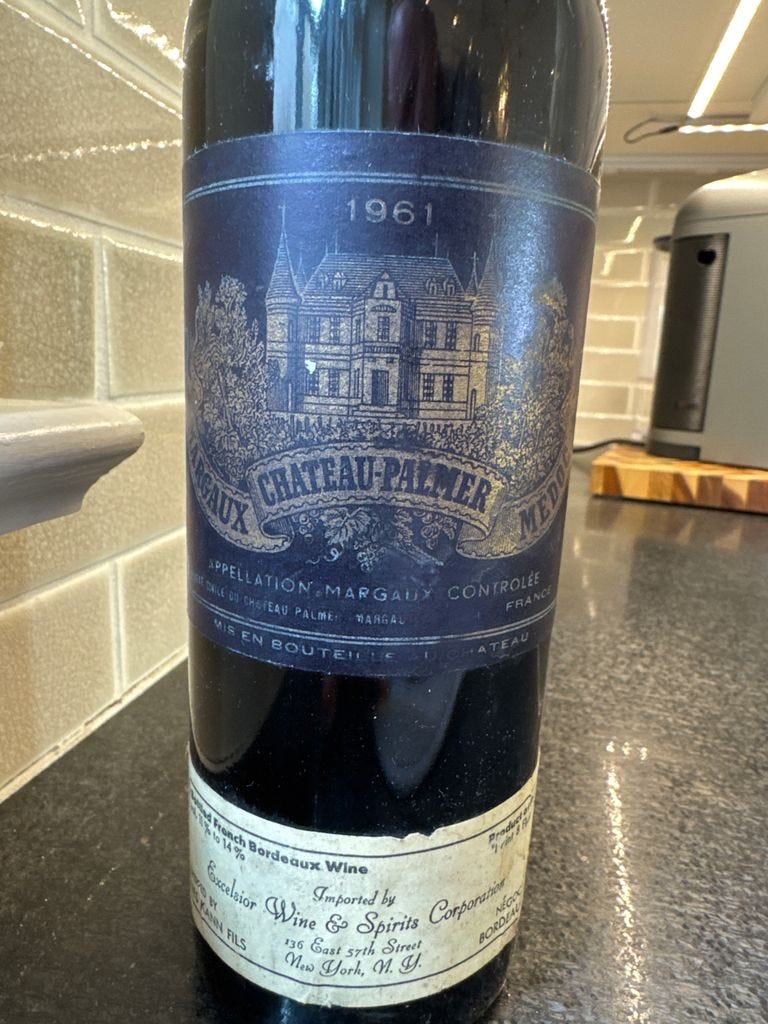
In 1989 an economist named Orley Ashenfelter went to a wine auction, and watched three identical lots of 1961 Château Palmer come up one after another. The first sold for £920. The second for £800. The third for £700. So for the same wine, just 90 or so seconds apart, the person who bought first, paid almost a third more than the person who simply waited for the subsequent lots.
Ashenfelter, being an economist, found this confusing. The law of one price (the idea that identical things should cost the same) had just been violated in front of his eyes, and, as he recorded, nobody else seemed to care. So he did what economists typically do, and gathered data on hundreds of pairs of identical wines sold in sequence across London, Chicago and San Francisco. As watch geeks you might have guessed that he found the same result nearly everywhere; when identical items are sold one after another, prices are about twice as likely to fall as to rise as you move down the list. He gave the pattern a name which has now stuck for a few decades: the afternoon effect.
I bring this up because of something Geoff Hess said in a recent interview with Johnny Davis. Hess is the global head of watches at Sotheby’s, and when Davis asked him how much of the job is psychology, Hess didn’t bother with any false modesty. “There’s a science to what we call ‘lotting’ a sale,” he said. 150 watches don’t go up in the order they arrived, or alphabetically, or by reference number; Hess says they are “placed.” There is, in his words, “a deliberate plan around where the crescendo should occur.” And then Hess said: “It really is like conducting an orchestra.”
Now, “conducting an orchestra” is the sort of thing a charming auction-house executive would say, and you could be forgiven for filing it under flattering self-mythology. I suppose in the auction world, this is the equivalent of a chef describing himself as an ‘artist’. But the more I thought about it, the more I wanted to dig into the research on this… so I did. Turns out there is a lot of peer-reviewed stuff out there, most of it written by people who have never even bid on a watch.
So today, we will learn a few things; how auctions are engineered, why the ‘crescendo’ should not fall on the last lot, and, believe it or not, how all this can explain what a colonoscopy and a charity gala have in common. 😂
Afternoon effect means the early bird overpays
We will kick off with Ashenfelter’s anomaly; why on earth would three identical wines decline in price over 90 seconds?