
Thinking, Fast and Slow... Again.
The original insight from Daniel Kahneman was "slow down, think harder." A new study suggests the gut maybe deserves a bit more credit than we've been giving it.

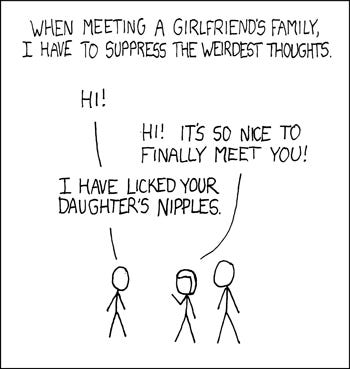
It felt appropriate to kick this essay off with an XKCD comic…
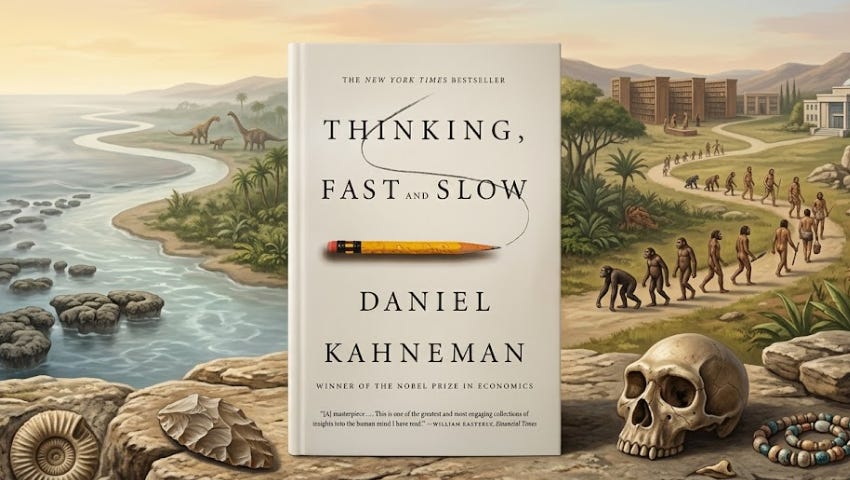
A few years ago, I wrote a summary of Daniel Kahneman’s book Thinking, Fast and Slow, and I’ve referenced this book on SDC more times than I can count. If you needed evidence that Substack’s algorithms work pretty well, Carl Hendrick published an essay called Rethinking Fast and Slow earlier this year, and it appeared on my feed the very same day he posted it. Since reading it, Carl’s essay has remained open in a browser window on my laptop the entire time… and I have read it at least 20 times. So yeah, it’s no exaggeration to say I’ve been chewing on this for a few months.
Carl’s essay begins by going through a new study published earlier this year. This study takes the standard Kahneman story we all know and love, and looks under the hood, so to speak.
If you have not read my summary, you should probably start there (that’ll allow me to keep this brief) - the Kahneman take is basically that we have two processing systems in our brain. System 1 is fast, intuitive, and often wrong, and System 2 is slow, deliberate, and plays the role of ‘the responsible adult which corrects System 1’s mistakes.’ The general takeaway on this model is that System 2 is essentially doing the heavy lifting, and the popular narrative has been to slow down, think harder, and try to override your gut.
The new study I mentioned above, looked at this model and built upon it; and fear not… our man Kahneman has, technically speaking, not been ‘disproven’ by this new study (which is a relief tbh).
Estimated reading time: 17 minutes
New perspectives
The researchers used a ‘Compound Remote Associates’ test, which sounds dramatic but it’s the kind of thing I imagine you’d find in a Sunday newspaper. You’re given three words like river, note, account and you have to find a fourth word that connects them all.1
What they did next was ask that that participants give two answers. For the first answer they put them under time pressure (six to eight seconds) and also required them to memorise a dot pattern (to keep the deliberative part of the brain busy, and to stop them from ‘thinking it through’). Then, after that initial gut response, they were given unlimited time to deliberate further and produce a ‘final’ final answer.
The headline finding was that by the time participants gave a final answer, they had already produced that same correct answer in the first, intuitive stage - roughly 70% of the time. They concluded the second deliberation phase (where the ‘heavy lifting’ System 2 was doing the work) was mostly just confirming what ‘the gut’ (System 1) had already produced under harsh conditions which were designed to prevent ‘real thinking.’
This pretty much inverts the classic story as we know it. ‘Sound thinkers’, it turns out, mainly benefit from an ability to have correct intuitions in the first place, as opposed to having the capacity to correct bad intuition through careful reasoning.
How to predict a good gut?
The obvious next question was to ask what makes some people better at intuitive thinking; here, the researchers found two things.
The first is a bit obvious; easier problems, where the solution is semantically close to the cue words, get solved intuitively more often. But of course they do; ‘easier problems are easier’ is not a finding that’s going to win a Nobel prize.
The second finding is more interesting; the researchers used a verbal fluency task to map each participant’s semantic network2 (basically, how their knowledge was organised in their head). People who solved the puzzles intuitively had knowledge that was more tightly woven together. When they thought of one idea, related ones came along automatically, almost like a package. Also, ideas from completely different topics could link up without effort, instead of being walled off in separate boxes.3
Carl uses a useful analogy in his essay; imagine two libraries with the same number of books. In one, they’re shelved randomly, and in the other, related volumes sit together with cross-references between sections. The second library has the same books, but the internal organisation makes the work easier. So in this study, the more intuitive people were operating organised libraries in their heads.
The researchers also measured forward flow, which is essentially how efficiently you move through semantic space (your brain library) when generating ideas. Higher forward flow predicts better intuitive performance, even after controlling for how much people knew.
This is pretty insane to me because what they are saying is that a bigger driver of good intuition, was the architecture of your knowledge, and not the quantity of knowledge. Back to the library analogy, the most important determinant of good intuition is how densely connected the concepts are in your head, and how fluidly the you can move through them.
As Carl puts it in his essay:
“In other words, it’s not so much what you know but the way in which you know it.”
Quick caveat as I don’t want to muddy the waters in any way; the study measured these networks using an animal-naming task, not a watch-naming task. Which means, strictly speaking, the official finding is that general semantic-network efficiency predicts performance on a general word-association puzzle.
So yes, I am indeed making a small leap when I propose ‘watch-specific networks built through ‘watch experience’ will produce accurate watch intuitions’. I call it a small leap because I didn’t pull this out of thin air either; I’m drawing on a much bigger body of work which talks about expert intuition (Kahneman and Klein’s collaboration being the obvious one) to make that leap.
For watch collectors
Carl’s essay seems to have been written for educators, and his takeaways were about teaching and learning. But perhaps you’re wondering… how does this apply to watch collecting? Almost every conversation we have on SDC about taste, judgement, expertise, or even the appalling amount of self-deception in this hobby, runs through the very same brain circuits.
Let me start with the most obvious application before we dig further.
‘Hell yes’ vindicated
Tony Traina’s first rule for watch collecting is “if it’s not a ‘hell yes’ it’s a no.” I wrote about his list a while back, and at the time I said Tony’s rule “captures that moment perfectly, in that, your gut will know before your brain catches up.” I stand by that, but at the time, I had no real ‘basis’ for supporting this beyond personal experience… I just ‘knew’ I had experienced the feeling.
It turns out, this new study suggests there’s something more going on than just a silly romantic notion of trusting your gut. When you encounter a watch and feel an immediate, visceral yes, what’s actually happening there is that your semantic network is firing up. All the watches you might’ve handled over the years, all the proportions you’ve stared at, and all the conversations you’ve had about case finishing and dial layout and movement architecture… these are running in the background and producing a near-instant ‘verdict’ that bypasses your ability to articulate all of it. The articulation will of course come later, but the verdict comes through first.
I had this experience the first time I saw a Resonance in person, and I’ve described it before but can’t be bothered to find the right post to link to. Every preconception about what made a watch ‘special’ wasn’t really in the front of my mind. I didn’t ‘think’ my way to wanting it; I basically wanted it before I’d thought anything at all.
At the time I would have said ‘gut feeling’ but after reading this study, I think a more accurate description is that all the accumulated exposure to watches and horology had built a dense-enough network in my head to recognise something I’d never seen before but could nonetheless place fairly precisely.
The corollary is also interesting, in that if you don’t have the ‘hell yes’ moment, you probably can’t have it, no matter how much research you do. Deliberation can produce a “yes I should”, but it is very unlikely to produce a “yes I must”. Those are very different things, and people who confuse them are the folks who tend to buy watches they later wonder why they bought.
Why collectors get burned
A concept you’re probably familiar with is when an enthusiast spends months researching a category, reads every blog, watches every YouTube review, builds a spreadsheet, and still buys something that they regret six months later.
Why does that happen?
The standard explanation is that they got caught up in chasing hype & status, or they didn’t research enough, or they should have handled the watch first. All of this may be true to some extent, but I think the key issue is what Carl mentioned in his essay. These folks don’t have the network set up yet. No amount of information substitutes for integration, and integration only comes from comparative, hands-on experience.
You can read about Lange’s finishing for a year and still buy something else thinking it offers ‘similar quality’, because the words don’t connect to anything in your head with enough density to fire automatically when you’re staring at the alternative.
This is also why I think the standard advice given to new collectors, to ‘just take your time, do your homework‘, is well-intentioned but also woefully incomplete. Time alone will never build any networks - the time needs to be spent in proximity to many examples, asking comparative questions - because that’s what builds networks in your head.
There’s a reason vintage dealers make their apprentices handle hundreds of watches before letting them buy for the firm… you can’t ever ‘shortcut’ this by only reading about vintage watches. Actually, that brings me to the next point.
Authentication
I once wrote about how absurdly good modern fakes have become; despite this, veteran dealers can pick up a Submariner, glance at it for less than three seconds, and tell you it’s wrong. A lot of the time they can’t immediately tell you why; but supposedly ‘they just know’.
The conventional explanation is the blanket-term experience, which is true, but also quite vague. This study tells us how it works in their heads; a dealer’s semantic network is so dense, with so many connections between case shape, font weight, lume hue, dial gloss, bracelet stretch, crown tube angle, weight-in-hand and so forth… that anything off-pattern triggers a mismatch signal in their head almost instantly. If there’s a conscious explanation, it comes later; their recognition is fast and accurate, and what the study is also suggesting is that it’s accurate because it’s fast.
This is also why I find it quite amusing when collectors try to learn about authentication purely from checklists. Two collectors can read the same article on Mk3 Red Sub dials, and a year later one of them will spot a fake at 20 paces but the other still can’t see it with the watch in hand. The difference between these two comes down to how many other watches they’ve handled in that year, and how many comparative observations they’ve made along the way.
Deliberation as a trap
I wrote a long post on self-deception recently, and one of the central points was that your conscious mind is better described as a press secretary than an analyst. Robert Trivers spent his career arguing that we deceive ourselves on purpose, and most of what we call ‘thinking it through’ is actually finding reasons for what we already wanted.
If you apply that lens to this study, things get super interesting. The classic Kahneman approach assumes that deliberation is corrective - in other words, if you take time to think things through, you’ll get closer to the right answer. But what if, for many watch decisions, deliberation isn’t correcting your gut, but in fact manufacturing post-hoc justifications (as self-deception)?
In practical terms, what would happen is you’d feel an urge to buy a hyped piece, and your gut tells you this is a dumb idea… but once you start deliberating on the idea, the self-deception kicks in. So your slow-thinking brain produces an investment thesis, a craftsmanship story, an argument about in-house movements, a memory adjustment saying ‘I always wanted one’… and suddenly, the purchase actually doesn’t look dumb at all. In fact, it looks sensible, and then, it becomes inevitable.
To be clear, the study doesn’t directly say this, but the idea does fit into the big picture if you map the findings onto other research we have explored - the bottom line is that good intuitive thinkers don’t need deliberation to confirm a good answer.
So as a takeaway, if you find yourself deliberating extensively over a watch (and this is especially true for watches you didn’t have an immediate ‘hell yes’ for) there are two possibilities. Either the problem legitimately exceeds what your intuition can handle (we’ll get to that), or your deliberation is doing the rationalisation work that Trivers warned about.
I’m obviously not saying you should never think and deliberate about a purchase; I’m saying that the usual assumption (that ‘more thinking equals better decisions’) doesn’t quite hold up entirely - sometimes more thinking just leads to worse self-deception.
Gschwind and Mayer
These are two interesting cases that might add some colour to the ‘network model’ in the watch world.
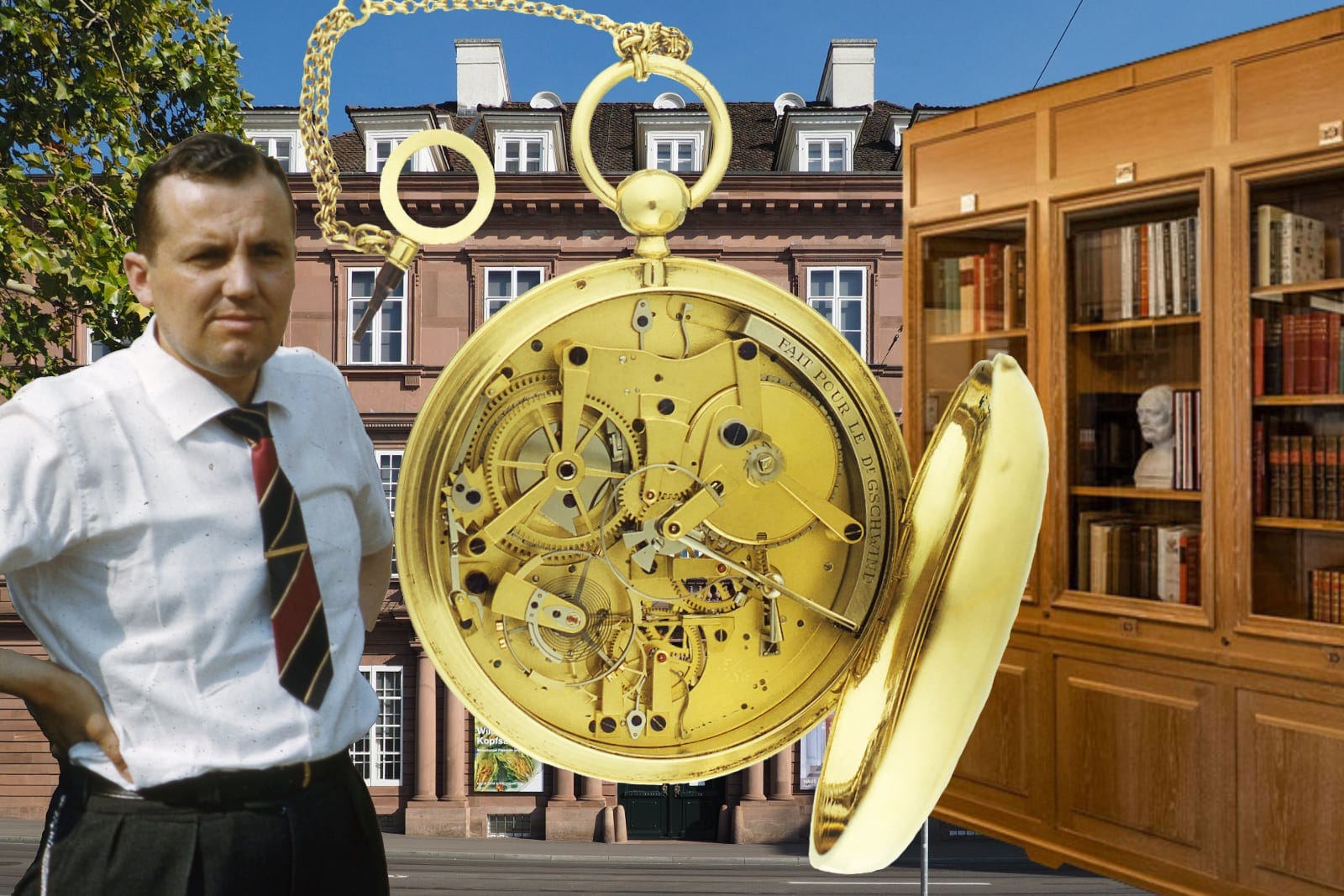
The first is Eugen Gschwind, the Basel dentist who ‘discovered’ François-Paul Journe before almost anyone else. Gschwind was a dentist who happened to have a deep mental network for mechanical thinking. My reading of Gschwind through this lens is that his network let him to recognise something special about Journe’s work that others had missed; Gschwind saw it because his mental network was primed to see it.
The second is John Mayer, who I’ve referenced before regarding taste. His Hodinkee appearances landed well because he kept picking pieces that turned out to be ahead of the ‘popular curve.’ Some of this is undoubtedly social influence; he became a tastemaker by being on Hodinkee. But part of it, I’d argue, is that Mayer has a fairly well-built horological mental network from years of obsessive study and ownership, and that network produces accurate intuitions about which pieces have something there. I doubt he sits around and reasons out his choices as much as he just sees a watch and knows (or ‘feels’) what he likes.
Deliberation is not always a bad thing
I need to make it abundantly clear that I’m not saying intuition will always win. The study itself is also explicit about the fact that intuition has its limits as well.
When the semantic distance between a problem and a solution grows too large (i.e. when you are outside your usual area of expertise), your gut will stop producing reliable answers and you truly do need to slow down and reason carefully. For collectors, this maps to many situations and we can cover a few basics ideas here.
When you’re entering a new category. If you’ve been collecting dive watches for ten years and someone offers you a vintage rectangular dress watch from the 1940s, your network will have nothing useful to add. You will need to research, handle multiple comparable pieces, ask questions, and deliberately build the network from scratch before you can trust your reactions. Skipping this step is how people overpay enormously when they cross over to new categories.
When the design is engineered to exploit your existing network. Hype watches and clever fakes are both, in their own ways, optimised to exploit the patterns your gut uses. A super-fake will mimic the surface signals your network is keying off. A hype watch is engineered to trigger every desire-reflex you have. In both cases, your fast thinking is being weaponised, and slowing down is absolutely the right response.
When you can’t articulate anything about why you want it. There’s a difference between “I love it and I can’t fully say why” (which is often a well-built network making a sound call) and “I have no idea why I want this, I just do” (which is often FOMO, social proof, or status-anxiety being run through your justification engine). The test to apply is whether you can describe the feel of the watch with any specificity, even if you can’t fully analyse it.
When the stakes are large enough that even a small probability of being wrong matters. Buying a £3,000 watch on instinct is one thing; buying a £300,000 watch on instinct is quite another. The study found that intuition gets less reliable as problems get harder, and so I’m inclined to say that high-stakes decisions deserve the additional safeguard of slow thought, even if it sometimes just rationalises what you were going to do anyway.
How to build the network
If the conclusion I’m drawing here is roughly correct, that good collecting is a function of the network architecture in your head (and not just accumulated information) then a few practical implications naturally follow from this. Again, a quick reminder that this is now extrapolating from the study into the expertise from other literature in this field.
Handle as many watches as possible, in person. Forum photos and YouTube videos build a much weaker network than physical encounters.
Compare side by side, not in isolation. Two watches in the same room is more transformational than seeing two separate watches six months apart.
Talk to people who think differently from you. Rich semantic networks have low modularity, which means they’re not siloed into separate sub-categories. A collector who only talks to other Rolex collectors will build a Rolex-shaped network. A collector who talks to vintage specialists, independent watchmakers, design students, and finishing pedants will build something more flexible - and therefore, will be more capable of producing intuitions that travel.
Spend time with watchmakers. I’ve written before about how the perceived barrier to talking to top watchmakers is mostly imaginary. You should pursue these conversations because they’re some of the densest network-building experiences available in the hobby. An hour with an experienced movement constructor or master watchmaker, talking about how a movement is actually constructed and built, will reorganise your sense of what everything means more thoroughly than a year of reading about it.
Parting thoughts
A guy named Mark Goodrich left an excellent comment under Carl’s post:
“This is a great blog on a fascinating piece of research but I think it is important to mention that Daniel Kahneman expressly allows for this use of effective intuition in Chapter 22 - Expert Intuition: When can we Trust it? This details his adversarial collaboration with Gary Klein who is a proponent of so-called Naturalistic Decision Making or NDM. The conclusions they jointly reached chime extremely well with this research so I think Kahneman would have been fascinated to see it.
Thinking Fast and Slow is one of my favourite books of all time because it actually covers so much more than the basic System 1 and System 2 approach than the title suggests and that people associate with it. There are fascinating gems all the way through - by way of example only, Chapter 22 also deals briefly with “wicked” environments, something highly relevant to classroom experience!”
So really, this study doesn’t ‘overturn’ Kahneman so much as give us a more precise idea of what is happening when expert intuition kicks in, and why some people have it and others don’t. The answer (for now) is found in the structure of our semantic memory4; some folks have organised libraries and others have the same collection of books but scattered around in random piles.
That said, what I find exciting about this framing is how it ‘upgrades’ the insights from Kahneman’s work. The popular interpretation of Kahneman has always been a tad miserable; slow down, you idiot, you can’t trust yourself, your gut is a liability, you’ve gotta override it. And sure, sometimes that’s totally right. But this new study suggests that for a lot of problems, the gut is actually doing a lot of the work, and more importantly, that ‘the gut’ is something you can build/improve via experience, comparison, and conversation… that’s basically the entire pitch for (in my opinion) the best way to enjoy this hobby properly.
Which means, if Carl is right (and I think he mostly is) what separates a thoughtful watch enthusiast from a disorganised one has very little to do with intelligence, processing power, or even how many years they’ve been at it. It has everything to do with the layout of their mind - and the good news is, this layout is within your control.
I think this is a much less anxious way to think about the hobby as well. We are all constantly building a library in our heads, and the watches we encounter along the way are partly the curriculum and partly the result. A ‘hell yes’ moment is just your mental library telling you it finally recognises a watch it has been waiting a long time to encounter.
Now, whether the library I’ve built thus far (in my own head) is any good, I have no real way to tell from inside it. I guess none of us do, and we probably never will except with hindsight. That doesn’t mean it’s not worth paying close attention to. Hopefully, when you’re having a particularly good day, and you walk into a room with just the right people and the right watches, you will feel everything in your head click…
That’ll be the first time you notice the ‘shelves’ you’ve been filling all along.
Footnotes
For this one, the answer is “bank” - so you get river bank, bank note, and bank account.
“A semantic network is a knowledge representation technique that uses a kind of graph to represent concepts and the relationships between them. This method is often used in fields such as neurolinguistics and natural language processing to perform tasks like semantic parsing and word-sense disambiguation.”
In the paper’s terms, these brains had shorter paths between concepts, more local clustering, and lower modularity - but figured you wouldn’t care for the jargon.
“Semantic memory is the type of long-term memory that stores general knowledge, concepts, facts, and meanings of words, allowing for the understanding and comprehension of language, as well as the retrieval of general knowledge about the world.”
This was such a good read; thank you! I find particularly helpful your way of differentiating one's immediate response to a watch: "I love this but I don't know why", versus "I don't know why I want this, I just do." I think bearing this in mind can seriously help one avoid regret purchases.
I'm curious, in your experience are there any particular watches where your immediate "gut" reaction eventually became very different after prolonged thought? Eg is there a watch that you at first dismissed but then eventually came to love? And vice versa, one you at first loved but then eventually dismissed?
And as you mature as a collector, do you find this happens less as your mental network is now set up in such a way that a snap judgement on a watch--either positive or negative--will usually be proven right by sustained reflection?
Cheers!
I recall that on a past SDC post we discussed Malcolm Gladwell’s Blink and the importance of experience in the value of snap judgments. I shared my understanding of Gladwell’s position: only with proper experience can a person validly accept their gut instinct. Without proper experience, a person trusting their gut is more likely making a wild ass guess.
I like how you carry this so much further here today :”No amount of information substitutes for integration.” Gold stuff here mate.
More gold: “When the semantic distance between a problem and a solution grows too large (i.e. when you are outside your usual area of expertise), your gut will stop producing reliable answer.” Nothing to add. Pure gold here.
—
Authentication / Superfakes
In “Blink”, there was an anecdote related to your passage of watch authentication. The intro to Blink tells the story of a statue which the Getty museum acquired after scientific authentication. But several art historians who took one look at the piece immediately had a hunch that it was fake and they were ultimately proved correct.
—— Compare side by side, not in isolation.
Two watches in the same room is more transformational than seeing two separate watches six months apart. Can you give a Luddite such as myself more insight here? What do you @KF look for in comparing watches. Just a few minutes ago, I handled a friends Patek Annual Calendar while I am wearing my wife’s Moser VANTAblack tourbillon.
They seem so different as to occupy different spaces. What do you look for when comparing watches on the fly? These spontaneous encounters are much different than a curated setting such as a large watch enthusiast event or sitting down at a dealer's where one selects watches to compare.
— Spend time with watchmakers
Great advice.
I have an acquaintance who has forgotten more about watches than I’ll ever know. Of the many insights I get from him, one thing that sticks in my mind is a passing comment he made many months ago. He was at a dinner in the US with David Candaux who was showing the DC12 and in sharing his experience my acquaintance remarked “I spent about 60 minutes with David discussing the double balance wheel in the DC12 and other watches with two balance wheels.”
That comment reveals both a level of knowledge to which we should aspire as well as a goal for us in our watch collecting interactions. Spend time with the watchmakers.
— All the best KF, another banger.